Stanford’s Holographic AI Glasses Could Replace VR Headsets
▼ Summary
– Stanford has developed a 3mm-thick mixed-reality glasses prototype using holography, optics, and AI to enhance realism in XR vision.
– The author highlights the immersive potential of mixed reality, citing personal experiences with Apple Vision Pro that blurred the line between virtual and real memories.
– Current VR headsets like Vision Pro and Quest 3 face issues such as discomfort, weight, and high cost, limiting everyday use despite their impressive capabilities.
– Stanford’s research aims to pass a “visual Turing Test,” where holographic displays could mimic reality by bending light like physical objects, surpassing flat-screen 3D effects.
– Recent advancements include a wider field of view (34.2° horizontal, 20.2° vertical) and thinner optics (under 3mm), though challenges like peripheral vision and real-world deployment remain.
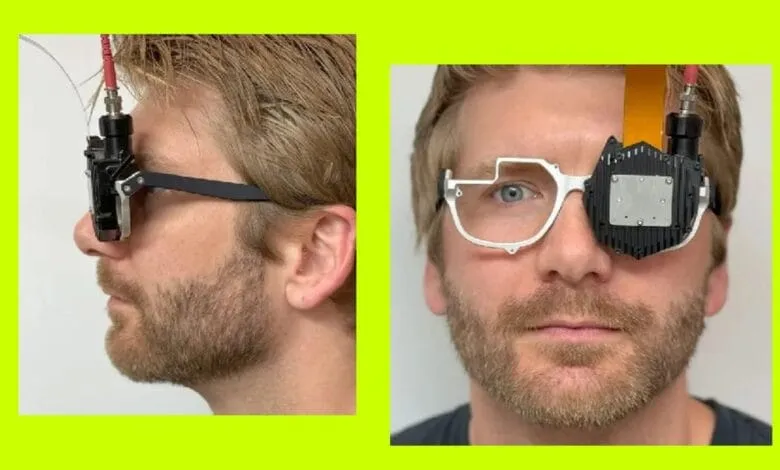
Stanford researchers are pushing the boundaries of mixed reality with groundbreaking holographic glasses that could make bulky VR headsets obsolete. Their latest prototype, just 3mm thick, combines advanced optics, AI-driven holography, and nanotechnology to create immersive experiences indistinguishable from reality.
The team, led by Professor Gordon Wetzstein, has developed a system that manipulates light at the nanoscale using waveguides and real-time AI processing. Unlike traditional VR displays that rely on flat screens, this approach mimics how physical objects interact with light, eliminating the “uncanny valley” effect that plagues current headsets.
One of the biggest hurdles for VR adoption has been comfort. Devices like the Apple Vision Pro and Meta Quest 3 offer stunning visuals but feel like strapping a brick to your face. Stanford’s solution? Glasses so thin they rival everyday eyewear. The latest iteration features a 34.2-degree horizontal field of view, a significant leap from last year’s 11-degree prototype. While still narrower than commercial headsets, the team is rapidly closing the gap.
A key innovation is the switch from Surface Relief Gratings (SRGs) to Volume Bragg Gratings (VBGs), which reduce visual noise and ghosting. Combined with a MEMS mirror for precise light control, the system creates a “synthetic aperture” that expands the eyebox, allowing natural eye movement without losing the image.
The ultimate goal? Passing a visual Turing Test, where users can’t distinguish between holographic projections and real objects. Postdoctoral researcher Suyeon Choi explains: “If the brain perceives digital imagery as physically present, we’ve succeeded.”
But challenges remain. Peripheral vision could betray the illusion unless the glasses fully block outside sightlines, something current prototypes avoid for comfort. And while AI handles dynamic adjustments flawlessly, scaling production for consumer use is another hurdle entirely.
The project, described as a trilogy, is now in its second phase. If progress continues, we might see real-world deployment sooner than expected. Whether that’s thrilling or unsettling depends on your perspective. After all, if holograms become indistinguishable from reality, where do we draw the line?
Have you tried today’s mixed-reality headsets? Do you think holographic displays could truly replace them? Share your thoughts below.
For more tech insights, subscribe to our newsletter and follow the latest developments in XR innovation.
(Source: ZDNET)