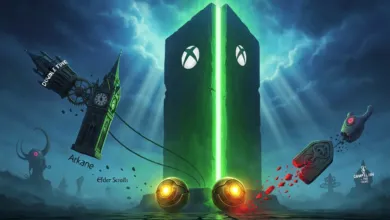
Microsoft’s Struggles With Game Studios Raise Concerns
▼ Summary
– Microsoft laid off 9,000 employees, including significant cuts in its gaming division, marking its fourth major round of layoffs since early 2023.
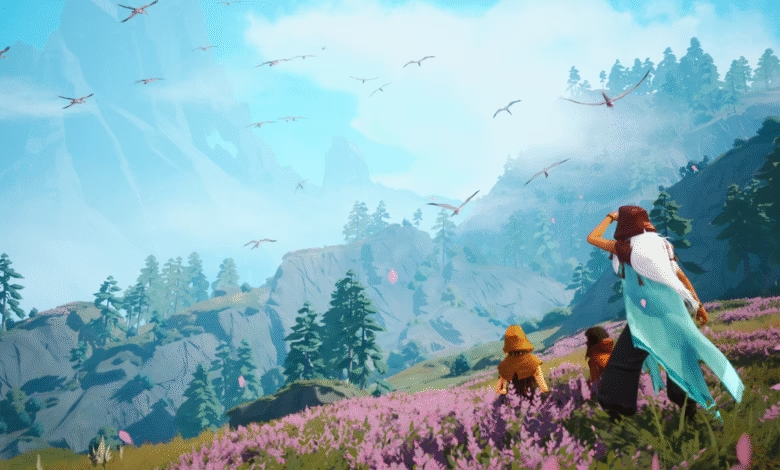
– Two high-profile games, Rare’s *Everwild* and The Initiative’s *Perfect Dark*, were canceled, with The Initiative shutting down entirely after failing to release a game.
– Multiple studios, including Blizzard, Raven Software, Turn 10, and Zenimax Online, were affected, with projects canceled and staff reductions reported across the division.
– Microsoft’s rapid expansion through acquisitions, like Bethesda and Activision Blizzard, led to inefficiencies and redundancies, prompting widespread cuts to streamline operations.
– The company has a history of mismanaging studios, such as Bungie and Lionhead, often stifling creativity or forcing unsuitable projects, resulting in long-term failures.
Microsoft’s gaming division faces mounting challenges as recent layoffs and project cancellations expose deeper issues with studio management. The tech giant’s latest workforce reduction impacted nearly 9,000 employees, marking the fourth major restructuring in its gaming operations since early 2023. This wave saw the abrupt termination of two high-profile titles, Rare’s Everwild and The Initiative’s Perfect Dark reboot, alongside significant cuts at Blizzard, Raven Software, Turn 10, and Zenimax Online Studios.
The fallout extends beyond canceled games. Warcraft Rumble lost active support, while an unannounced MMO from Zenimax and a new shooter from Doom creator John Romero were scrapped. These moves follow Microsoft’s aggressive acquisition strategy, culminating in its $68.7 billion Activision Blizzard purchase. Yet the aftermath reveals troubling patterns: studios struggling under corporate oversight, projects languishing in development limbo, and creative talent departing.
Historical context paints a grim picture. Microsoft’s track record with acquired studios includes missteps like Lionhead’s closure after forcing ill-fitting projects, Rare’s identity crisis post-acquisition, and Bungie’s departure following creative clashes. Even 343 Industries, tasked with stewarding Halo, faltered under unrealistic expectations. Unlike Sony, which balances creative freedom with decisive project management, Microsoft repeatedly struggles to nurture its studios effectively.
The upcoming Fable reboot represents another critical test. Playground Games, once renowned for its Forza Horizon series, now faces scrutiny as key staff depart and the fantasy RPG’s development drags on. Meanwhile, Microsoft’s pivot toward multiplatform publishing, leveraging megafranchises like Call of Duty and Elder Scrolls, raises questions about its commitment to exclusive content.
At its core, these challenges stem from inconsistent leadership and reactive strategies. From Don Mattrick’s retreat from first-party development to Phil Spencer’s acquisition spree, Xbox’s direction has swung between extremes. The result? A bloated portfolio where promising ideas wither, and studios become collateral damage in corporate reshuffles. Without addressing these systemic issues, Microsoft risks squandering its unprecedented resources, and the trust of both developers and players.
(Source: Polygon)