NASA Launches Google’s AI Model Into Orbit
▼ Summary
– NASA JPL achieved the first in-orbit demonstration of a vision-language model by running Google’s Gemma 3 on a Loft Orbital satellite to analyze images from the satellite’s own sensor.
– The NAVI-Orbital system uses a compressed 4-bit version of Gemma 3, requiring only 8 GB of memory, allowing it to run on a low-power Nvidia Jetson Orin AGX module without modifications or fine-tuning.
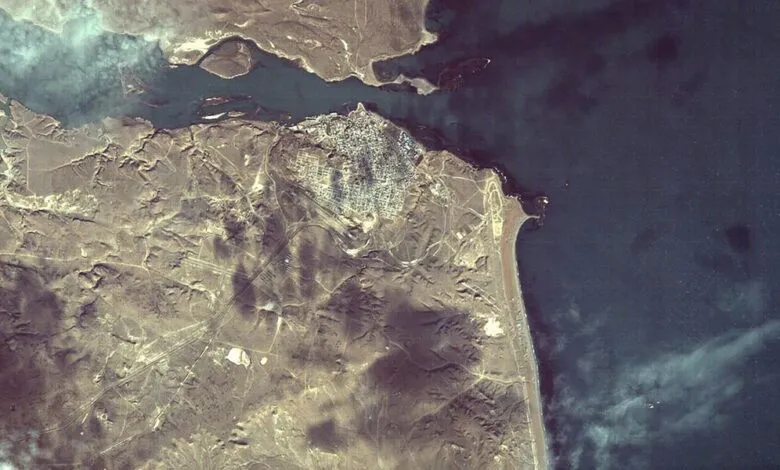
– In live orbit tests over Toulouse and Argentina, Gemma 3 generated text descriptions of images and answered scripted questions about features like commercial areas or natural features.
– The system enables “semantic compression,” where satellites downlink small text summaries instead of large raw image files, overcoming bandwidth limits and reducing wildfire detection delays from up to 90 minutes.
– NAVI-Orbital allows researchers to control spacecraft with natural language prompts, a shift from requiring structured commands, and is walled off from flight software but points toward future AI-assisted astronaut companions.
The debate over whether orbital data centers can realistically host massive large language models (LLMs) requiring thousands of GPUs continues. However, a new experiment proves that smaller, more efficient AI models can deliver significant value beyond Earth’s atmosphere.
NASA’s Jet Propulsion Laboratory has successfully launched Google’s Gemma 3 into orbit, marking the first in-space demonstration of a vision-language model analyzing imagery directly from a satellite’s own sensor. The system, named NAVI-Orbital, processed images captured by Loft Orbital’s YAM-9 satellite using Gemma 3. According to Juan M. Delfa, technical group lead at NASA, this achievement represents more than just image analysis; it signals a fundamental shift in how researchers interact with spacecraft.
“This is a major shift,” Delfa explained. “Now, a scientist can write a prompt, upload it to the spacecraft, and that will be taken into account by the system. It’s different from previous paradigms, where researchers have to write very structured commands that require an operations team and process.”
The NAVI-Orbital framework is an agentic software system developed by Delfa, Taran Cyriac John of NASA JPL, and Andrew W. Herson of Loft Orbital. It uses a LangGraph-based conductor to coordinate operations and deploys a compressed 4-bit version of Google’s Gemma 3 4B, an open-weights LLM, to generate plain-text image descriptions.
Before launch, NAVI-Orbital achieved 88 percent accuracy when classifying a benchmark dataset of 7,960 images. Remarkably, Gemma 3 accomplished this without any training or fine-tuning on the specific dataset or categories. It is the same base model available for download on Hugging Face and usable on a standard laptop. Once in orbit, NASA conducted two live capture tests over Toulouse, France, and the coast of Argentina. Gemma 3 produced text descriptions of each image and responded to scripted queries about features like commercial areas, residential zones, and natural landmarks.
The image analysis occurred onboard YAM-9, which houses a compute cluster of radiation-hardened processors,FPGAs, CPUs, and GPUs,to handle multiple customer payloads. Solar panels supply between 150 and 500 watts, depending on the satellite’s position. For the live experiment, Gemma 3 ran on Nvidia’s Jetson Orin AGX, a compact compute module common in robotics and AI. The 4-bit, 4-billion-parameter model requires only 8 gigabytes of memory, making it viable for low-power devices. “It conveys the message of how lightweight it is. You can run it in a tiny, tiny computer,” Delfa noted.
Paul Lasserre, general manager at Loft Orbital, believes vision-capable LLMs could deliver a “paradigm shift” for orbital operations. Contrary to popular depictions in spy movies, most satellites cannot stream high-fidelity images or video in real time. Bandwidth is scarce, and satellites typically relay data to ground stations only at scheduled intervals based on their orbit.
Lasserre sees AI addressing this bottleneck through “semantic compression.” Instead of transmitting large volumes of raw image data, a satellite can downlink a text summary of noteworthy findings. “It doesn’t matter if the link is slow, because you’re downlinking dozens of kilobytes instead of dozens or hundreds of megabytes,” he said. “It lets you use your satellite in a tactical way, which until now was only in Hollywood movies.”
Delfa illustrated the potential with a real-world scenario: wildfire detection. Current satellites can identify wildfires, but bandwidth and processing limitations often delay results by up to 90 minutes. A satellite capable of analyzing imagery in orbit and sending a plain-text warning could eliminate that lag entirely.
Beyond faster insights, NAVI-Orbital points toward a transformative change in spacecraft control. Delfa emphasized that this is the “major shift” he flagged. The system is deliberately isolated from flight software; it reads images and produces descriptions, with decision-making confined to image analysis. However, the interface itself is novel. Repurposing the system to search for different targets,like wildfires,requires only editing a text prompt. There is no need to rewrite or revalidate onboard software, nor to train and deploy a new AI model, as was often necessary with earlier image-classification systems.
Looking further ahead, Delfa envisions this capability extending beyond uncrewed satellites. “We thought, astronauts have a lot of limitations in the spacesuit in terms of dexterity, so we conceived this idea of having NAVI as a companion to the astronaut, to allow interaction via natural language,” he said. “This is the concept that we definitely want to push forward.”
Substantial research remains before such a vision becomes reality. But the NAVI-Orbital demonstration has already proven two critical points: deploying a large language model in space is feasible, and controlling it with natural language prompts is possible.
(Source: Ieee.org)