Meta’s Zuckerberg says AI cloud business ‘makes sense’

▼ Summary
– Mark Zuckerberg confirmed Meta is exploring an AI cloud business to sell excess compute capacity, directly competing with AWS, Azure, and Google Cloud.
– The move aims to monetize Meta’s over $100 billion AI infrastructure spending, turning a cost center into a revenue stream.
– Neocloud specialists like CoreWeave, Nebius, and IREN saw their stocks drop on the news, despite Meta being one of their largest customers.
– Meta has advantages in custom silicon and scale but lacks experience in the service-oriented, lower-margin cloud business.
– The plan is still in early exploration, but Meta’s massive AI compute resources make selling idle capacity a logical financial incentive.
Mark Zuckerberg has publicly confirmed that Meta is exploring an AI cloud business, stating that selling computing power “makes sense” in a recent interview with Bloomberg. This endorsement puts the CEO’s weight behind a plan first reported earlier this month, which described a venture tentatively called Meta Compute that would rent out the company’s spare AI capacity.
The economic logic is clear. Meta is spending well over $100 billion on AI infrastructure this year alone, and monetizing excess compute would transform a massive cost center into a revenue stream. It would also push the company into unfamiliar territory. Unlike Amazon, Microsoft, and Google, Meta has never sold cloud services to external customers. This move would drop it into a market that Goldman Sachs projects could reach $2 trillion by 2030.
The plan could mirror competitors’ offerings. Meta might provide access to its own AI models, similar to how AWS operates through Bedrock, along with raw compute capacity in the style of neocloud providers. The company reportedly considered hosting its own models, including the closed-weight Muse Spark, on the service.
The market reaction was split. Meta’s shares jumped about 9% on the initial report, while neocloud specialists CoreWeave, Nebius, and IREN fell by double digits. The threat to them is obvious, since renting out GPUs is their core business. A hyperscale entrant with Meta’s balance sheet changes the competitive dynamics overnight.
There is a notable irony here. Meta remains one of the largest customers for these same firms, having committed some $35 billion to CoreWeave alone to buy the very capacity it now wants to resell.
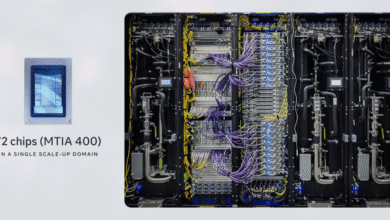
Meta’s edge rests on custom silicon and vast scale. It has put its own MTIA chips into production and extended a Broadcom chip deal through 2029, giving it control over its compute stack. But selling that compute is a different challenge. Cloud is a service business built on contracts, support, and reliability guarantees. Wall Street has already flagged that it carries thinner margins than Meta’s advertising cash machine.
The neoclouds it would challenge, from CoreWeave to fast-growing upstarts like Nscale, have spent years learning that trade. Meta would be starting closer to scratch than its infrastructure suggests. For now, “makes sense” is a long way from a launched product. But a company sitting on tens of gigawatts of AI compute has every incentive to make idle silicon pay, and Zuckerberg just said so out loud.
(Source: The Next Web)