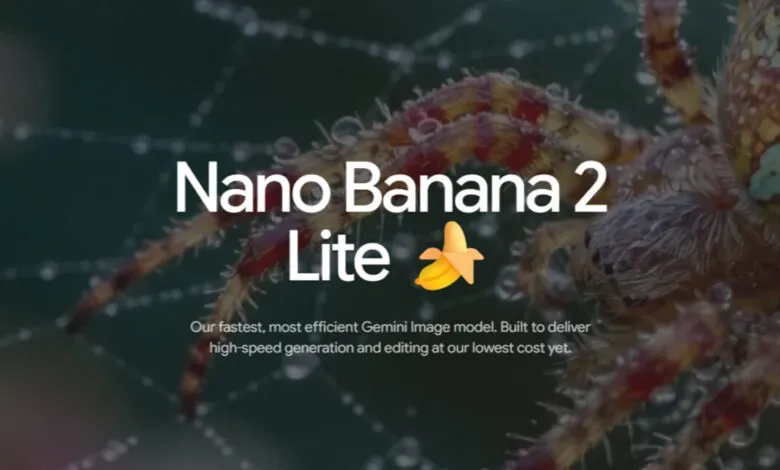
Google unveils fastest, cheapest image model: Nano Banana 2 Lite
▼ Summary
– Google DeepMind’s Nano Banana 2 Lite (Gemini 3.1 Flash Lite Image) aims to balance quality and speed, creating images much faster than Google’s beefier models.
– It is designed for rapid prototyping and idea exploration where quality is less critical, though Google shows examples of it approaching the quality of its other models.
– User Elo scores from Arena.ai rate Nano Banana 2 Lite outputs nearly as high as the non-Lite versions.
– The model struggles with small text, infographics with incorrect data, and poor consistency in characters or people across iterations.
Google DeepMind has officially launched Nano Banana 2 Lite, which it describes as its fastest and most affordable image-generation model to date. While the current AI landscape is crowded with image tools, many of the high-quality options remain slow and costly. According to Google, this new model strikes an optimal balance between speed and output quality, and it is now live across the Google ecosystem. The company emphasizes that Nano Banana 2 Lite can produce images in a fraction of the time required by its more powerful counterparts.
Technically named Gemini 3.1 Flash Lite Image, this model is part of the broader Gemini 3.1 family. Google positions it as an ideal tool for rapid prototyping and idea exploration, where absolute fidelity may not be the top priority. Still, the company has released comparison examples that suggest Nano Banana 2 Lite can come surprisingly close to the quality of its non-Lite siblings.
To back up these claims, Google points to Elo scores from Arena.ai, which indicate that users rate the Lite version’s outputs nearly as highly as those from the full-size models. However, the company is upfront about the model’s limitations. Nano Banana 2 Lite tends to struggle with small text and infographics, which may contain inaccuracies. It also shows weaker consistency when generating characters or people across multiple iterations, meaning closer inspection can still reveal the telltale flaws of AI-generated imagery.
(Source: Ars Technica)