Google Ads revamps target-based bidding for limited-budget campaigns
▼ Summary
– Google is updating target-based bid strategies (like Target CPA) to align more closely with configured targets when campaigns are budget-constrained, effective August 17.
– A Bid Target Adjustment Tool will be available on July 6, allowing advertisers to review and modify bidding targets before the changes take effect.
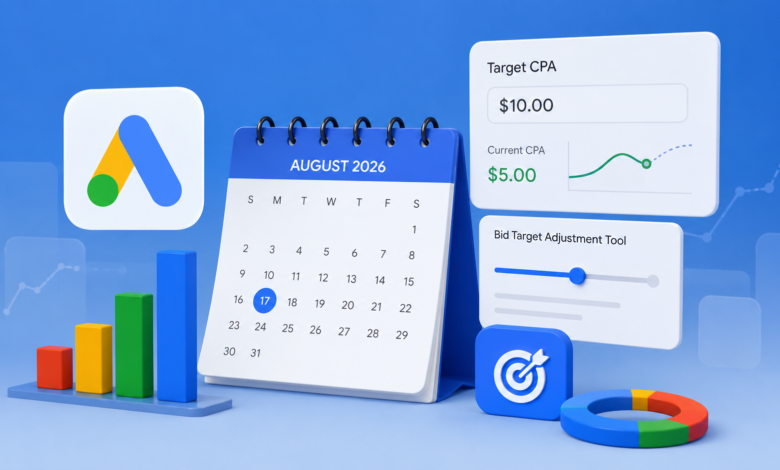
– Campaigns that have been outperforming their targets (e.g., a $5 CPA on a $10 target) may see performance shift toward the set target unless the advertiser updates it.
– The update aims to reduce volatility and create more predictable performance when advertisers adjust campaign budgets.
– Google advises advertisers to review campaigns using target-based bidding and consider lowering targets to maintain current performance levels.
Google is preparing to roll out a significant update to how its target-based bid strategies function when campaigns face budget constraints, with the goal of delivering more predictable performance that aligns with advertiser goals regardless of spending fluctuations.
The change takes effect on August 17th, and a new Bid Target Adjustment Tool will be available starting July 6th to help advertisers prepare.
What’s changing. According to Google, campaigns using strategies like Target CPA will now adhere more strictly to their configured targets, even when budgets are limited. Previously, such campaigns might have deviated from targets to optimize for volume within a tight budget. Now, the system will prioritize hitting the specified goal.
To ease the transition, Google is introducing the Bid Target Adjustment Tool, which lets advertisers review and modify bidding targets before the August enforcement date.
Why this matters. Advertisers whose campaigns have consistently outperformed their targets should pay close attention. After the update, a campaign with a Target CPA of $10 that has been achieving a $5 CPA may see its performance drift upward toward the $10 goal. If the target hasn’t been reviewed recently, this could result in higher costs per conversion or a shift away from historical efficiency.
The Bid Target Adjustment Tool offers a window to proactively update goals. For advertisers who fail to adjust, the update could mean paying more per acquisition or seeing performance move toward Google’s target rather than the campaign’s past results.
Why Google is making the move. The company says the update is designed to reduce volatility and create more consistent performance when advertisers increase, decrease, or otherwise adjust campaign budgets. By tightening the link between bidding targets and actual delivery, Google aims to make outcomes more predictable.
The new tool is intended to help advertisers align their bidding targets with actual business objectives before enforcement begins.
What advertisers should do. Google recommends reviewing all campaigns using target-based bidding strategies and evaluating whether existing targets still reflect desired outcomes. Advertisers will receive in-account notifications ahead of the rollout and can use the Bid Target Adjustment Tool to identify campaigns that may be impacted.
The bigger picture. This update could have major implications for advertisers whose campaigns are consistently beating their targets. In some cases, maintaining current performance levels may require lowering target settings rather than leaving them unchanged.
The bottom line: Google is tightening the relationship between target-based bidding goals and actual campaign performance. This makes it more important than ever for advertisers to regularly review and update bidding targets as business conditions evolve.
(Source: Search Engine Land)