Inside a 10Gbit SFP+ Network Adapter: Autopsy Photos
▼ Summary
– Affordable 10 Gbit SFP+ modules used over Cat-5e copper began dropping frames due to overheating, reaching 40°C while idle and causing PCB discoloration.
– The modules contain a Marvell Alaska X PHY with a metal heatsink, and power consumption can reach around 2.5 watts.
– An 8051-based MCU in the modules identifies them as 30-meter multi-mode fiber modules for compatibility purposes.
– The modules were replaced with Wiitek-branded ones using a newer chipset, drawing up to 1.5 watts and running at 30°C idle; active airflow is recommended to prevent overheating.
– The final solution was to run single-mode fiber to the room with cooler SFP+ modules, considered optimal if cable ducts have space.
With 10 Gbit SFP+ modules becoming increasingly common in home networks, many enthusiasts are discovering that these tiny transceivers can run dangerously hot. One user, operating under the handle [This Does Not Compute], experienced frame drops after a period of use with his SFP+ modules connected over Cat-5e copper to a nearby NAS. Upon inspection, the modules registered a concerning 40°C at idle, and an internal teardown revealed significant heat-related discoloration.
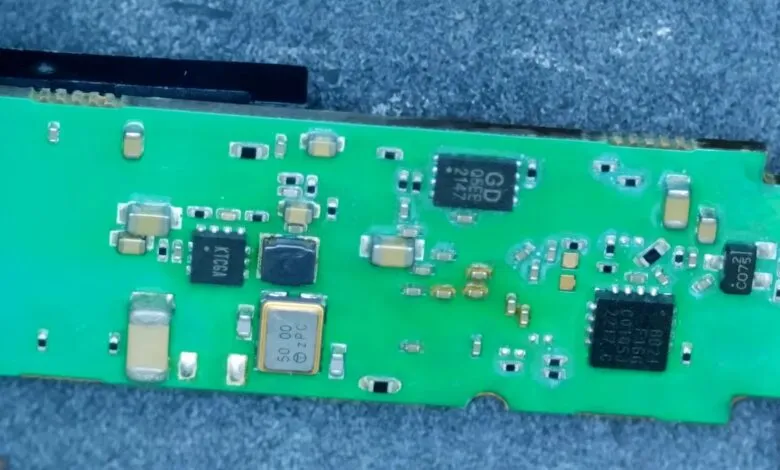
At the heart of these modules lies the Marvell Alaska X 88X3310/40P PHY, a chip marketed as low-power but still requiring a metal heatsink glued directly to the IC. This heatsink is thermally coupled to the module’s metal casing. The opposite side of the PCB showed severe browning, a clear sign of prolonged thermal stress. Further investigation indicated that power draw can climb to approximately 2.5 watts during operation.
The teardown also uncovered a hidden layer of intelligence: an 8051-based microcontroller tasked with identifying the module to the switch as a 30-meter multi-mode fiber module. This feature appears to be a compatibility trick, likely used in the FS-branded SFP+ modules examined.
To solve the overheating issue, the original modules were swapped for Wiitek-branded units that claim a maximum power consumption of just 1.5 watts, thanks to a newer chipset. Even so, these replacements still idle at 30°C. Community comments on the video emphasize that active airflow is critical for high-speed networking gear, as these components can easily overheat and even become brittle over time.
The ultimate fix for the video’s networking problems was to switch to single-mode fiber and matching SFP+ modules, which run significantly cooler. If your cable ducts have room for it, that approach appears to be the most reliable solution for avoiding thermal issues in high-speed networks.
(Source: Hackaday)