Senate vote prompts Trump admin to save ocean monitoring
▼ Summary
– The federal government abruptly announced in May it would dismantle the Ocean Observatories Initiative (OOI), a $350 million ocean monitoring network, without giving a reason.
– The decision to shut down the OOI, which tracks climate change, faced widespread opposition because it also provides data for weather forecasting and fisheries management.
– The government will reverse its decision and keep the OOI operational, though the extent of damage to the system during the shutdown period remains unknown.
– An official government statement is not yet available, but reports from The New York Times and a statement from Representative Zoe Lofgren confirm the reversal.
– The OOI is a federally funded resource providing ocean data on currents, salinity, temperatures, and tectonic activity to researchers, planners, and companies.
In May, the federal government abruptly announced it would dismantle a network of ocean monitoring systems it had spent more than $350 million building. No explanation accompanied the decision to shut down the Ocean Observatories Initiative (OOI), but critics quickly zeroed in on the network’s role in tracking climate change as a likely motive.
The OOI, however, also supplies critical data for weather forecasting and fisheries management, which generated broad opposition. Now, that opposition appears to have succeeded. The government is set to reverse its decision, though the extent of damage the OOI sustained during the month-long disruption remains unclear.
No formal statement has yet been released by the federal government. But The New York Times reports that the reversal will be announced later today. Ars also received a statement from Zoe Lofgren, the ranking Democrat on the House Science Committee, confirming the decision has been made.
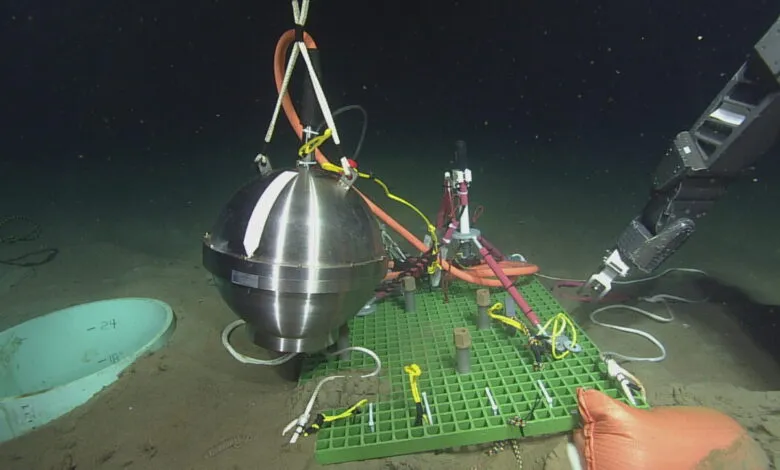
The OOI is a federally funded resource that delivers ocean data to academic researchers, government planners, and private companies. The system includes arrays of monitoring equipment in multiple locations across the Atlantic and Pacific Oceans. These arrays track variables such as currents, salinity, chemical levels, temperatures, and tectonic activity. The data-gathering platform currently hosts more than 100 individual entries displaying the information the system collects.
(Source: Ars Technica)