Apple’s big Siri update arrives, but the real test is just starting

▼ Summary
– Apple announced Siri AI, a major revamp launching in beta later this year, which will operate apps, analyze screen content, and use personal context for responses.
– Analysts expressed skepticism, with Barclays calling Apple a “laggard in AI” lacking killer apps and a clear monetization strategy, while Morgan Stanley saw “clearer paths to monetizing AI” but called it a “marathon.”
– Most iPhones currently in use lack the computing power to support Siri AI features, and more than 1.3 billion iPhones cannot run two key Siri functions requiring top-tier models.
– Some Apple Intelligence features, such as higher image generation limits and smart home camera footage descriptions, will require an iCloud+ subscription.
– Siri AI focuses on everyday tasks, like pulling a friend’s address from a text, contrasting with business-targeted AI from ChatGPT and Claude, and may lock users into the iPhone ecosystem.
Apple has officially unveiled its long-awaited Siri overhaul, marking a significant moment for the company’s push into artificial intelligence. But industry observers caution that the real challenge lies ahead.
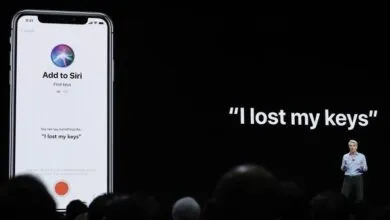
During a Monday event, Apple introduced Siri AI, a comprehensive upgrade designed to elevate its nearly 15-year-old virtual assistant into direct competition with OpenAI’s ChatGPT and Google’s Gemini. The revamped assistant, set to launch in beta later this year, will be capable of controlling apps, analyzing content displayed on an iPhone’s screen to answer questions, and integrating personal context into its responses, according to the company.
For the past couple of years, Apple has faced mounting pressure to demonstrate a credible AI strategy after falling behind rivals. Now, the company must prove it can leverage its assistant to fuel iPhone upgrades, expand services revenue, and enable entirely new product categories. Yet the most pressing question for investors may be whether Apple , a company renowned for transforming emerging technologies into mainstream hits , can persuade users to pay for AI.
“Updates felt more evolutionary vs revolutionary, and we continue to view (Apple) as a laggard in AI with no killer apps and a questionable monetization strategy,” Barclays analysts wrote in a note following the event.
Apple did not immediately respond to CNN’s request for comment on its monetization plans for Siri AI and Apple Intelligence.
Apple is not alone in facing doubts about its AI ambitions. Both OpenAI and Anthropic, which are nearing public offerings, have encountered skepticism over whether their revenue streams justify their enormous valuations and investment levels.
Apple has been somewhat insulated from such concerns because the bulk of its revenue comes from iPhone sales, which have remained robust. The company posted record revenue for the March quarter, largely driven by demand for the iPhone 17.
Still, analysts are watching for evidence that Apple’s AI efforts will translate into more iPhone upgrades, iCloud+ subscriptions, or both. Morgan Stanley analysts noted that Apple’s announcements offered “clearer paths to monetizing AI,” though they described the company’s AI progress as a “marathon, not a sprint.”
Siri AI and other Apple Intelligence tools are compatible with devices as old as the iPhone 15 Pro, launched in 2023. However, more than half of all iPhones currently in use lack the hardware to support Apple Intelligence, according to Bloomberg Intelligence analyst Anurag Rana. Even if those users upgrade this fall, they are likely to be motivated by longer battery life or faster performance rather than AI features.
“I don’t think (AI is) driving upgrade cycles in the way that manufacturers were hoping that it would,” Paul Schell, a senior analyst covering AI for ABI Research, told CNN.
Nevertheless, this week’s announcements offered a glimpse of how AI features could steer users toward pricier iPhones and subscription plans. Certain Siri AI capabilities , such as more accurate voice dictation and the ability to customize its voice for greater expressiveness , are exclusive to Apple’s top-tier models: the iPhone Air, iPhone 17 Pro, or iPhone 17 Pro Max. Morgan Stanley estimates that more than 1.3 billion active iPhones lack the computing power or memory to run those two features.
Some Apple Intelligence functions, including higher limits on image generation and descriptions of footage from HomeKit-compatible smart home cameras, will require an iCloud+ subscription.
Apple is positioning Siri to evolve from a simple question-answering tool into a central component of the iPhone’s software ecosystem. Google and Samsung have pursued a similar strategy by embedding Gemini into Android in recent years.
The use cases Apple demonstrated for Siri AI focus on everyday tasks rather than office productivity , a clear departure from ChatGPT and Anthropic’s Claude, which target business users.
“I’m looking for something, I’m replying to a text message, I’m trying to find the address of the restaurant that my friend mentioned last week , those kind of things,” said Carolina Milanesi, president and principal research analyst at Creative Strategies. “I’m not saying that people will use Siri for productivity, but that’s not really what Apple cares about.”
During Monday’s event, Apple showed how Siri could reference content from text messages, allowing users to ask questions like, “Where’s Jeff’s new place?” to pull a friend’s updated address from a recent message. Siri can also interpret what’s displayed on an iPhone’s screen. In one demonstration, Apple Vice President of Siri engineering Mike Rockwell asked for directions to a landmark visible in a photo, with a stop at his friend’s house along the way.
Apple’s current offerings may not be enough to convince users to buy a $1,000 iPhone or subscribe to a more expensive iCloud plan just yet. But in the near term, they could help Apple retain existing iPhone users.
“It’s going to be difficult for a user to migrate from iOS to Android, with the Siri AI model understanding you, and now your personal context, and all of the history,” said Nabila Popal, a senior director at the International Data Corporation covering smartphones. “You’re going to leave that behind when you switch completely.”
(Source: KSL.com)