How SEOs Are Adapting to an AI-First World
▼ Summary
– The supply of search talent now exceeds demand due to AI, the economy, and commoditized SEO, leading to more layoffs and fewer job openings.
– AI is commoditizing the production of SEO recommendations, shifting value from generating ideas to driving implementation and measurable business outcomes.
– The most valuable SEO skills are now prioritization, testing, communication, influence, and judgment, as AI struggles with these human-centric abilities.
– Career progression now depends on layering business acumen and leadership over SEO expertise, since AI reduces the value of knowledge alone.
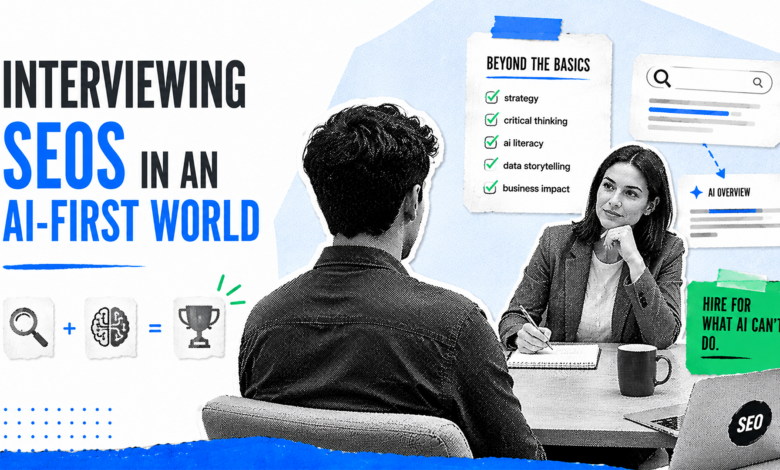
– Hiring in 2026 should focus on a candidate’s ability to turn knowledge into outcomes, demonstrated by handling disagreement, failed tests, stalled projects, and AI errors.
The search industry is facing a shift unlike anything most professionals have encountered before. For the first time in over 15 years, the supply of search talent now exceeds the demand. Whether you attribute this to artificial intelligence, economic pressures, or years of checkbox-style SEO becoming a commodity, the result is unmistakable: layoffs are rising, job openings are shrinking, and competition for roles has never been fiercer.
The hard truth is that many of the skills that once defined a valuable SEO are now easier to automate, outsource, or replicate with AI. So let’s get real about why this is happening, which skills are becoming table stakes, and what employers should prioritize when hiring SEO talent in 2026.
The First SEO Roles AI Targets
A common myth is that AI is coming for SEO jobs. I don’t think that’s accurate. What I do see is AI reshaping which skills command a premium. Historically, SEO work centered on gathering information and producing recommendations: technical audits, content briefs, keyword clustering, schema markup, metadata tweaks, and competitor analyses. These tasks required time, experience, and effort.
They still matter, but the effort required is plummeting. An SEO can now use AI to generate a first-pass audit or optimization suggestion in minutes. What once took hours now takes seconds. That doesn’t make the output worthless. It just shifts where the value lies.
For years, organizations treated recommendations as the final deliverable. The audit was the deliverable. The roadmap was the deliverable. The deck was the deliverable. But recommendations were never the end goal. They only create value when they lead to prioritization, implementation, and measurable business outcomes. AI excels at idea generation but does almost nothing to solve the implementation problem.
That’s why the first SEO jobs AI will replace are those focused solely on producing recommendations rather than driving outcomes. As the cost of generating ideas approaches zero, employers will naturally pay more for people who can decide which recommendations matter and actually get them done. In short, AI is commoditizing parts of SEO execution, but it is not commoditizing judgment.
What AI Still Can’t Do Well
As AI gets better at generating recommendations, the value of SEO talent shifts to areas like prioritization, testing, communication, influence, and judgment. These aren’t new skills, but they are quickly becoming the primary differentiators. Most organizations don’t lack ideas; they lack alignment, execution, and good decision-making.
Consider judgment. A few weeks ago, I disagreed with Gemini on a topic I know inside out. The answer sounded reasonable, the explanation was polished, but it was wrong. As AI becomes more capable, the ability to spot when it is confidently wrong becomes a skill in itself. The future SEO isn’t the person who generates the most recommendations. It’s the person who knows which ones actually matter.
A New Career Framework for SEOs
For years, career progression was simple: learn more SEO, get promoted. Learn technical SEO, get promoted. Master content strategy, get promoted. Master analytics, get promoted. Those skills still matter, but AI is rapidly devaluing knowledge for its own sake. The ability to produce SEO recommendations is becoming more accessible every day.
That doesn’t mean expertise is obsolete. It means the skills layered on top of that expertise matter more. Today’s most valuable search professionals understand search, AI, and how businesses operate. Most importantly, they know how to align people, priorities, and resources around a common objective. The higher you climb in an organization, the less your success depends on identifying problems and the more it depends on solving them. AI scales execution. People scale vision.
What I’d Look for When Hiring in 2026
If I were hiring an SEO today, I wouldn’t spend much time quizzing them on canonical tags, title tags, or XML sitemaps. Not because those topics are unimportant, but because I can quickly gauge whether someone knows the fundamentals. Instead, I’d want to understand how that person operates when things get messy.
I’d ask them to share a recommendation nobody agreed with. Years ago, I argued that H1 tags provided virtually no ranking benefit. People laughed. Some openly disagreed. Eventually, John Mueller echoed a similar position, and Bill Slawski had been discussing it for years. I don’t care whether the candidate was right. I care whether they had the conviction to challenge assumptions and the communication skills to navigate disagreement.
I’d ask about a failed test. Every experienced SEO has watched a promising initiative die between recommendation and implementation. The difference is what happened next. Did they move on to the next project, or did they find a way to remove blockers and maintain momentum?
I’d also ask where AI gave them bad advice. The common theme across all these questions is simple: I’m not looking for someone who knows SEO. I’m looking for someone who can turn SEO knowledge into outcomes. The easiest part of SEO has always been knowing what to do. The hard part is getting it done and generating tangible results. AI won’t replace SEOs, but the lazy ones are toast.
(Source: Search Engine Land)