This Zurich startup’s 4-armed robot saves $140,000 per astronaut hour
▼ Summary
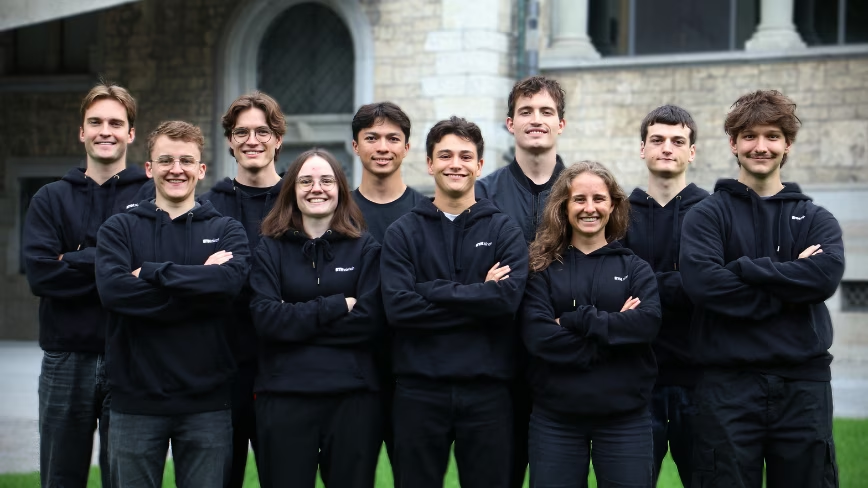
– Orbit Robotics, a Zurich-based startup, unveiled Helios, a four-armed robot designed for work inside space stations.
– In microgravity, legs are useless, so Helios replaces them with two extra arms for mobility and working.
– Two of the robot’s arms anchor it to the station interior while the other two perform tasks.
A startup based in Zurich is making waves in space technology with a four-armed robot designed to operate inside orbital stations. Orbit Robotics has introduced Helios, a machine that rethinks how automation can function in microgravity environments. Since legs are useless in space, Helios replaces them with two additional arms, which serve as both mobility tools and working appendages. The concept is straightforward: while two arms keep the robot anchored to the station’s interior, the other two carry out tasks typically handled by astronauts.
The financial implications are significant. According to the company, each hour an astronaut spends working inside a space station costs approximately $140,000. By deploying Helios for routine or hazardous jobs, station operators can reduce crew workload and cut operational expenses dramatically. The robot can handle inspections, maintenance, and even experiments, freeing up human astronauts for higher-value activities.
Orbit Robotics designed Helios with a focus on adaptability and safety. Its gripping system is engineered to latch onto handrails and equipment mounts found throughout modern space stations. The robot can also switch between anchoring and working modes without human intervention, making it a self-sufficient assistant for orbital crews.
The startup’s announcement comes as space agencies and private companies push for greater automation in low Earth orbit. With the International Space Station aging and new commercial stations on the horizon, robots like Helios could become essential components of daily operations. By replacing expensive astronaut labor with a durable, multi-armed machine, Orbit Robotics is betting that the future of space work is smarter, cheaper, and more efficient.
(Source: The Next Web)