Iran demands tech giants pay fees for Strait of Hormuz cables
▼ Summary
– Iran announced it will impose fees on US tech companies for using undersea Internet cables passing through the Strait of Hormuz.
– Iranian state media proposed charging license fees to Meta, Google, Amazon, and Microsoft, and claimed Iran has sole rights to repair the cables.
– The Strait of Hormuz is a digital chokepoint; the threat may accelerate efforts by Big Tech and Gulf countries to find alternative cable routes.
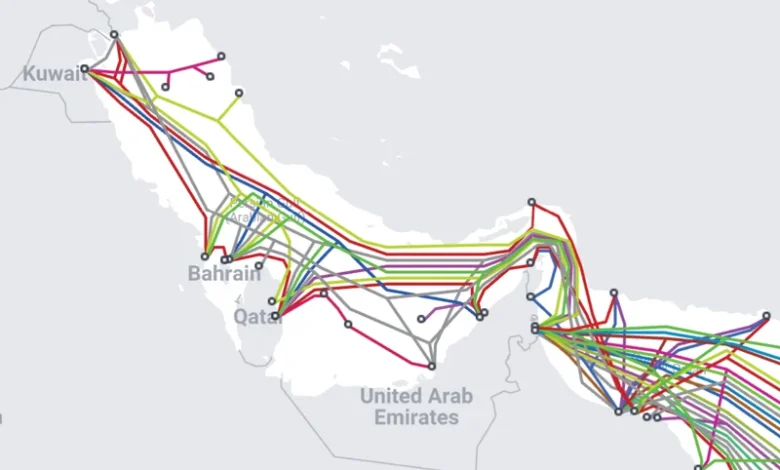
– Most cables in the region pass through Omani waters, but the FALCON and Gulf Bridge cables run through Iranian territorial waters at certain points.
– War has already halted cable projects and repairs in the region, and Iranian state media issued veiled threats warning of damage to cables.
Iran has declared that major U.S. technology companies must pay fees for using undersea Internet cables passing beneath the contested Strait of Hormuz shipping lanes. The ongoing conflict has already stalled several projects and forced a halt to cable repairs in the region. This latest threat from Tehran could push Big Tech and Gulf states to accelerate efforts in finding alternative routes that bypass the Strait of Hormuz’s digital chokepoint.
The assertion of Iranian authority over the Strait was outlined in a brief statement from Ebrahim Zolfaghari, a spokesperson for Iran’s military and the Islamic Revolutionary Guard Corps. In a May 9 post, Zolfaghari wrote, “We will impose fees on internet cables.” It remains unclear how Iran might enforce such fees or regulate cable projects, given that most routes pass through waters controlled by Oman.
However, Iranian state-linked media outlets Tasnim and Fars have offered more detailed proposals, as reported by The Guardian. One Tasnim plan specifically describes charging license fees to U. S. tech giants,naming Meta, Google, Amazon, and Microsoft,for cable usage. The plan also asserts that Iran alone holds the exclusive right to repair and maintain the subsea cables in the region.
More than 99 percent of global Internet traffic travels through the worldwide network of undersea cables that connect continents and islands. The major active cables running through the Strait of Hormuz primarily serve Gulf countries. According to TeleGeography, a telecommunications research firm, these include the Asia Africa Europe-1, FALCON, and the Gulf Bridge International Cable System.
Alan Mauldin, a research director for TeleGeography, told CNN that the FALCON and Gulf Bridge cables pass through Iranian territorial waters at certain points. CNN also reported that Iranian state media outlets have “issued veiled threats warning of damage to cables,” further escalating tensions over the region’s digital infrastructure.
(Source: Ars Technica)