AI Era Deepens Cyber Insecurity
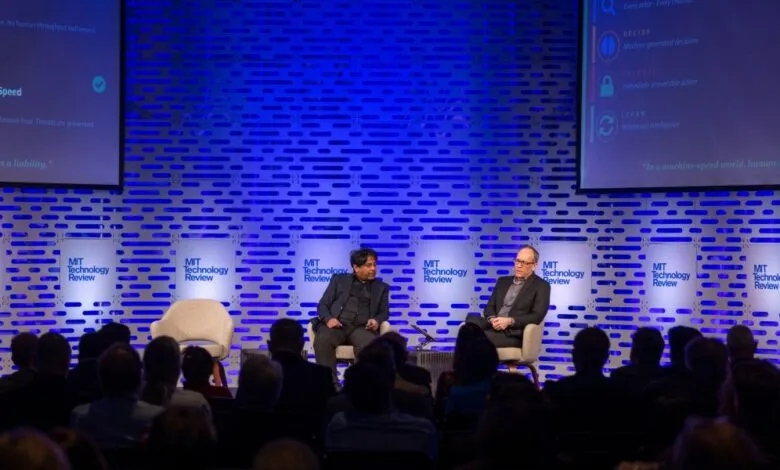
▼ Summary
– Tarique Mustafa is the Cofounder, CEO, and CTO of two AI-powered cybersecurity companies, GCCybersecurity and Chorology.
– He has over 20 years of technical leadership experience, holding senior roles at companies including Symantec and DHL Airways IT.
– At GCCybersecurity, he architected AI algorithms for the company’s 4th and 5th generation autonomous data leak protection platform.
– He holds multiple USPTO patents and has authored research publications on information security, software architecture, and artificial intelligence.
– He received a Rotary International Scholarship for doctoral studies at USC and holds master’s degrees in engineering and computer science from USC.
The rise of artificial intelligence has not only revolutionized productivity and innovation but has also deepened the global cyber insecurity crisis. As AI tools become more accessible and powerful, both attackers and defenders are racing to adapt, but the balance of power is shifting in alarming ways.
Tarique Mustafa, Cofounder, CEO, and CTO of GC Cybersecurity and its data compliance spinout Chorology, Inc., has spent over two decades at the forefront of this battle. A recognized authority in knowledge representation, inference calculus, and AI planning, Mustafa has dedicated his career to developing autonomously collaborative AI systems that tackle ultra-high-scale challenges in data security, compliance, and data leak prevention. His work, backed by multiple USPTO patents, positions him as a key voice in understanding how AI reshapes the cybersecurity landscape.
At GCCybersecurity, Mustafa architected the core AI algorithms behind the company’s 4th and 5th generation fully autonomous data leak protection and exfiltration platform. This technology represents one of the most advanced defenses against modern data theft. Before founding GCCybersecurity and Chorology, he served as founding CEO/CTO of NexTier Networks, a Silicon Valley firm recognized for its award-winning Data Leak Prevention solutions. His technical leadership spans senior roles at Symantec, DHL Airways IT, MCI WorldCom, EDS, Andes Networks, and Nevis Networks, where he built industry-leading security products using next-generation security monitoring, event correlation, IDS/IPS, and SSL/IPSec technologies.
Mustafa’s expertise is deeply rooted in both theory and practice. He holds multiple approved and pending patents with the USPTO and has authored numerous research publications on information security, data security, computer and network security, software architecture, database technologies, and artificial intelligence. His academic credentials include a prestigious Rotary International Scholarship for doctoral studies in Computer Science at the University of Southern California (USC), along with master’s degrees in engineering and computer science from USC, and a bachelor’s degree in mechanical engineering from NED University of Engineering & Technology.
The core challenge, according to Mustafa, is that AI empowers adversaries with unprecedented speed and sophistication. Attackers can now automate reconnaissance, craft highly convincing phishing campaigns, and adapt their tactics in real time. Meanwhile, defenders must rely on equally advanced AI to detect and neutralize these threats before data is exfiltrated. The AI era has made the stakes higher than ever, turning cyber insecurity into a persistent, escalating threat that demands continuous innovation and vigilance.
(Source: MIT Technology Review)