Alexis Ohanian’s Immigration Stance Stuns Washington
▼ Summary
– Alexis Ohanian criticized Trump administration immigration policy at a Washington event, calling for a pathway to citizenship while sharing his family’s immigrant story.
– Tim Cook maintained a close, transactional relationship with Donald Trump, who claimed to have provided Apple with several significant policy favors.
– The article notes a cyclical pattern where politicians gain and then lose influence online, using Dan Crenshaw’s rise and fall as a primary example.
– Dan Crenshaw’s political downfall was partly attributed to his inability to ignore online lies and the changing moderation policies on social media platforms.
– MAGA influencer culture is described as a “brotherhood of shitposters” that can mobilize quickly to attack political figures online.
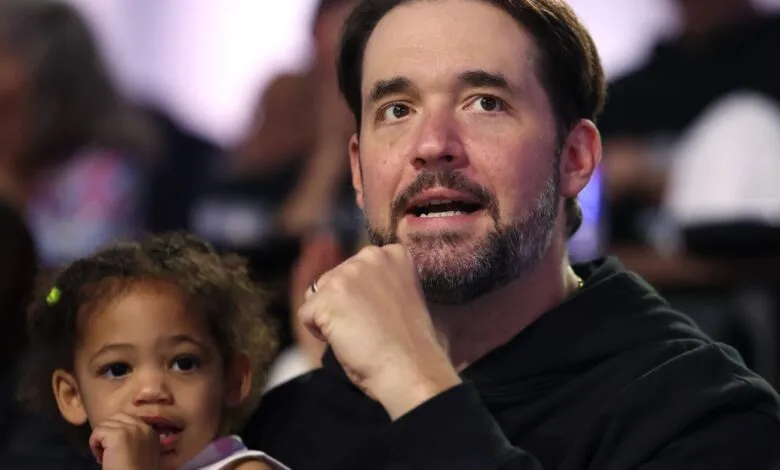
In a room filled with Washington power brokers, a prominent tech founder recently delivered a message that cut through the usual deference. Alexis Ohanian, the venture capitalist and Reddit co-founder, used a hall of fame induction ceremony to make a personal and pointed case for immigration reform. His audience included Michael Kratsios, a senior Trump administration official, making the moment particularly striking amidst a climate where many tech leaders have carefully avoided criticizing the White House.
Ohanian’s remarks wove together his own family’s history. He noted the upcoming remembrance of the Armenian genocide, from which his grandparents fled to find refuge in America. He then revealed that his mother once overstayed her visa for several years before obtaining a green card and citizenship. “Thankfully, ICE did not round her up,” he stated. Connecting this directly to his professional legacy, Ohanian argued that the success of companies like Reddit, which contributed valuable data to train large language models, is itself a product of the immigrant experience. He called for secure borders alongside a pathway to citizenship, urging the room not to “demonize” those seeking to earn their place in America.
The setting was the Consumer Technology Association’s Digital Patriots Dinner, an event typically focused on celebrating industry allies. Other honorees included bipartisan members of Congress like Reps. Jay Obernolte and Ted Lieu, who co-chair the House AI Task Force. Ohanian’s decision to voice these views directly to administration figures, rather than just on social media, highlighted a rare break from the tech sector’s often cautious political engagement.
This contrast was underscored elsewhere as former President Trump reminisced about his relationship with another tech titan. In a Truth Social post, Trump recounted how Apple CEO Tim Cook would call him for assistance, boasting about the “BIG HELPS” he provided. This dynamic illustrates the transactional relationships that often define tech policy, with Trump citing a tariff exemption granted after Apple pledged major U. S. manufacturing investments. With Cook transitioning to Apple’s executive chairman, a role that includes engaging with global policymakers, this direct line to Trump’s trade decisions may become even more active.
The intersection of politics and online culture continues to reshape careers. A recent analysis of Rep. Dan Crenshaw’s downfall reveals how the MAGA influencer ecosystem can overpower even those once considered digitally savvy. Crenshaw, a Texas Republican, was initially successful on a Twitter platform with stricter content moderation. However, when enforcement relaxed, he struggled against a wave of online attacks. Alex Bruesewitz, a Gen Z influencer who helped launch Trump’s TikTok account, described a “brotherhood of shitposters” that mobilized against Crenshaw, demonstrating how online political culture now operates with its own rules and formidable power.
This environment makes reporting on the nexus of extremism and internet memes particularly challenging. Meanwhile, the cycle of politicians attempting to master digital outreach continues, a pursuit that began with pioneers like Barack Obama nearly two decades ago. The lesson seems clear: online influence is fleeting, and the platforms themselves are unpredictable players in the political arena.
(Source: The Verge)