Physicists Solve the Proton Size Puzzle
▼ Summary
– Physicists have debated conflicting measurements of the proton’s charge radius for 15 years, with some suggesting a smaller size than expected.
– The discrepancy had raised the possibility of new physics beyond current theoretical models.
– Recent experimental results published in *Nature* and *Physical Review Letters* now indicate the proton radius is indeed smaller.
– Researchers believe these latest findings effectively resolve the long-standing “proton radius puzzle.”
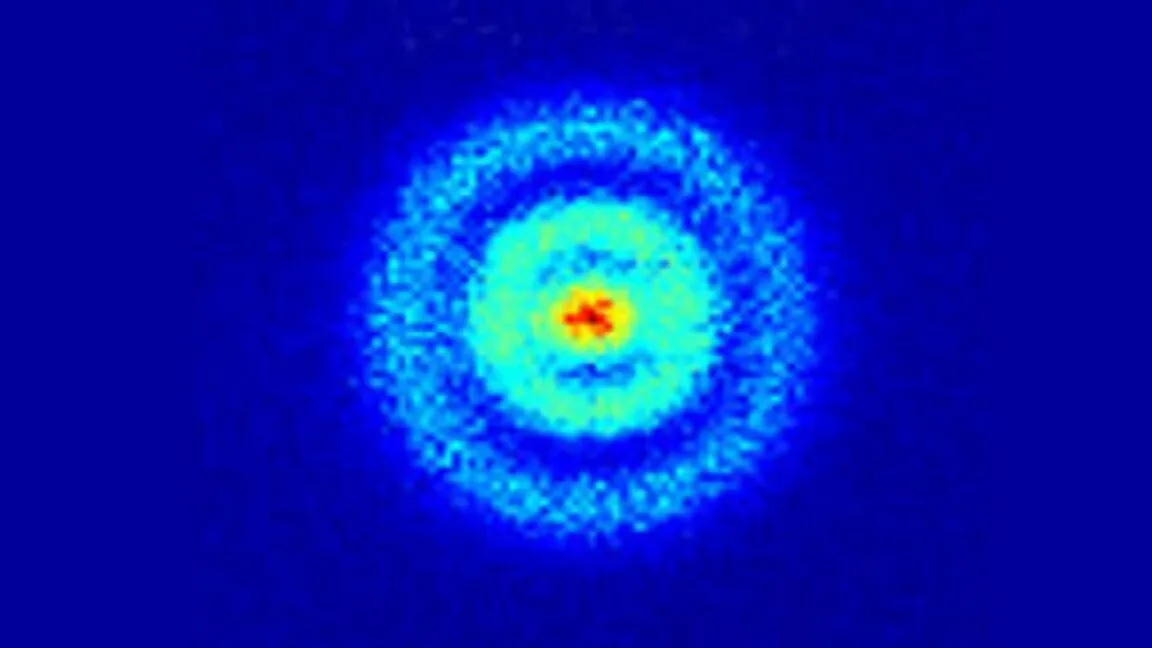
– The quantum mechanical description of the atom involves electron wave functions and superposition, differing from the simpler Bohr model.
For over a decade, a significant conflict in physics has centered on the proton charge radius. Measurements from different experiments produced contradictory results, with some aligning with established theory and others pointing to a surprisingly smaller size. This inconsistency, known as the proton radius puzzle, fueled speculation about potential new physics beyond the Standard Model. Now, two new high-precision studies appear to have settled the matter, concluding that the proton is indeed smaller than some earlier estimates suggested, effectively closing the door on the prospect of revolutionary discoveries stemming from this particular anomaly.
The latest findings, detailed in papers published in Nature and Physical Review Letters, present compelling evidence. “We believe this is the final nail in the coffin of the proton radius puzzle,” stated Lothar Maisenbacher of the University of California, Berkeley, a co-author of the Nature study. The research strongly supports the smaller radius value, aligning with a specific class of experiments and resolving the long-standing discrepancy that had intrigued the physics community.
To understand the puzzle, it helps to move beyond the simplified Bohr model of the atom. In that outdated picture, electrons orbit the nucleus like planets around a sun. Quantum mechanics provides a far more accurate, though less intuitive, description. Electrons exhibit wave-particle duality, existing in a superposition of states described by a wave function. This function represents a cloud of probability for the electron’s location. Only upon measurement does this wave function collapse, yielding a specific position. Repeated measurements trace out a fuzzy, orbital-like pattern, not a neat circular path.
Determining the proton’s charge radius involves probing this quantum system with extreme precision. The puzzle arose because two primary experimental methods, electron scattering and spectroscopy of muonic hydrogen, returned different values for this fundamental property. The new results decisively favor the smaller radius obtained from muonic hydrogen studies, indicating that earlier, larger measurements from some electron-based experiments likely contained subtle, unaccounted-for systematic errors. This resolution reinforces the robustness of the Standard Model, at least in this domain, while showcasing the relentless precision of modern experimental physics.
(Source: Ars Technica)