Uber and Nuro Test Lucid Gravity Robotaxi with Employees
▼ Summary
– Uber and Nuro have started employee test rides in San Francisco using a Lucid Gravity SUV equipped with Nuro’s autonomous driving system.
– The Lucid Gravity robotaxi, publicly revealed in 2026, uses Nvidia’s Drive AGX Thor platform and is fitted with cameras, lidar, and radar.
– Uber has committed to purchasing at least 20,000 of these vehicles over six years and plans to own and operate the premium robotaxi service.
– This testing phase is designed to evaluate the autonomous system and rider experience, focusing on technically demanding pickup and drop-off operations.
– The partnership is part of Uber’s strategy to stay in the ride-hailing market without fully developing its own autonomous vehicle technology.
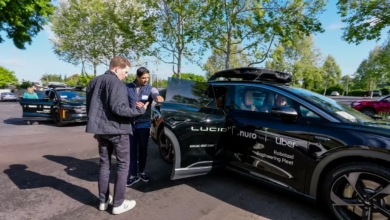
A new phase of testing has begun for a high-end autonomous ride-hailing service in San Francisco. Uber and Nuro have launched an employee-only pilot program using the Lucid Gravity SUV, a vehicle specifically modified for driverless operations. A select group of Uber staff can now summon one of these vehicles through the company’s app, experiencing the service firsthand while a human safety operator remains behind the wheel as a precaution.
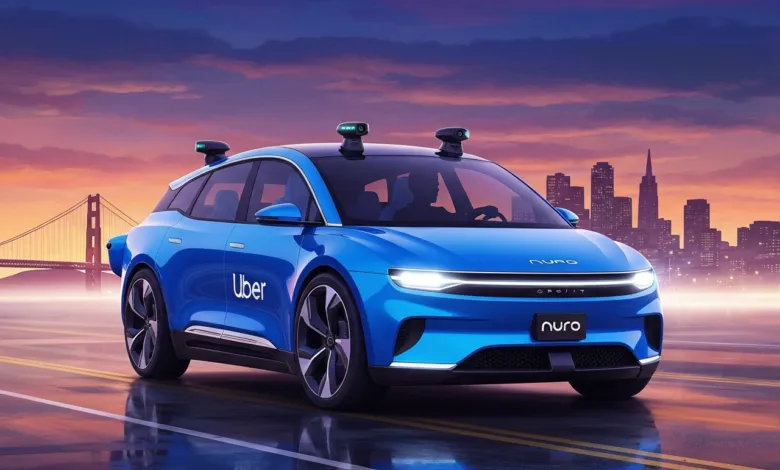
This initiative represents the next step in a strategic alliance formed last July. At that time, Uber made a substantial $300 million investment in Lucid and separately committed a multi-hundred-million dollar sum to Nuro. The vehicle at the center of this partnership, the Lucid Gravity robotaxi, was unveiled publicly earlier this year. It is outfitted with a sophisticated sensor suite including high-resolution cameras, solid-state lidar, and radar. All this data is processed by Nuro’s autonomy software, which runs on the powerful Nvidia Drive AGX Thor computing platform.
Currently, Nuro maintains an engineering fleet of 100 Lucid Gravity SUVs. These vehicles are gathering critical real-world data and conducting tests across various American cities. According to regulatory documents, the production line for the commercial version of these modified SUVs is slated to begin by the end of 2026. The ongoing employee tests are crucial for refining the entire system. Engineers are focusing on how the autonomous technology, the vehicle itself, and the passenger experience integrate in a live setting. Particular attention is being paid to pickup and drop-off operations, which are among the most complex challenges for any robotaxi service.
Looking ahead, Uber has made a significant procurement commitment, agreeing to purchase at least 20,000 Gravity SUVs over the next six years. The company plans to own and operate the resulting premium robotaxi service, potentially with support from a third-party management firm. This partnership with Nuro is a key component of Uber’s broader platform strategy. Instead of developing its own costly self-driving technology from scratch, Uber is forming alliances with various specialists to maintain its position in the future mobility market.
A similar logic underpins Uber’s investment in other companies, such as Verne, the Croatian firm that launched Europe’s first commercial autonomous ride service this past April. The current San Francisco pilot is a precursor to a broader rollout. Uber and Nuro are targeting a public launch of their commercial robotaxi service in the city before the end of this year.
(Source: The Next Web)