Astronauts Break Distance Record on Lunar Surface
▼ Summary
– Commander Reid Wiseman described the view of the Moon from the Orion spacecraft as spectacular and surreal, beyond the capacity of normal adjectives.
– The Artemis II crew, after three years of training, prepared to operate the spacecraft and document the lunar surface on this first human Moon mission in over 53 years.
– The Orion spacecraft performed well, reaching its closest point to the Moon and setting a record for the farthest human travel from Earth during the flight.
– The mission experienced a scheduled loss of radio contact with Earth for about 40 minutes as the spacecraft flew behind the Moon.
– Live video from the spacecraft was limited by bandwidth, but the crew planned to downlink higher-resolution photos later.
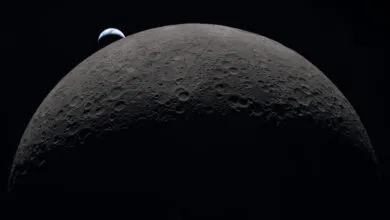
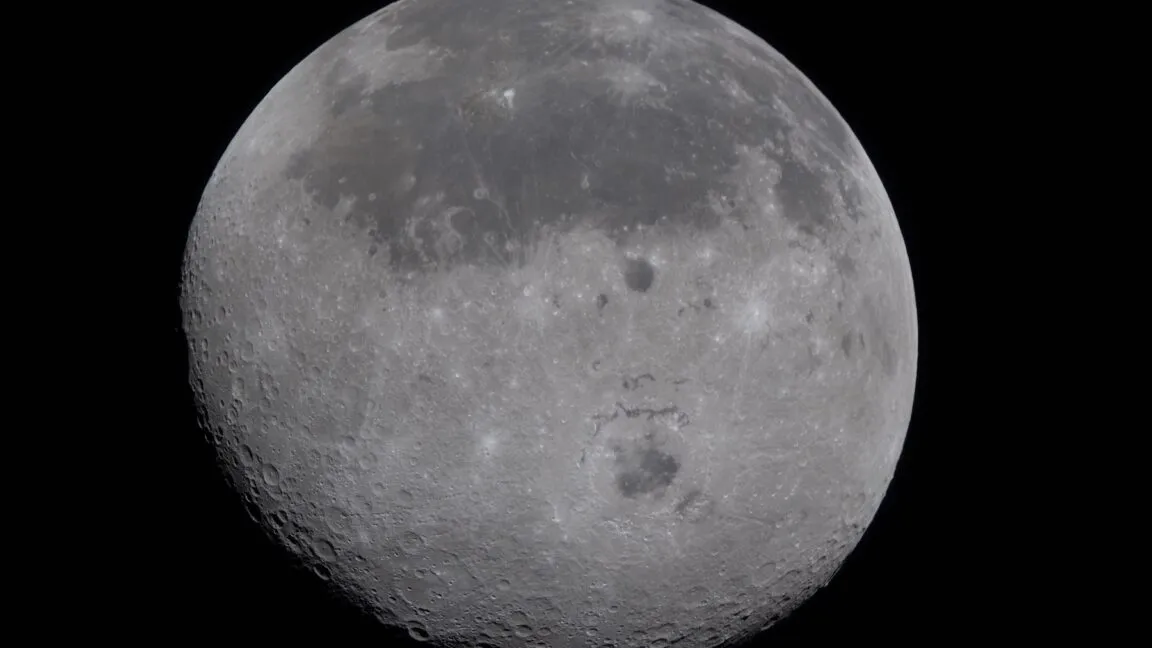
The view from the capsule window defied description. After nearly eight hours of observation, the commander of NASA’s Artemis II mission conceded that language itself was insufficient. “Our brains are not processing this image in front of us,” said Reid Wiseman, the mission’s leader. “It is absolutely spectacular, surreal. I’m going to need to invent some new adjectives.”
Live video transmitted from the Orion spacecraft showed the lunar surface growing steadily larger during final approach on Monday. While bandwidth limitations from deep space meant initial GoPro footage was low-resolution, the crew was scheduled to send higher-quality telephoto images back to Earth overnight.
This moment represents the culmination of three years of intensive preparation. Wiseman and his crewmates, Victor Glover, Christina Koch, and Jeremy Hansen, have trained extensively to operate their capsule, named Integrity. Their preparation covered everything from piloting procedures to handling potential emergencies, accepting the inherent risks of being the first crew to fly on NASA’s powerful Space Launch System rocket. As the first human mission to lunar vicinity in over five decades, the astronauts also received specialized training in geology and photography to expertly document their unique perspective.
That rigorous training is now proving its value. Following a successful launch last week, the Orion spacecraft performed a critical maneuver on Monday, swinging behind the Moon. At 7 p.m. EDT, the vehicle reached its closest point to the lunar surface, passing within 4,067 miles. Just two minutes later, Artemis II achieved a profound milestone, reaching its most distant point from Earth at 252,756 miles. This location set a new record for the farthest any human has ever traveled into space.
These historic events occurred while the spacecraft was out of sight from Earth, leading to a planned loss of signal. For approximately 40 minutes, mission controllers in Houston had no contact with the crew inside Integrity as it traversed the Moon’s far side. The successful restoration of communications upon the capsule’s reemergence confirmed the maneuver’s success and marked the crew’s passage into a realm of exploration untouched for generations.
(Source: Ars Technica)