Cybersecurity Veteran Switches to Drone Hacking

▼ Summary
– Mikko Hyppönen describes cybersecurity work as “cybersecurity Tetris,” where successes are invisible and only failures accumulate.
– He is a veteran cybersecurity expert with over 35 years of experience, having analyzed thousands of malware types since the late 1980s.
– Hyppönen has pivoted to focus on counter-drone technology, motivated by the war in Ukraine and the threat from Russia.
– The nature of malware has evolved from hobbyist viruses to tools used primarily by criminals, spies, and state actors for profit and espionage.
– His anti-drone work involves creating signatures to detect drones and exploiting vulnerabilities to disable them, paralleling methods used in cybersecurity.
On a stage at a major security conference, a veteran figure paces, his distinctive ponytail resting against a sharp suit. Mikko Hyppönen is explaining a core frustration of his profession to a room of experts. He calls it cybersecurity Tetris. When you succeed perfectly, the completed line vanishes, leaving only the accumulating blocks of your failures. The ultimate goal is that nothing happens, making effective defense inherently invisible. Yet, after over three decades on the front lines against malware, Hyppönen’s career is now shifting toward a visible, physical threat. His new mission is countering drones.
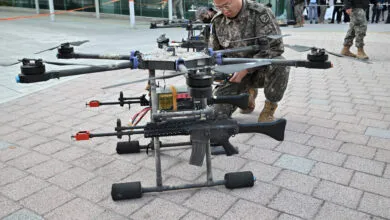
For Hyppönen, this pivot is both personal and professional. Living near Finland’s border with Russia, the war in Ukraine has underscored the devastating role of unmanned aerial attacks. While foundational cybersecurity battles against viruses and ransomware continue, he sees the industry having made monumental progress in securing everyday devices. A modern iPhone, he notes, is a fortress. The realm of drone warfare cybersecurity, however, represents a new and urgent frontier where defenses are still being charted.
His journey began in the 1980s, hacking video games and reverse-engineering software on a Commodore 64. This curiosity led to a first job analyzing malicious code, placing him at the genesis of the modern antivirus industry. He witnessed malware evolve from the curiosity-driven Form. A virus, which spread via floppy disks to places like the South Pole, to the globally destructive ILOVEYOU worm in 2000. That attack infected millions of computers, a scale that marked a turning point.
Today, the landscape is transformed. Malware development is rarely a hobby; it is the domain of state-sponsored spies, criminal enterprises, and mercenary hackers. The WannaCry and NotPetya attacks were brutal exceptions that proved the rule, using worm-like capabilities for sabotage. The defensive industry has grown into a $250 billion professionalized field. Exploits for hardened systems like iPhones can cost millions, pricing out many criminals and representing a significant victory for consumer protection.
This context is why Hyppönen’s move in 2025 to become Chief Research Officer at Sensofusion, a company building anti-drone systems, is a logical evolution. The conflict in Ukraine, a war defined by drones, made the mission deeply personal. As a Finnish military reservist with a family history of confronting Russian aggression, he states the work is “very, very important.” He frames it as humans against machines, a notion that sounds like science fiction but is now concrete reality.
The parallels between his old work and his new challenge are striking. Just as signature detection identifies and blocks known malware, anti-drone systems analyze radio frequency IQ samples to identify and jam unmanned vehicles. The defensive logic extends further: once you detect the protocol controlling a drone, you can target it with cyberattacks. Finding a vulnerability can force a drone to malfunction and crash. “If you find a vulnerability, you’re done,” Hyppönen explains, noting this makes protocol-level attacks uniquely decisive.
The enduring dynamic remains the same, a perpetual cat-and-mouse game where defenses prompt adversaries to innovate new bypasses. Only the battlefield has changed. “I spent a big part of my career fighting against Russian malware attacks,” Hyppönen reflects. “Now I’m fighting Russian drone attacks.” The core mission of defense continues, adapting to meet the threats of a new era.
(Source: TechCrunch)