DNA in Asteroids: What Are These Discoveries Telling Us?
▼ Summary
– A recent paper confirmed the discovery of all four DNA bases on the Ryugu asteroid, but this finding replicates similar results from over a decade ago.
– The study’s significance lies in resolving a prior mystery, as earlier analyses of Ryugu samples had failed to detect these bases despite their presence in other asteroids.
– The research provides new details that may explain how these fundamental chemical building blocks originally formed on asteroids.
– Understanding the origin of these bases on asteroids is crucial for tracing how the raw materials for life arrived on early Earth.
– The bases (A, T, C, G in DNA) attach to a sugar-phosphate backbone, and their sequence in nucleic acids carries the genetic information essential for life.
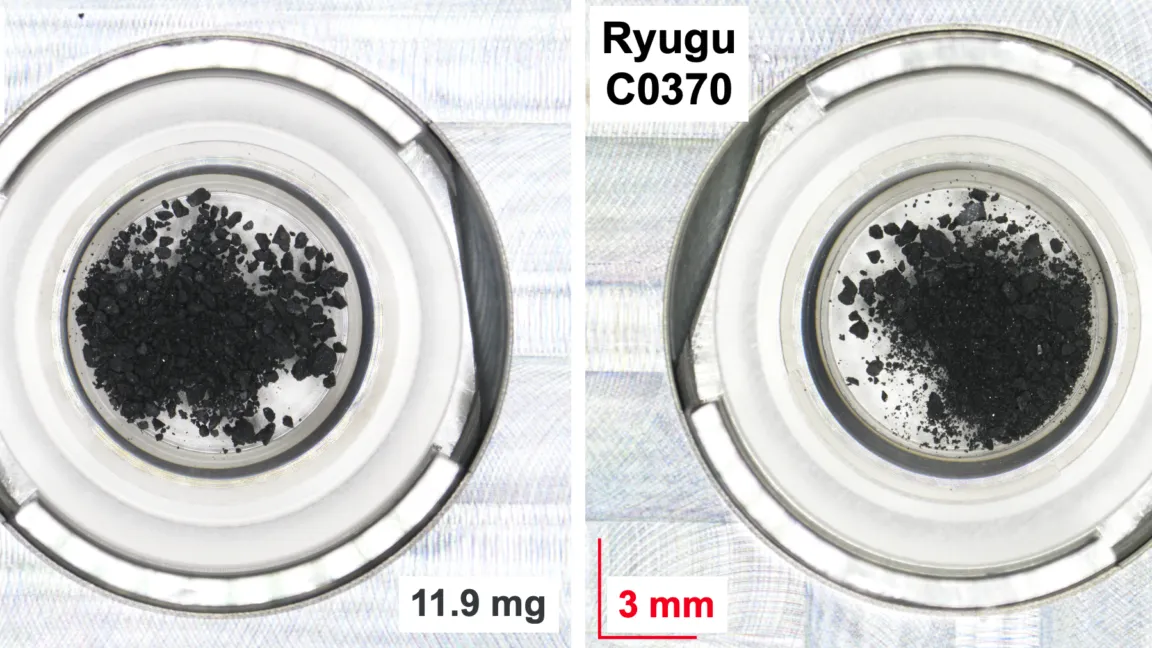
Recent findings from asteroid samples have reignited a crucial conversation about the origins of life on our planet. A new study confirms the presence of all four DNA and RNA building blocks, known as nucleobases, in material from the asteroid Ryugu. This discovery is significant not because it’s the first of its kind,similar findings have been reported since 2011,but because it resolves a puzzling inconsistency. Earlier analyses of Ryugu samples had failed to detect these compounds, despite their presence in other meteorites. The latest research, employing more sensitive techniques, has now definitively identified them, closing a key gap in our understanding.
Beyond confirming their existence, this work offers fresh insights into how these vital molecules formed in space. The precise origin of these organic compounds is a central question for scientists trying to piece together how the fundamental ingredients for biology arrived on early Earth. The study suggests these nucleobases likely formed through non-biological chemical reactions in the ancient solar system, potentially on the asteroid’s parent body, before being delivered to our planet via impacts.
To appreciate the importance, it helps to understand what researchers are looking for. Both DNA and RNA, the molecules that store and transmit genetic information in all known life, share a core architecture. They possess a structural backbone made from alternating sugar and phosphate molecules, linked together in a chain. While the specific sugar differs slightly between the two molecules, this backbone is otherwise a universal feature.
The unique identity and function of these nucleic acids come from the nucleobases attached to each sugar unit. DNA uses adenine (A), thymine (T), cytosine (C), and guanine (G). RNA uses adenine, uracil (U), cytosine, and guanine. It is the specific sequence of these bases along the sugar-phosphate backbone that encodes genetic instructions. A leading hypothesis in origins-of-life research suggests that even before modern biology emerged, the order of bases on primitive RNA molecules could have influenced their ability to drive early chemical reactions, setting the stage for life’s complexity.
(Source: Ars Technica)