Top Democrat Urges Support for Trump’s Surveillance Powers
▼ Summary
– Congressman Jim Himes is privately urging colleagues to renew the Section 702 surveillance program, arguing he has seen no evidence of Trump administration abuse.
– The program, which targets foreigners, also collects vast amounts of private communications from U.S. citizens without a warrant.
– Himes defends the program by citing a 99% compliance rate from recent reforms, but the FBI unit that produced that data has been shut down.
– Critics argue oversight is flawed, as the secret FISA Court and Congress rely on the Justice Department to self-report violations, not conduct independent audits.
– Without the dismantled internal checks, critics warn of a massive vulnerability leaving Americans exposed to potential surveillance abuses.
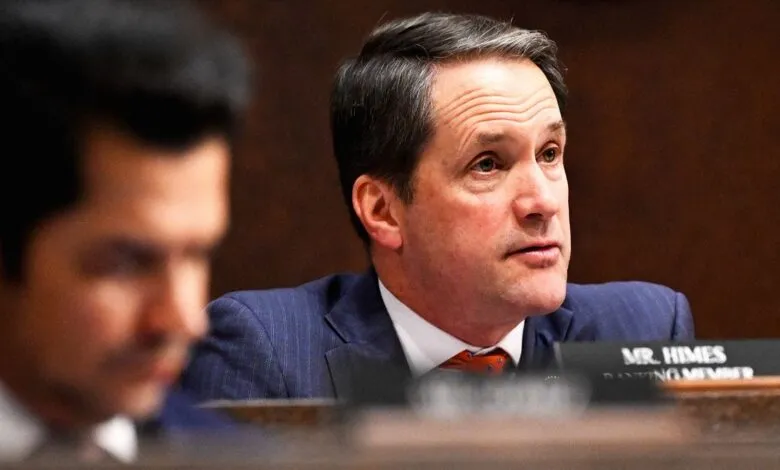
A senior Democratic lawmaker is actively urging his party to support the continuation of a powerful surveillance authority, arguing that recent reforms have effectively prevented misuse, even as key oversight mechanisms have been dismantled. Congressman Jim Himes, the top Democrat on the House Intelligence Committee, is privately lobbying colleagues to back the renewal of Section 702 of the Foreign Intelligence Surveillance Act. This provision allows intelligence agencies to collect the electronic communications of foreigners located outside the United States, but it also incidentally captures vast amounts of data belonging to American citizens, which the FBI can then search without a warrant.
In a confidential letter to fellow Democrats, Himes contends that the program is essential for national security and is now operating with robust safeguards. He points to legislative reforms passed in 2024 that codified the FBI’s internal querying procedures. Himes asserts these changes are “working as intended,” highlighting a compliance rate “exceeding 99 percent” over the past two years as proof that domestic misuse has been curtailed.
This defense, however, rests on a foundation that has recently been gutted. The compliance metric Himes cites originated from the FBI’s now-defunct Office of Internal Auditing. That unit, which historically uncovered hundreds of thousands of improper searches, was shuttered last year by FBI Director Kash Patel. With the auditors who calculated failure rates eliminated, the very compliance mechanisms Himes praises have effectively ceased to function as independent checks.
Himes’ office reiterated his stance, stating he remains open to further reforms but believes a short-term reauthorization is critical. “A short-term reauthorization of Section 702 will enable Congress to thoroughly debate the pros and cons of these suggested reforms… without placing our national security in peril by allowing the program to expire,” he said. As a member of the bipartisan “Gang of Eight” with access to highly classified briefings, Himes possesses deep insight into the program’s operations.
Yet his letter makes additional claims that experts say misrepresent the reality of oversight. Himes argues that “any effort to misuse the program would almost certainly become known” to the secret Foreign Intelligence Surveillance Court (FISC) and to Congress due to heavy oversight from all three branches of government. In practice, neither body conducts independent audits. The FISC has no investigative arm and, like Congress, relies entirely on the Justice Department to self-report any violations.
“This particular Department of Justice has gutted internal oversight mechanisms and has been rebuked by dozens of federal courts for providing inaccurate, misleading, or incomplete information,” says Liza Goitein of the Brennan Center for Justice. She notes that without independent auditing, there is no reliable way to verify the FBI’s compliance or the truthfulness of its reporting.
Proponents, including Himes, maintain that allowing the FBI to search this database without a judge’s prior approval is necessary to respond swiftly to imminent threats. Critics counter that the dismantling of internal checks creates a profound vulnerability. They warn it leaves Americans exposed to potential surveillance abuses that could remain hidden for years, if they are ever uncovered and declassified at all, placing extraordinary trust in an administration that has actively weakened accountability structures.
(Source: Wired)