2027 Kia Telluride Review: Luxury Looks at a Mainstream Price
▼ Summary
– The 2027 Kia Telluride is a new, second-generation model that has been very well-received, continuing the success of the first-generation vehicle.
– It has grown in size and its design is notably influenced by Range Rover, while also introducing a hybrid version for the first time.
– The SUV now offers two powertrains: a turbocharged 2.5L four-cylinder gasoline engine or a hybrid system based on that same engine, which provides more power and better fuel economy.
– The Telluride is a large, three-row SUV available with either front-wheel or all-wheel drive, with AWD being optional or standard depending on the trim level.
– While the switch to a turbo four-cylinder provides welcome torque, a noted drawback is that engine noise is perceptible inside the cabin during acceleration.
The 2027 Kia Telluride continues to redefine the three-row SUV segment, offering a compelling blend of upscale design, practical space, and now, hybrid efficiency. This new generation builds on the runaway success of its predecessor, which captivated buyers and critics alike. Kia has refined the formula, delivering a vehicle that feels more premium than ever while keeping its value proposition firmly intact. The addition of a hybrid powertrain is a significant step forward, addressing the growing demand for fuel efficiency in a large family vehicle.
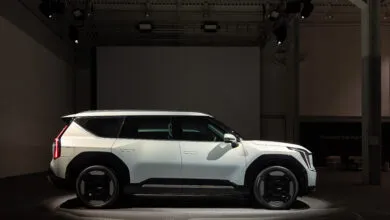
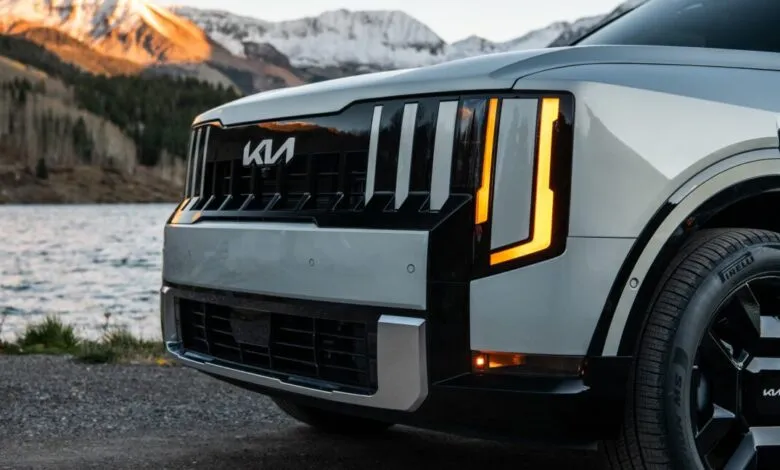
The design evolution is immediately striking. The Telluride’s exterior now carries a more confident, blocky stance that draws clear inspiration from luxury marques. It’s grown slightly in every dimension, enhancing its road presence without sacrificing its family-friendly proportions. Inside, the cabin feels more spacious and is appointed with higher-quality materials than before. The dashboard layout is cleaner, dominated by expansive digital displays that integrate seamlessly with the physical controls Kia wisely retains for critical functions.
Powering the new Telluride are two key engine options. The standard offering is a turbocharged 2.5-liter four-cylinder gasoline engine, which replaces the previous V6. This unit generates 274 horsepower and 311 lb-ft of torque, providing strong low-end pull that is particularly useful for merging and towing. The major news is the available hybrid powertrain, which pairs that same turbo engine with a dual-motor system. This setup boosts output to a combined 329 horsepower and 339 lb-ft of torque while achieving an impressive estimated 35 mpg combined. This efficiency makes the large SUV far more economical to run daily.
Driving the Telluride reveals a competent and comfortable cruiser. The switch to the turbo four-cylinder is generally a success; the added torque is noticeable and welcome, especially when the vehicle is loaded with passengers or cargo. The eight-speed automatic transmission in non-hybrid models shifts smoothly, while the hybrid utilizes a six-speed unit. The primary dynamic drawback is engine refinement. Under hard acceleration, the four-cylinder can become vocal and somewhat coarse, transmitting noticeable noise into the otherwise quiet cabin. This is one of the few reminders that you’re driving a mainstream brand vehicle.
The Telluride remains a substantial machine, measuring 199.2 inches long, 78.3 inches wide, and 69.9 inches tall. This size translates into a genuinely usable three-row interior with ample space for adults in the first two rows. Buyers can choose between front-wheel drive and all-wheel drive, with AWD being a popular $2,000 option on mid-level trims and standard on the more rugged X-Line and X-Pro variants. These off-road-oriented models feature increased ground clearance, all-terrain tires, and unique styling cues for those seeking greater adventure capability.
(Source: Ars Technica)