DLSS 5: A Real-Time AI Filter for Gaming

▼ Summary
– Nvidia announced DLSS 5, a generative AI-powered graphics update that is receiving mixed reactions for significantly altering a game’s visual style.
– Unlike previous upscaling versions, DLSS 5 uses AI to rework lighting and materials, adding new details that can make scenes look more realistic but also uncanny.
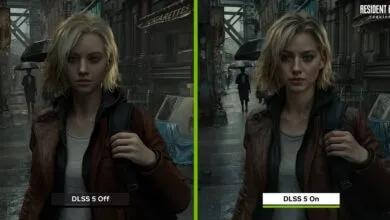
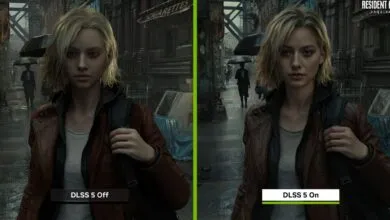
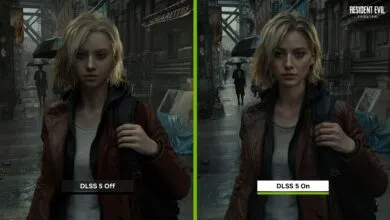
– The technology notably changes character models, as demonstrated by making a protagonist’s features appear different, akin to an Instagram filter.
– Nvidia states it provides developers with controls to adjust the intensity and application of DLSS 5 to preserve artistic intent.
– DLSS 5 is scheduled for release this fall and will be compatible with a select number of games, including major upcoming titles.
Nvidia’s latest graphics technology, DLSS 5, promises a transformative leap in visual fidelity for supported games, generating real-time enhancements to lighting, shadows, and materials through advanced generative AI. Announced at the GTC conference, the tool is framed by CEO Jensen Huang as a pivotal moment that merges hand-crafted artistry with artificial intelligence to achieve new levels of realism. Initial demonstrations, however, have sparked a heated debate within the gaming community, with critics comparing its effects to the often-derided “AI slop” seen in other digital media.
The core function of DLSS 5 represents a significant shift from its predecessors. Earlier versions primarily used machine learning for intelligent upscaling, bridging the gap between performance and resolution. This new iteration actively reworks a scene’s visual makeup. The AI model is trained to comprehend complex scene semantics, like characters, hair, fabric, and skin, along with nuanced lighting conditions, all from analyzing a single frame. It then uses this understanding to generate precise enhancements, such as realistic subsurface scattering on skin or the delicate sheen of fabric, purportedly while preserving the original scene’s fundamental structure.
The results, as shown in previews for games like Resident Evil Requiem and Starfield, are immediately striking but also controversial. Character models undergo noticeable alterations. In one example, protagonist Grace Ashcroft appears with significantly fuller lips and intense eyeshadow, an effect reminiscent of a heavy-handed social media filter. Similarly, characters in Starfield exhibit an unnaturally sharp, stage-lit quality, with bright highlights on features and hair that seem disconnected from the environment’s actual lighting.
Reactions from industry figures have been sharply divided. Bethesda’s Todd Howard praised the technology, stating its implementation in Starfield “brought it to life.” Conversely, game developer Mike Bithell offered a scathing critique, calling it “nonsense” for players who “don’t want any art direction” in their experience, labeling the early demonstrations a disappointing mess.
Nvidia has been quick to address concerns over artistic integrity. The company emphasizes that DLSS 5 is designed to honor creative vision by anchoring its output to the game’s original color data and motion vectors. Perhaps more importantly, Nvidia states it will provide developers with extensive controls. Artists will have adjustable parameters for intensity, color grading, blending, and saturation, allowing them to fine-tune the effect. Developers can even mask specific objects or areas to be completely excluded from AI enhancement, ensuring the final look aligns with their intended aesthetic.
Scheduled for release this fall, DLSS 5 will initially be compatible with a curated list of titles. Confirmed games so far include Resident Evil Requiem, Starfield, Hogwarts Legacy, EA Sports FC, The Elder Scrolls VI: Oblivion remake, and Assassin’s Creed Shadows. The technology is capable of running in real-time at up to 4K resolution. While it undoubtedly points toward a future of heightened photorealism, its final reception will hinge on how developers choose to implement its powerful, and potentially divisive, generative capabilities.
(Source: The Verge)