Beyond the Fly: A Digital Reality Unveiled
▼ Summary
– Eon Systems released videos claiming a “real uploaded animal,” a virtual fly, but provided no scientific paper or detailed methods for independent verification.
– Experts criticized the claim as lacking credible evidence, noting the blog post was insufficient and key metrics like “91% behavior accuracy” were unexplained.
– The simulation is a composite of existing projects, not a true brain upload, as it lacks crucial biological details like neurotransmitters and connection strengths.
– The company’s claim raises unresolved philosophical questions about what constitutes an uploaded animal versus a digital emulation or copy.
– Eon’s CEO stood by the claim, suggesting the fly has limited consciousness, but conceded it is an imperfect “minimum viable product” with significant limitations.
The recent online frenzy surrounding a virtual “embodied fly” highlights the potent mix of ambition and ambiguity in cutting-edge AI research. A few viral videos from a company called Eon Systems sparked claims of a groundbreaking achievement: the world’s first uploaded animal. While the concept of digital brain emulation captures the imagination, the substance behind these bold announcements remains frustratingly thin, raising critical questions about scientific validation and the very definition of such a feat.
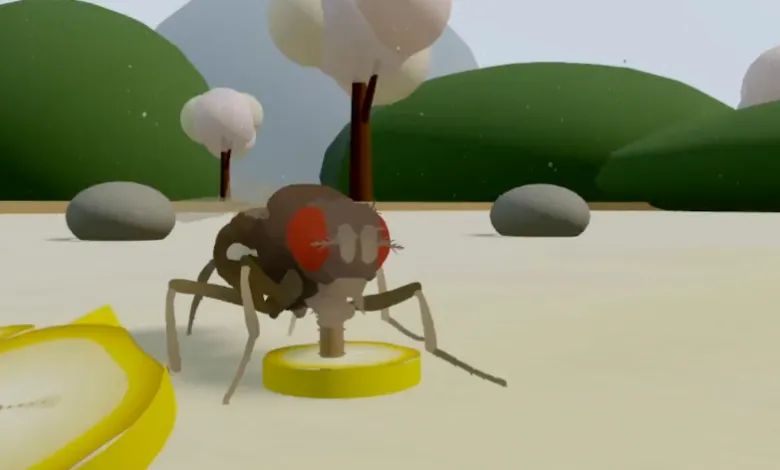
Last week, social media platforms buzzed with excitement over posts from Eon Systems, a San Francisco-based firm. The company’s co-founder, Alexander Wissner-Gross, shared a clip he called the “world’s first embodiment of a whole-brain emulation,” while CEO Michael Andregg described it as a “real uploaded animal.” The evidence presented to the public consisted solely of these short videos showing a digital insect moving and feeding within a simulation. For a claim that would represent a monumental scientific leap, this was conspicuously scant proof.
In response to growing scrutiny, Andregg published a blog post titled “How the Eon Team Produced a Virtual Embodied Fly.” This document walked back the most sensational language, avoiding the phrase “real fly,” and outlined a process of stitching together existing large-scale projects. These included a detailed map of a fruit fly’s neural connections, a physical simulation of its body, and models to connect the two in a virtual environment. Experts consulted for this analysis found the blog post a step in the right direction but ultimately insufficient. They emphasized that a claim of this magnitude demands a detailed, reproducible technical report with full access to code and simulation data.
Shahab Bakhtiari, a professor leading a systems neuroscience and AI lab, noted the blog provided more context but arrived too late and lacked the rigor needed for proper validation. Alexander Bates, a neurobiology research fellow specializing in fly brains, echoed this, stating the group “under-delivered.” He pointed out that the virtual fly’s behaviors were not evaluated against clear, real-world metrics and that a key claim of “91% behavior accuracy” was left unexplained. He also wryly observed, “the fly does not fly.”
The technical criticisms are profound. Aran Nayebi, a machine learning professor, argued the project is “not even close” to capturing a fly’s full brain, missing crucial biological details like neurotransmitters and synaptic strength. The motor system, he stated, is also not a “true upload.” This gets to the heart of a deeper, almost philosophical problem glossed over by the initial hype: what does it even mean to “upload” an animal?
Is it reproducing a set of behaviors? Is it replicating a neural map in a computer? Or does a “fly” necessitate the entire biological package, a living body, metabolism, and a lifetime of experience? The Eon simulation is itself a composite built from data derived from multiple different insects, complicating any claim about uploading a single organism. Furthermore, it creates a copy, not a transfer, opening a pandora’s box of implications about identity and consciousness that the company’s promotional materials ignore.
When pressed, CEO Michael Andregg stood by his original claim but layered on caveats. He conceded the work “isn’t a perfect replica of a fly” and described uploading as a spectrum with “different levels,” admitting uncertainty about how much biology is required. He even suggested the team believes their virtual fly is “conscious in a limited sense.” This shift in rhetoric, from definitive announcement to a discussion of a “minimum viable product” for an uploaded animal, highlights the gap between tech startup parlance and substantive scientific discourse.
Philosophers question the very framework of the claim. Jonathan Birch argued we should never use the term “uploaded animal,” suggesting “whole-brain emulation” is a more accurate, if less thrilling, description. Tom McClelland added that at best, such work might upload aspects of a fly’s mind, but certainly not the entire organism. The episode serves as a potent reminder that in the race to announce breakthroughs, the burden of proof must be met with transparent, reproducible science, not just viral videos and provocative statements. The journey to understanding digital intelligence is long, and confusing marketing with milestone only obscures the path forward.
(Source: The Verge)