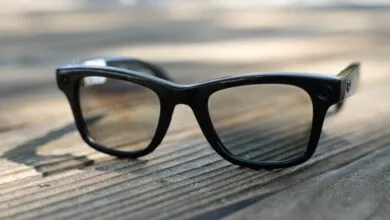
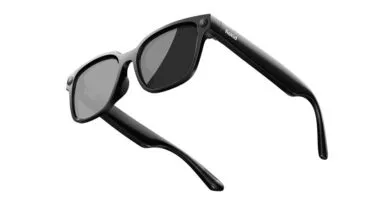
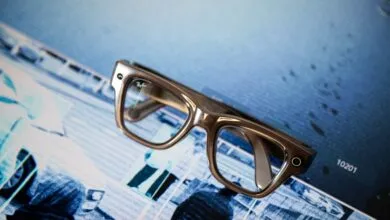
Workers Report Seeing Ray-Ban Meta Glasses Footage From Bathrooms

▼ Summary
– A Swedish report reveals that employees of Meta subcontractor Sama have watched sensitive user footage captured by Ray-Ban Meta smart glasses.
– The report is based on interviews with over 30 Sama employees who annotate video, image, and speech data for Meta’s AI systems.
– Workers reportedly saw privacy-sensitive content, including videos of people having sex and using the bathroom.
– One anonymous employee described footage of a person changing clothes, while another saw a user’s naked partner.
– The report highlights a stream of sensitive data entering Meta’s systems, which made the annotation workers uncomfortable.
A recent investigation has raised serious concerns about the privacy safeguards surrounding Meta’s smart glasses. According to a Swedish media report, contractors hired to train artificial intelligence systems have viewed highly sensitive footage recorded by users wearing Ray-Ban Meta smart glasses. This footage allegedly included private moments captured in bedrooms and bathrooms, highlighting potential vulnerabilities in how user data is handled before it is processed by AI.
The report, a collaboration between Swedish newspapers and a Kenyan journalist, is based on interviews with more than thirty employees at various levels of Sama, a Kenya-based subcontractor. These workers are responsible for data annotation, a critical process where they label video, image, and speech data to help Meta’s AI systems learn and recognize objects and scenarios. Several interviewees stated they had worked directly on projects for the tech giant’s smart glasses.
Employees described an uncomfortable workflow where they were exposed to a continuous stream of private user content. Multiple sources claimed to have witnessed videos recorded by the glasses that showed people engaged in sexual activity or using the toilet. One anonymous worker recounted a specific instance of seeing a video where a man placed his glasses on a bedside table; his wife later entered the room and changed her clothes, unaware the device was recording. Another employee reported seeing users’ partners emerge naked from a bathroom, captured by the glasses’ camera.
The journalists behind the investigation noted they could not access the actual materials handled by Sama workers or the physical annotation workspaces. Their findings were also supported by accounts from former Meta employees in the United States who had observed live data annotation processes for various company projects. This situation points to a significant gap between data collection and the implementation of robust privacy filters before human review. The allegations suggest that intimate moments, intended perhaps for personal memory-keeping or accidentally recorded, are flowing into training pipelines with inadequate protections, causing distress for the low-wage workers tasked with reviewing them.
This incident places Meta’s data privacy practices under intense scrutiny, particularly regarding its partnerships with third-party contractors across the globe. While data annotation is a standard industry practice for developing AI, the handling of footage from always-wearable devices like smart glasses presents unique ethical challenges. The report underscores the tension between the need for vast datasets to power advanced AI and the fundamental right of users to privacy within their own homes. It prompts urgent questions about what technical and procedural measures are in place to prevent private content from ever reaching human eyes during the development process.
(Source: Ars Technica)