Will Data Centers Drive Up Your Electric Bill?
▼ Summary
– Major tech companies are pledging to build their own power plants for data centers to shield consumers from rising electricity costs, a plan championed by President Trump.
– Experts warn it is likely impossible to fully insulate consumers from the increased power demand caused by the vast expansion of AI data centers.
– Independent power supplies for data centers often rely on gas turbines, which are in short supply and not always designed for continuous operation.
– The pledge comes amid political pressure over rising power bills, with some states hosting data centers seeing significant electricity price increases.
– US data center power demand is projected to more than triple by 2035, contributing to concerns about rising energy costs.
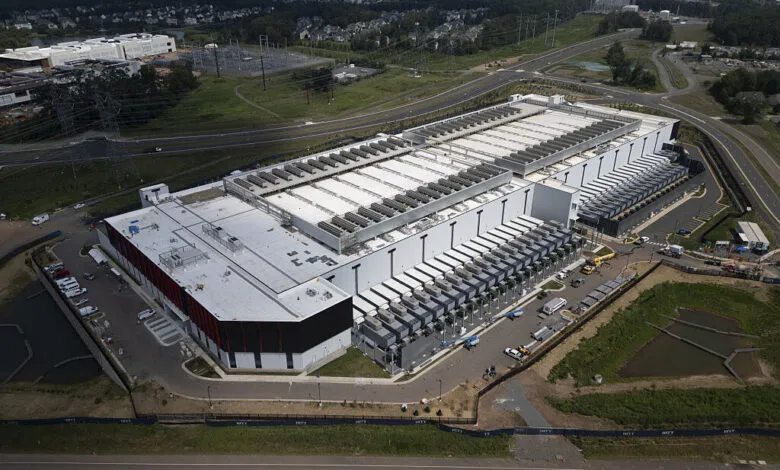
The rapid expansion of data centers to power artificial intelligence has sparked a national debate about electricity costs, with major technology companies pledging to build their own power plants to prevent consumer bills from rising. This commitment, championed by President Donald Trump, aims to shield households from the financial impact of soaring energy demand. However, experts question whether it is feasible to completely insulate the public from the effects of this massive industrial growth, noting that increased demand on the grid often has widespread consequences.
At a White House event, executives from leading firms including Amazon, Google, Meta, and Microsoft are expected to sign a pledge to develop independent power supplies for their facilities. The initiative seeks to address political and consumer backlash over climbing power bills by having companies generate their own electricity rather than drawing solely from the public grid. President Trump has publicly promised that “no one’s prices will go up” as a result of the energy demands from new AI data centers.
Despite these assurances, industry analysts and legal experts express significant skepticism. They argue that the pledge is likely non-binding and that the fundamental economics of electricity markets make it nearly impossible to fully buffer consumers. “Regardless of how these data centers connect, behind the meter or as part of the network, you’re going to increase demand,” explained Ari Peskoe, director of the Electricity Law Initiative at Harvard Law School. This heightened demand can influence overall market prices and infrastructure costs that are ultimately distributed.
A major practical hurdle involves the power generation itself. The most common solution for independent data center power is natural gas turbines, but these units are currently in short supply. Furthermore, many existing turbines are not designed for the continuous, around-the-clock operation that massive computing facilities require. “We still need more of these turbines,” Peskoe added, highlighting a key logistical obstacle to the companies’ plans.
The political push comes amid tangible increases in household energy expenses. While President Trump campaigned on a promise to slash energy bills, recent data tells a different story. Nationwide, residential electricity costs rose by six percent in February compared to the previous year. The impact is even more pronounced in states with high concentrations of data centers, such as New Jersey and Pennsylvania, which saw jumps of sixteen and nineteen percent, respectively.
Multiple factors are driving bills higher, including volatile natural gas prices, extreme weather events, and the urgent need to modernize aging grid infrastructure after decades of underinvestment. The situation could be further complicated by geopolitical tensions affecting energy supplies. Critics of the data center boom directly link these facilities to higher costs by straining the existing power system.
Projections underscore the scale of the challenge. Analysts forecast that power demand from U.S. data centers will more than triple by 2035, surging from nearly 35 gigawatts today to a staggering 106 gigawatts. This explosive growth places unprecedented pressure on the nation’s energy ecosystem, making the tech industry’s pledge to self-supply a critical yet uncertain experiment in industrial policy.
(Source: Ars Technica)