5 Nano Banana 2 Prompts That Showcase Its Power
▼ Summary
– Google has released Nano Banana 2, an upgraded AI image generation model that is faster and uses pre-rendering planning for more logical compositions.
– The model is already integrated into Gemini, where users can access it by typing a prompt and selecting from preset styles like Cyborg or Cinematic.
– Testing shows Nano Banana 2 excels at handling complex prompts requiring physical logic, material properties, and accurate, localized typography.
– The model demonstrates strong abilities in maintaining subject consistency, spatial reasoning, and creating coherent scenes from detailed, multi-element descriptions.
– While technically impressive in logic and text rendering, the aesthetic appeal of the generated images is presented as a subjective matter of taste.
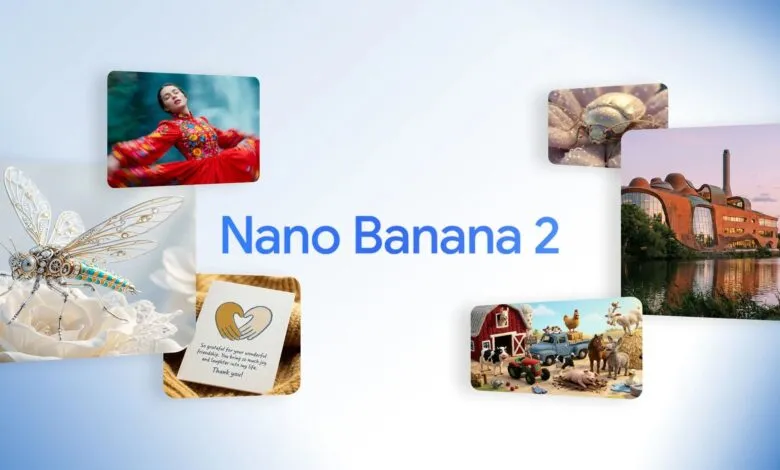
Google’s latest image generation model, Nano Banana 2, is now active within Gemini, offering users a more powerful and intelligent tool for creating visuals. This upgraded version promises significant improvements in logical planning and compositional accuracy, moving beyond simple image assembly to a more thoughtful rendering process. To access it, users simply need to select the “Create Image” option and enter a descriptive prompt, with several preset artistic styles like Cyborg or Cinematic available to guide the output.
The company suggests this model can construct convincing realities from text descriptions. To test these claims, we put it through a series of challenging prompts designed to probe its core capabilities.
The first test focused on clarity and physical logic. The prompt asked for a macro photograph of a clear glass sphere balanced on a teapot spout, with tiny silver letters inside spelling “CLARITY IS KEY.” This scenario demands an understanding of complex physics, material properties, and precise typography. The model had to reason how text would appear when nested inside a curved, transparent object. The resulting image demonstrated impressive fidelity, with legible, subtly distorted letters that accurately reflected the sphere’s curvature and texture.
Next, we explored its ability to handle complex, multi-subject scenes. The instruction was for a cinematic shot of a steampunk pirate ship, crafted from brass and wood, sailing on a cloud sea with a crew of anthropomorphic animals. Managing visual chaos and maintaining subject integrity are common pitfalls for image generators. Nano Banana 2 succeeded by clearly defining each element, rendering a logically engineered ship with detailed surfaces that beautifully reflected the golden-hour sunset lighting, all while keeping the animal crew distinct and coherent.
A third prompt tested localization and graphic design logic. It requested a professional board game layout for “The Spice Route,” featuring a map with a legend using accurate, localized Japanese fonts for specific words, alongside a stack of ancient spice jars. The model’s “web grounding” capability was crucial here, as it searched for and correctly rendered the specific Japanese typography within a stylized design. The final composition presented a coherent and understandable game board where the spice jars were logically stacked and all visual elements worked together.
We then challenged its reasoning with a dynamic, anachronistic scene. The prompt described an action shot of a breakdance battle between medieval knights and 1980s graffiti-tagged robots on a cobblestone street outside a castle, lit by modern stage lights. This requires planning high-energy motion for vastly different object types while maintaining spatial and textural logic. The model produced a vibrant, cool-looking image that convincingly merged these disparate elements into a single, energetic composition.
Finally, the ultimate test combined subject consistency, web grounding, and complex composition. The prompt asked for a hyper-realistic twilight photo of a semi-fantastical Seattle sidewalk, rain-slicked, with the Space Needle in the distance. It required three consistent characters near a Pike Place Market sign and a cafe chalkboard menu. The AI had to research real-world Seattle details, like the view of the Space Needle from the market and the appearance of local signs, and then integrate fantastic characters. The output featured a geographically accurate background, and the typography on the chalkboard menu was perfectly legible and correctly spelled, rendered with multi-line accuracy on the wet pavement.
Google positions Nano Banana 2 as a substantial leap forward in logical, spatial, and textual reasoning, not merely a technical refresh. Based on these tests, the model largely delivers on that promise, generating images that are technically impressive. Their aesthetic appeal, however, ultimately remains a subjective matter of personal taste.
(Source: TechRadar)