Scientists Solve the Mystery of “Screeching” Scotch Tape
▼ Summary
– The screeching sound of rapidly peeling Scotch tape is caused by supersonic shock waves from micro-cracks, a recent scientific discovery.
– Scotch tape was invented in 1930 by 3M engineer Richard Drew to solve a paint-damage problem in two-tone car manufacturing.
– The tape became extremely popular during the Great Depression as a means of repairing items instead of replacing them.
– Peeling tape can produce light, a phenomenon known as triboluminescence, which has been observed since the 17th century.
– A common example of triboluminescence is Wint-O-Green Life Savers, where crushing sugar crystals and wintergreen oil creates visible blue sparks.
For decades, the sharp, high-pitched screech of rapidly peeling Scotch tape has been a familiar, if unpleasant, sound in homes and offices. Scientists have now determined this distinctive noise is caused by microscopic shock waves, generated when tiny cracks in the adhesive propagate faster than the speed of sound. This discovery, detailed in a recent physics journal, solves a long-standing auditory mystery and connects to other fascinating phenomena like the emission of light from sticky tape.
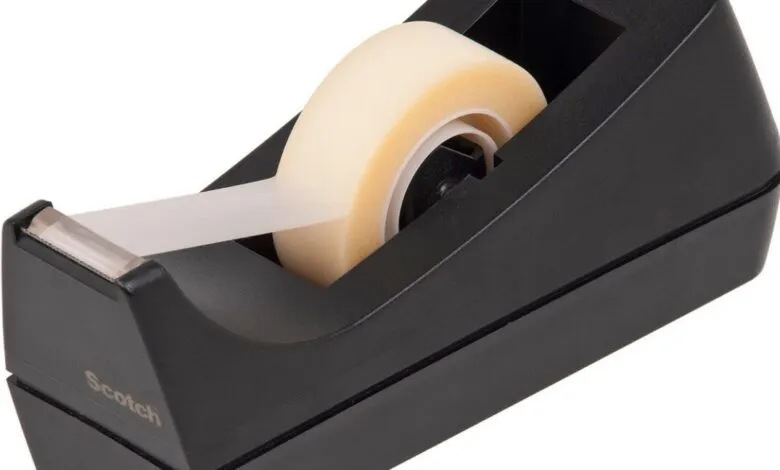
The story of the tape itself begins with innovation. In 1930, a 3M engineer named Richard Drew sought to solve a problem in automobile manufacturing. Two-tone paint jobs required masking, but the adhesives used were so strong they often ripped the paint right off. Drew experimented and found a sandpaper adhesive with a more forgiving stickiness. He applied it to a roll of cellophane, creating the first transparent sticky tape. Its popularity soared during the Great Depression, as people used it to mend items instead of buying new ones. Interestingly, Drew also collaborated with a colleague to invent the now-iconic dispenser with the serrated metal edge.
Beyond its practical uses, Scotch tape has long intrigued physicists. As far back as 1939, researchers documented that peeling tape in a dark room could produce a faint glow along the peeling line. This is a manifestation of triboluminescence, a phenomenon where light is generated when materials are crushed, torn, or scratched. The effect has been observed for centuries. For example, certain diamonds emit blue or red light during cutting, and some ceramics glow when cut with high-pressure water jets.
A classic, edible demonstration involves Wint-O-Green Life Savers candy. Crushing one in the dark produces visible sparks. The mechanism is elegant: crushing the sugar crystals violently separates electrical charges, ripping electrons free. These electrons jump across a tiny gap, colliding with nitrogen molecules in the air. The excited nitrogen atoms emit ultraviolet light. The wintergreen flavoring, methyl salicylate, acts as a fluorescent agent, absorbing that invisible UV light and re-emitting it as a visible blue glow, making the whole spectacle possible to see.
(Source: Ars Technica)