Google AI Update: Data Sharing & ChatGPT SEO Impact

▼ Summary
– Google has redesigned links in its AI Overviews, now displaying them in pop-up cards with site names and descriptions when hovered over on desktop.
– A report found that 43% of ChatGPT’s background queries for non-English prompts are run in English, potentially disadvantaging non-English content in source selection.
– Google’s Search Relations team did not definitively state that a website is necessary, framing it as a business decision dependent on audience location rather than a default requirement.
– These developments illustrate a shift away from traditional organic search, with AI interfaces and fragmented user journeys changing how visibility and traffic are achieved.
– The overall theme is that SEO practitioners must adapt by spreading content across platforms and closely tracking the true sources of their clicks.
The digital landscape for search engine optimization is shifting, with recent developments from Google and OpenAI directly impacting how content is discovered and cited. Google’s redesign of links within its AI Overviews introduces a new interactive element, while data reveals ChatGPT’s search process often defaults to English, even for non-English prompts. Simultaneously, a notable discussion from Google’s own team questions the absolute necessity of a dedicated website for online visibility, signaling a broader industry evolution.
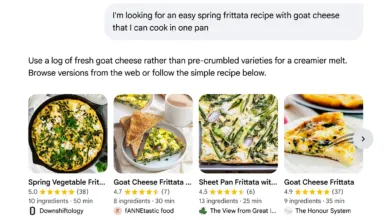
Google has unveiled a redesigned experience for links featured in its AI-generated search responses. On desktop, hovering over a group of citations now triggers a pop-up card displaying the site name, favicon, and a brief description. The company is also making link icons more prominent and descriptive across both desktop and mobile interfaces. This update is part of an ongoing effort to improve link visibility within AI search results, a priority Google’s leadership has emphasized. The new hover interaction provides users with immediate context, potentially influencing click-through rates and addressing publisher concerns about traffic from AI summaries. Early feedback from SEO professionals has been positive, with many hoping the more visible citation format becomes a permanent feature.
Separately, an analysis of ChatGPT’s search behavior reveals a significant linguistic bias. Research indicates that 43% of the background queries ChatGPT generates to source information are executed in English, even when the original user prompt is in another language. This means nearly eight out of ten non-English search sessions include at least one English-language query behind the scenes. Since OpenAI’s documentation states that ChatGPT can rewrite prompts into more targeted queries, this data suggests an inherent preference for English sources during its information-gathering phase. For SEO and content teams operating in international markets, this creates an unexpected hurdle. Content in other languages might be overlooked during ChatGPT’s initial source selection, regardless of its relevance, because language filtering appears to occur before traditional ranking signals are applied.
In a parallel development, Google’s Search Relations team recently engaged in a candid discussion about the fundamental need for a website. When asked directly if a website is still essential, the team’s response was notably non-committal. They acknowledged the advantages of owning a website, such as data sovereignty, control over monetization, and freedom from platform rules. However, they framed the decision as a strategic business choice rather than an unequivocal requirement for online presence. This perspective underscores the fragmented nature of modern user journeys, which now span AI chatbots, social platforms, and community apps alongside traditional search. The implication for businesses is clear: a website is one of several channels, and the primary focus should be on meeting the audience where they are, rather than relying on a single digital property.
Collectively, these updates highlight the dynamic pressures on traditional organic search channels. Google is iterating on how visibility works within AI, ChatGPT’s processes may inadvertently marginalize non-English content, and the very foundation of a dedicated web presence is being reconsidered. For marketers and content creators, this reinforces the importance of a diversified platform strategy and meticulous tracking of genuine traffic sources. The ground is indeed moving, demanding adaptability and a broader view of what constitutes effective digital visibility.
(Source: Search Engine Journal)