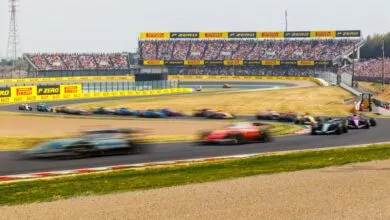
2026 F1 Cars Revealed: Preseason Tests Hint at Major Changes
▼ Summary
– The 2026 F1 season will feature major changes including new cars, engines, hybrid systems, and sustainable fuels.
– Preseason testing times are unreliable as cars may not conform to race rules and teams test specific components.
– Lap times can be misleading due to unknown fuel loads and teams sometimes running light to attract sponsors.
– The 2026 power units replace the MGU-H system and feature a more powerful MGU-K paired with a larger battery.
– The new hybrid system recovers kinetic energy from both braking and the engine, similar to road cars.
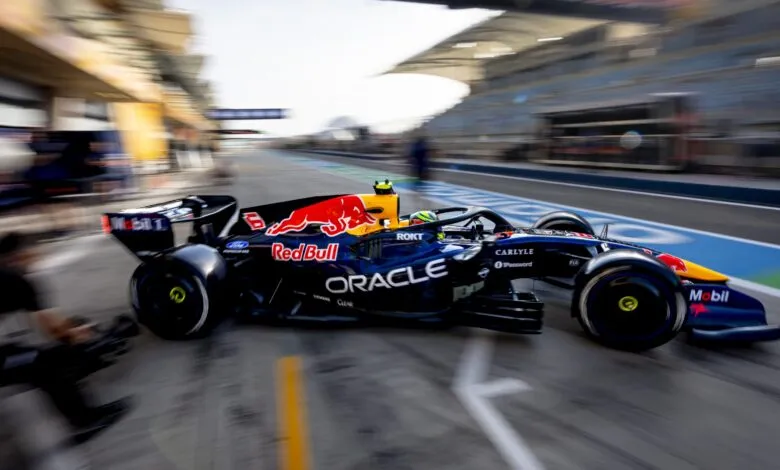
With the 2026 Formula 1 season on the horizon, the final preseason tests in Bahrain are offering a tantalizing first look at a radically transformed sport. This year marks a pivotal shift, introducing completely new car designs, power units, and sustainable fuels that promise to redefine performance and competition. While preseason lap times are famously unreliable indicators of true pace, the technical changes being validated on track are undeniably significant and set to reshape the racing landscape for years to come.
Interpreting testing times requires a healthy dose of skepticism. Teams operate under relaxed regulations, allowing them to experiment with components and test rigs that won’t appear in actual races. Observers might see glowing brake discs on cars running without wheel covers, a sight almost guaranteed to vanish once the championship begins. Fuel loads remain a complete mystery, adding an unknown variable to every lap time. Historically, some squads have even run cars deliberately underweight during tests to post flattering times, a tactic aimed at capturing media attention and impressing sponsors. Ultimately, drivers follow precise run plans crafted by engineers to gather specific data, making raw lap times about as useful as, in the words of one online wit, “a bacon briefcase.”
Despite the noise, these sessions are far from pointless, especially for the 2026 campaign. The sport is undergoing its most substantial technical revolution in over a decade. After twelve years of a stable hybrid power unit formula, everything has changed. The internal combustion engine remains a turbocharged 1.6-liter V6, but a major hybrid component has been removed. The complex MGU-H system, which harvested waste energy from the turbocharger and eliminated turbo lag, is gone. This simplification is a fundamental change to the power unit’s architecture.
The remaining hybrid element, the MGU-K, now carries much greater responsibility and power. This motor-generator unit, which recovers and deploys energy at the rear wheels, is significantly more potent than its predecessor. It is paired with a larger, 4 Mj (1.1 kWh) battery pack. The energy recovery process itself mirrors technology found in modern road cars, with the system harvesting kinetic energy both under braking and directly from the engine itself. This shift points toward a future where Formula 1 technology aligns more closely with the road-going automotive industry’s push for efficiency.
(Source: Ars Technica)