Apple’s Next AI Wearables: Glasses, Pendant, and AirPods
▼ Summary
– Apple is reportedly planning to launch smart glasses, an AI pendant, and camera-equipped AirPods, all with built-in cameras that connect to the iPhone for Siri to use visual context.
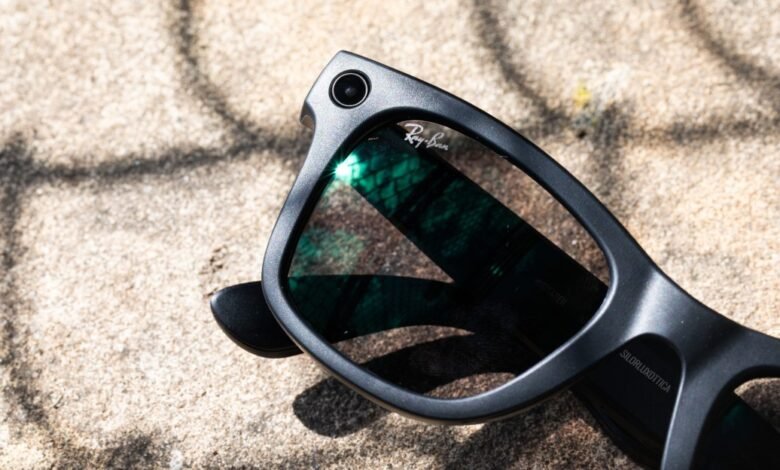
– The smart glasses, targeting a 2027 launch, will compete with Meta’s and feature speakers, microphones, and a camera for photos/videos and AI-powered functions, but no built-in display.
– These glasses will enable phone calls, music, and Siri interactions, and can identify objects, reference landmarks, and provide situational reminders based on the user’s surroundings.
– Apple is developing the glasses’ frames in-house, aiming for a high-quality build with embedded components and advanced camera tech, while a version with a display is still years away.
– The AI pendant, expected as early as next year, would act as an always-on camera and microphone for the iPhone, and upgraded AirPods with low-res cameras for AI analysis are also possible.
Apple is reportedly advancing its wearable technology strategy with three distinct AI-powered devices: smart glasses, a camera pendant, and upgraded AirPods. According to a recent report, these new products will integrate with the iPhone, enabling Siri to understand and act upon visual context from the user’s environment. This move signals a significant push into ambient computing, where artificial intelligence assists users seamlessly throughout their day.
Production for the smart glasses is said to begin in December, targeting a 2027 release. These glasses will directly compete with offerings from Meta. Unlike some competitors, Apple’s initial model will not include a built-in display. Instead, the focus will be on audio interactions, high-quality photography, and AI-driven environmental awareness. Users will reportedly be able to make calls, play music, and query Siri. The AI capabilities could allow the glasses to identify objects, provide contextual directions by recognizing landmarks, or even remind the wearer of tasks based on their location.
A key differentiator for Apple may be its approach to design and manufacturing. The company is believed to be developing the frames in-house rather than partnering with an established eyewear brand. Early prototypes connected to a separate battery pack via a cable, but newer iterations are said to embed the components directly into the frames themselves. The emphasis is on a premium build and advanced camera technology to set the product apart. While Apple continues to work on a more advanced version with an integrated display, that model is not expected for many years.
Beyond eyewear, Apple’s hardware ambitions include a small, wearable AI pendant. Roughly the size of an AirTag, this device could be worn as a necklace or pin. It would function as an always-on camera for the iPhone, equipped with a microphone for activating Siri. Though it may contain a basic chip, the pendant would primarily rely on the processing power of a paired iPhone. This accessory, which could launch as early as next year, represents a novel form factor for capturing and interpreting the world through AI.
The third piece of this wearable ecosystem involves the AirPods. Upgraded models expected later this year might incorporate low-resolution cameras. When paired with on-device AI, these cameras could analyze a user’s surroundings. This functionality could enable new forms of contextual audio or enhanced spatial awareness, further blending the physical and digital worlds. Together, these devices outline a comprehensive vision where Apple’s AI is not just heard through Siri, but can also see and understand the context of the user’s daily life.
(Source: The Verge)