Everything We Know About the Upcoming MacBook Air

▼ Summary
– The upcoming MacBook Air is expected to be a minor “spec bump” focused on performance, not a major design overhaul.
– It will be powered by the new M5 chip, which Apple claims offers significantly improved AI and GPU performance over the M4.
– Benchmark tests show the M5 is roughly 9-10% faster in single-core, 19% faster in multi-core, and 37% faster in GPU performance than the M4.
– The laptop will retain the same design and 13-inch/15-inch sizes, with a likely release in the first half of the year.
– This consistent update cycle exemplifies the benefit of Apple’s control over its hardware since transitioning from Intel to its own Apple Silicon.
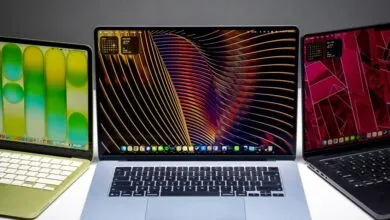
While the spotlight often shines on the MacBook Pro, Apple’s most accessible laptop is quietly preparing for its next evolution. The upcoming MacBook Air is poised for a significant performance upgrade, maintaining its beloved design while integrating the latest silicon. This refresh focuses on delivering enhanced power and efficiency, continuing Apple’s strategy of annual, iterative improvements to its hardware lineup.
The forthcoming model is not a complete redesign but rather a targeted spec bump centered on the new M5 chip. This represents a direct successor to the current M4 processor, promising notable gains in computational power and artificial intelligence capabilities. Apple’s previous announcements for the M5 MacBook Pro highlighted these advancements, suggesting the Air will benefit from the same architectural improvements.
Performance metrics indicate a substantial leap. Early benchmark testing shows the M5 chip achieving approximately 9-10% faster single-core CPU performance, a 19% increase in multi-core tasks, and a remarkable 37% boost in GPU performance compared to the M4. These figures translate to smoother multitasking, more responsive applications, and significantly better graphics handling for creative work and light gaming.
A key enhancement is in AI processing. Apple has stated the M5 delivers up to four times the peak GPU compute performance for AI workloads compared to its predecessor. This is powered by a next-generation GPU architecture that includes a dedicated Neural Accelerator in each core, a more potent CPU, a faster Neural Engine, and increased unified memory bandwidth. These features will accelerate machine learning tasks and applications leveraging on-device AI.
Beyond the internal silicon, the new MacBook Air is expected to retain its current physical identity. The sleek, lightweight design and the choice between 13-inch and 15-inch display sizes will remain unchanged. This consistency allows Apple to streamline production and focus the upgrade entirely on processing power and efficiency gains.
Regarding availability, a release during the first half of the year appears likely. Following the pattern of recent releases, the M4 Air launched in March of last year, an announcement in the spring seems plausible. This cadence of yearly updates exemplifies the advantage of Apple’s control over its silicon design, enabling regular performance refreshes across nearly the entire Mac portfolio, a rhythm that was difficult to maintain during the Intel era.
For consumers, this update presents a clear choice. Those seeking the absolute latest in Apple’s silicon technology for maximum future-proofing may want to wait for the M5 model. However, the current M4 MacBook Air remains a powerful and capable machine, and potential discounts on existing inventory could offer exceptional value for many users. The consistent annual upgrade cycle ensures that whether you buy now or later, you’re investing in a laptop built on a proven and rapidly evolving platform.
(Source: 9to5Mac)