China Unveils New Moon Ship and Reusable Rocket in Historic Test
▼ Summary
– China successfully conducted a test flight of a new reusable rocket and crew capsule, marking a key breakthrough for its goal of landing astronauts on the Moon by 2030.
– The test involved the Long March 10 booster and the Mengzhou spacecraft, which are core components of China’s lunar exploration program.
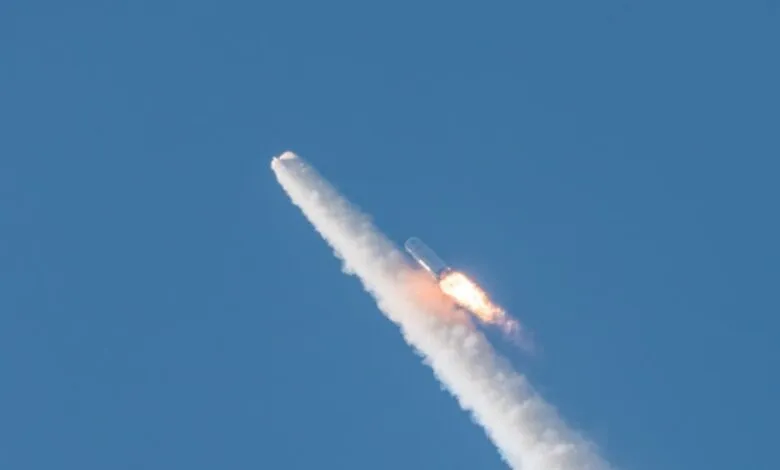
– During the flight, the Mengzhou capsule performed a launch abort test at maximum aerodynamic pressure, simulating an emergency escape from a failing rocket.
– Unlike similar US tests, the Long March 10 booster continued its ascent after the abort, completed a spaceflight, and executed a precise propulsive landing at sea for recovery.
– This launch is part of a competitive race between China and the United States for national prestige and access to lunar resources.
China’s ambitious lunar exploration program achieved a major milestone with the successful test flight of its next-generation crew spacecraft and a reusable rocket booster. This demonstration represents a critical step toward the nation’s goal of landing astronauts on the Moon before the end of this decade. The event underscores the intensifying international race to return humans to the lunar surface, a contest driven by both scientific ambition and strategic considerations regarding future resource access.
The test involved a subscale version of the Long March 10 rocket and an uncrewed prototype of the new Mengzhou crew capsule. Launched from the Wenchang Space Launch Site, the primary objective was to validate the spacecraft’s launch abort system, a vital safety feature designed to pull astronauts away from a malfunctioning rocket during ascent. At the point of maximum aerodynamic stress, the Mengzhou capsule fired its abort motors, separating from the booster and executing a flawless escape maneuver. The capsule later descended safely under parachutes, splashing down in the waters near Hainan Island.
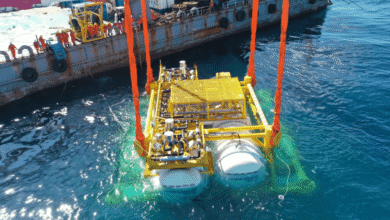
What set this test apart was the performance of the rocket itself. Unlike similar demonstrations conducted by other space agencies, where the test booster is typically expended, the Long March 10 continued its mission. After the capsule separated, the booster ascended further into space before reorienting itself, re-entering the atmosphere, and executing a precise propulsive landing in the South China Sea. A waiting recovery vessel was positioned nearby to retrieve the booster, showcasing a key reusable technology that could significantly reduce future mission costs.
The China Manned Space Agency hailed the flight as a fundamental breakthrough for its lunar exploration roadmap. Both the Long March 10 and the Mengzhou spacecraft are central components of China’s architecture for sending crews to the Moon. This successful test of integrated systems, encompassing crew safety and booster reusability, provides a substantial confidence boost for the program’s aggressive timeline, positioning China as a formidable contender in the new era of lunar exploration.
(Source: Ars Technica)