OpenAI Tests Ads in Free ChatGPT and Plus Versions

▼ Summary
– OpenAI is testing sponsored content in ChatGPT for free and Go tier users in the U.S., while Plus, Pro, Business, Enterprise, and Education subscribers will not see ads.
– The ads are contextually matched to conversations and appear separately at the bottom of responses, with strict privacy controls and no ads on sensitive topics like health or politics.
– This move marks a shift from CEO Sam Altman’s earlier critical stance on ads, now framing them as a way to support free access while aiming for a careful, contextual placement model.
– The strategy contrasts with rivals Anthropic, which is marketing its ad-free stance, and Google, which currently has no plans for ads in its Gemini assistant.
– The test represents a major new revenue channel for OpenAI, targeting user intent from conversations, but starts as a premium offering with high costs and limited inventory.
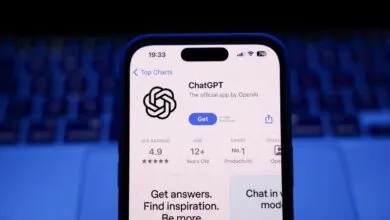
OpenAI has begun a limited experiment with advertising within its ChatGPT platform, introducing sponsored content to select users for the first time. This initial test is currently available to adult users in the United States who are logged into the free or Go subscription tiers. Notably, subscribers to the Plus, Pro, Business, Enterprise, and Education plans will not encounter any advertisements. The company has activated the principles it outlined earlier this year, with a recent update confirming that Education tier accounts will also remain ad-free, a change from its original announcement.
These sponsored messages appear at the very bottom of ChatGPT’s responses. They are visually set apart from the AI-generated answer and are clearly labeled. The system selects which ad to show by analyzing the topic of the ongoing conversation, along with the user’s chat history and past interactions with advertisements. For instance, a discussion about dinner ideas might prompt an ad for a grocery delivery service. Importantly, advertisers do not have access to individual conversations or personal data; they receive only aggregated performance metrics like view and click counts.
Users maintain several controls over this experience. They can dismiss an ad, request an explanation for why it appeared, disable ad personalization, or clear all advertising data. OpenAI has also instituted specific content safeguards, confirming it will not display ads in conversations concerning health, mental health, or political topics, and will block ads for any accounts identified as belonging to minors. Free users who prefer an ad-free experience have the option to exchange fewer daily messages for the removal of ads, while Go subscribers can upgrade to Plus or Pro.
This move follows OpenAI’s January announcement of its intent to explore advertising, framed as a way to support widespread access to AI tools. CEO Sam Altman previously noted on social media that many users desire extensive AI interaction without a subscription cost, suggesting this model could help meet that demand. This perspective exists alongside the company’s significant financial ambitions, including massive infrastructure investments and a goal to achieve an annualized revenue run rate exceeding $20 billion by the end of 2025. Reports indicate that early advertising commitments start at $200,000, with costs around $60 per 1,000 views during this U.S. test phase.
Altman’s public stance on advertising has evolved noticeably. In late 2024, he expressed strong distaste for ads in AI, calling the concept “uniquely unsettling” and criticizing ad-driven models for potentially misaligning with user interests. By late 2025, his position had moderated, stating he wasn’t “totally against” ads but emphasizing they would require extreme care to implement correctly. He distinguished between “catastrophic” pay-to-rank advertising and more acceptable contextual placements that do not influence ChatGPT’s recommendations, a distinction the current test appears designed to uphold.
The launch creates a clear divergence in strategy among leading AI firms. Anthropic recently launched a marketing campaign explicitly promising that its Claude assistant will not feature ads, a move Altman called “clearly dishonest.” Meanwhile, Google’s leadership has stated it has no current plans to introduce ads into its Gemini assistant, expressing surprise at OpenAI’s early move, though it already shows ads within its AI-powered search overviews.
This test matters because of ChatGPT’s immense scale, reportedly used by hundreds of millions weekly, creating pressure to monetize free users beyond subscriptions. For marketers, it opens a novel channel where targeting is based on conversational context rather than search keywords, potentially capturing users with stronger purchase intent. However, the exclusion of sensitive topics and the high entry cost position this initially as a premium channel for a select group of advertisers.
OpenAI has labeled this a learning experiment to refine the user experience, with no specified timeline for broader expansion. User reception will ultimately determine whether this advertising model scales or is reconsidered, testing in practice whether Altman’s vision of non-intrusive, contextual ads can coexist with the trusted assistant experience.
(Source: Search Engine Journal)