The Lonely Promise of Cute Robots: Companionship in a Digital Age
▼ Summary
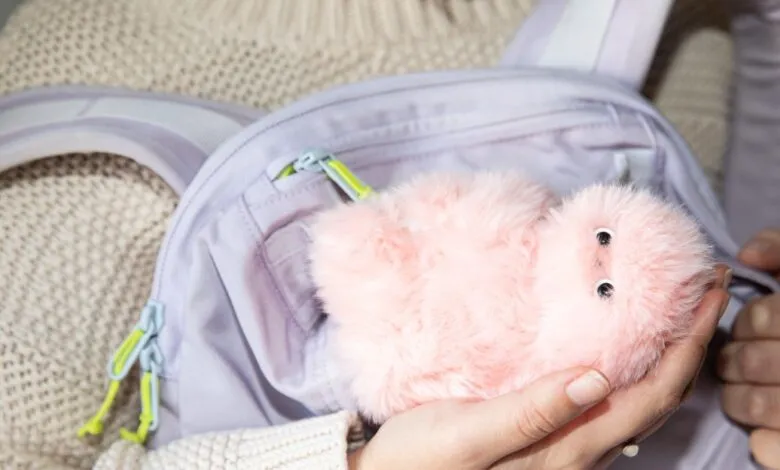
– The Mirumi is a fluffy, pink social companion robot from a Japanese startup, designed to combat loneliness by imitating a shy infant and attaching to a bag.
– The article contrasts Japan’s philosophy of creating friendly, therapeutic robots for well-being with a historical preference in the U.S. for utilitarian robots like the iRobot PackBot.
– While studies suggest social robots can improve well-being for isolated groups like the elderly, the author found Mirumi personally boring and ineffective in daily life.
– The robot unexpectedly became a temporary source of intense fascination and playful destruction for the author’s cat, highlighting an unintended use.
– The author questions whether predictable, non-reciprocal robot companions can truly alleviate loneliness, arguing that real connection involves mutual care and inconvenience.
Opening the box for Mirumi feels like stepping into a memory. The fluffy pink robot with its owlish face and surprisingly sturdy sloth-like arms arrives in late 2025, instantly pulling me back to a cramped Tokyo office in 2011. Back then, I was researching a story on robotics culture, specifically why American-made PackBots were at Fukushima while Japan’s famous robots were absent. The core insight was profound: in Japan, robots are often envisioned more as companions than as tools, designed for emotional support rather than dangerous labor. This philosophy has persisted for over a decade, leading directly to creations like Mirumi, a new kawaii companion bot meant to combat loneliness by mimicking a shy infant.
Now, in 2026, I’ve been living with Mirumi for weeks. It’s another social companion from Yukai Engineering, designed to hang on a bag strap, peer at people with googly eyes, and shyly duck its head when touched. As I attach it to my backpack, I realize the fundamental premise hasn’t shifted. This is the latest iteration in a long line of Japanese robots built to improve mental well-being. The potential benefits for combating loneliness, especially among aging populations, are supported by research. Studies during the pandemic showed robotic pets could enhance well-being for older adults with dementia. In cultures facing aging demographics and declining birth rates, these friendly machines hold significant appeal.
Yet, in my daily life, Mirumi proves to be adorably uneventful. On my New York commute, its swiveling head engages no one. At the office, it draws brief, amused attention, first when I plug a USB-C cable into its back, and later due to the loud mechanical whir of its head. It gets called cute, receives a few pats, and is then forgotten under a coat at a bar. It would be dishonest to say it provided no joy, but the most meaningful connection it forged was an unexpected one: a two-week obsession from my cat, Petey.
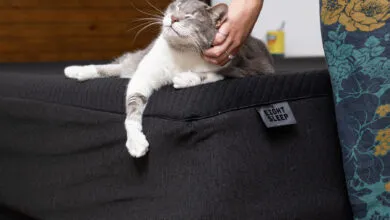
From the moment Mirumi whirred to life, Petey was captivated in a distinctly predatory way. His love was swift and destructive, a game of hunt and decapitation. I’d find the robot headless on the floor, fur matted with slobber. He’d wait at the door for my backpack, launching attacks with wailing cries. The saga ended only when he could freely bunny-kick the toy at will, and boredom set in. This violent affection highlighted a truth: the hunt itself was the compelling part.
My personal reflection on Mirumi’s purpose deepened during a visit to the Broadway show Maybe Happy Ending, a story about obsolete helper robots contemplating their “deaths.” It hit painfully close to home, as both my parents died from neurodegenerative diseases exacerbated by frontotemporal dementia. Their conditions brought profound loneliness and, for me as a caregiver, a isolating grief. I found myself wondering if a robot like Mirumi could have offered them solace. Clinical evidence suggests robotic pets can improve mood and caregiver interactions for dementia patients. While it wouldn’t have changed their endings, I am left to wonder if it might have made the journey slightly easier. Yet, I also recall my mother’s tendency to destroy or ignore assistive technology, a reminder that these solutions are not universal.
The night of the show, Mirumi was dead on my bag, its battery drained. I hadn’t noticed. This unthinking neglect made me question my own role. Was I as carelessly oblivious as the owners who abandoned the show’s robotic protagonists? The ease with which we can discard these manufactured friends points to a core limitation. True companionship involves reciprocal inconvenience. My cat Petey demands food, play, and care; in return, I receive purrs and unpredictable affection. His needs create a bond. With Mirumi, I can take its novelty without giving anything back. Its movements are predictable. Its “death” would be meaningless.
It is difficult to grieve for something you never loved. This isn’t to claim robot pets can’t inspire attachment, owners have held funerals for discontinued Sony Aibos. However, the current wave of AI companions often feels devoid of true reciprocity. A device can hang around your neck, but its company never feels like a chosen gift. An AI girlfriend can listen endlessly but will never have needs of its own. For someone experiencing deep loneliness, a one-sided, unconditional digital love might feel preferable to utter isolation. In specific clinical contexts, the benefits for mental health are clear. Yet, I remain skeptical that something which is cute, predictable, and ultimately easily discarded can ever truly satisfy the human need for authentic, mutual connection.
(Source: The Verge)