Telly’s TV Installations Stalled at 35,000 Last Fall
▼ Summary
– Telly, a startup offering free TVs with a second screen for ads, promised to ship 500,000 units in 2023 and millions more in 2024 but had only 35,000 in homes by late 2025.
– The company faced major logistical challenges, with 10% of TVs shipped via FedEx arriving broken, prompting a switch to a new delivery partner.
– Telly’s business model is capital-intensive, requiring $350 million in recent debt funding to give away high-value hardware for free.
– Despite low distribution, Telly generated significant advertising revenue, with each TV potentially earning over $50 per month in Q3 2025.
– The CEO remains publicly optimistic, dismissing concerns about hardware difficulties and envisioning Telly as a potential trillion-dollar company.
The ambitious free television startup Telly, which launched publicly in 2023, has encountered significant hurdles in scaling its operations, with installations stalling far below its initial projections. The company’s internal investor update from late 2025 revealed it had only 35,000 units in customers’ homes, a stark contrast to its original goal of shipping half a million TVs by the end of its debut year. While leadership once confidently predicted shipping “millions more” in 2024, the reality of manufacturing, logistics, and financing a free hardware product has proven immensely challenging.
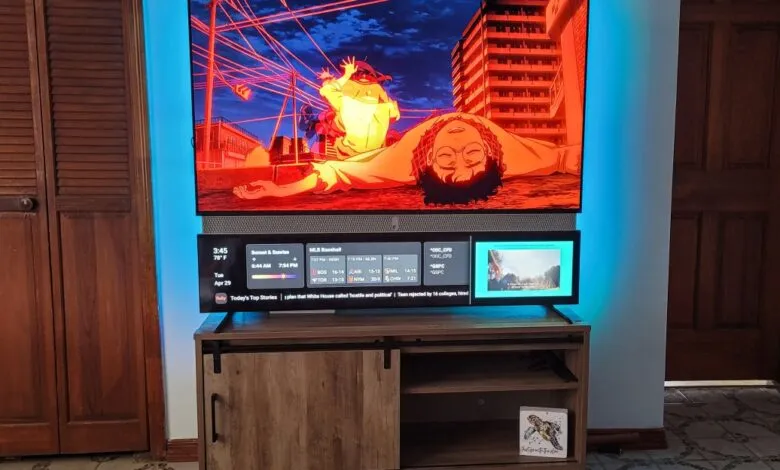
Telly’s core proposition is straightforward: consumers receive a free smart TV equipped with a secondary screen below the main display. This lower screen continuously shows advertisements alongside widgets for sports, news, and games. In return for the free hardware, users agree to engage with this ad-supported ecosystem. Early interest was strong, with a reported 250,000 preorders shortly after announcement. However, translating that demand into functional TVs in living rooms has been a complex ordeal.
A primary obstacle has been the company’s direct-to-consumer shipping model. Abandoning traditional retail channels meant Telly had to master logistics itself, a process plagued by damaged deliveries. Community posts on platforms like Reddit showed numerous customers receiving broken TVs, sometimes even replacements that were also damaged. The company’s own data acknowledged the severity, noting that at one point, 10 percent of units shipped via FedEx arrived broken. Telly has since switched logistics partners to improve delivery success rates.
Financing this venture is another monumental task. Executives have described the hardware as a “$1,000 TV,” and giving such products away requires substantial capital. According to the investor letter, Telly secured $350 million in debt funding in recent months to support its operations. Despite the high costs and logistical headaches, there is a promising financial signal. The startup reported reaching $22 million in annualized revenue by the third quarter of 2025. Given the small installed base, this suggests each TV is generating impressive advertising revenue, potentially over $50 per month, a figure that outpaces the average revenue per user reported by major competitors like Roku.
This revenue potential highlights the core business appeal: a dedicated, always-on secondary ad screen in the home could be highly lucrative. The formidable challenge lies in moving from a niche novelty to a mainstream product. Publicly, Telly’s CEO Ilya Pozin remains undaunted, dismissing the common investor warning that “hardware is hard.” He has pointed to giants like Apple and Tesla as evidence that hardware businesses can scale to extraordinary heights, even suggesting Telly has the opportunity to become a “trillion-dollar company.” For now, the path to that future depends on solving the fundamental issues of delivery and scaling that have kept installations at a fraction of the original, lofty targets.
(Source: The Verge)