Steam Dev: Game Difficulty Rises as Players Struggle to Email
▼ Summary
– The developer of the alternate reality game *After Hours* has observed a recent, significant increase in players incorrectly using email by typing their entire message into the subject line, leaving the body blank.
– This incorrect usage prevents the game’s automated hint system from working, as it is designed to read keywords only from the email body, making the game too difficult and leading to more negative reviews.
– The developer speculates that these players are likely young, based on their writing style, and their struggles align with broader anecdotal reports of younger generations lacking basic administrative and technical skills.
– Broader context from the article cites studies and teacher reports indicating a decline in both traditional literacy and digital competency, such as using computers as information-gathering tools, among young people.
– In response, the developer is exploring ways to adapt the game’s system to recognize these new communication patterns and provide help, approaching the issue with empathy rather than blame.
A game developer has discovered that a core puzzle in his alternate reality title is now proving nearly impossible for a significant number of players, not due to its complexity, but because of a surprising gap in basic digital literacy. The issue highlights a growing concern that younger generations, while digitally native, may lack foundational skills with tools considered standard by older users, directly impacting their ability to engage with certain types of media and problem-solving.
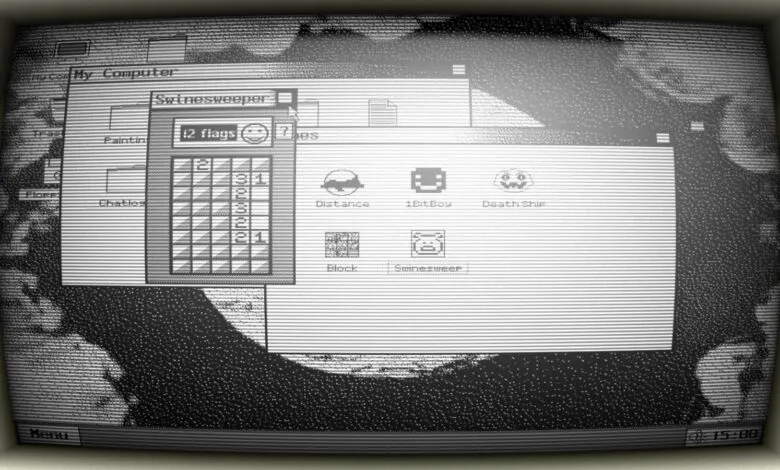
The game in question, After Hours, is a mystery adventure where players investigate a scientist’s disappearance by exploring an old computer. A key mechanic involves players noticing an email address within the game’s fictional correspondence and deciding to send a real message to it. The system is designed to parse keywords from the email’s body text and send an automated response containing a vital hint. This clever integration of the real world into the gameplay was initially successful, with players in 2018 quickly understanding the conceit and progressing.
Recently, however, developer Petter Malmehed observed a strange shift. A flood of emails began arriving with no message body at all. Instead, players were typing their entire question or comment directly into the subject line. The automated system, which only reads the body of the email, could not process these messages, leaving players stuck and frustrated. Consequently, the game’s review scores began to drop, with many new players citing it as being excessively difficult.
Malmehed estimates that in a recent year, roughly one-third of the thousands of emails received contained only a subject line, often written in informal, lowercase text. He speculates that the users struggling with this are predominantly young, a theory that aligns with broader anecdotal reports from educators. Teachers and parents increasingly note that many young people struggle with administrative tasks like composing formal emails, reading analog clocks, or even tying shoes. While researchers caution that the causes are multifaceted, ranging from shifts in educational focus to changes in daily technology use, the observable outcome is a cohort entering adulthood without some expected proficiencies.
The situation presents an ironic twist: a generation raised with technology appears to be faltering with specific technical applications. Email, with its requirement for a subject line and a separate body, operates on a different logic than the streamlined, single-field interfaces of modern messaging apps and social media platforms. For someone who has never needed to use email formally, the format is not intuitive. As Malmehed noted, “No form of modern communication requires a subject and a body , it’s easy to see how people not familiar with email aren’t filling out both fields.”
This skills gap extends beyond email. Studies have indicated that a low percentage of students globally possess the ability to use computers effectively as information-gathering tools, despite widespread access to devices. The decline of dedicated computer labs and typing classes in schools may contribute to this, leaving many without structured learning for these fundamental digital competencies.
For After Hours, the impact is direct and measurable. The percentage of players who complete the game has fallen dramatically. “I think the odd ways of writing the emails is the culprit,” Malmehed stated. “No hints makes the game way too hard.” He now describes his own hint system as “fragile” and something he wouldn’t recommend to other developers under current conditions.
His response, however, is not one of blame but of adaptation. Malmehed is exploring technical adjustments to make the system more robust, potentially allowing it to recognize queries from the subject line. His approach is empathetic, recognizing that the problem stems from a shift in common knowledge rather than a lack of player intelligence. The experience serves as a curious case study in how evolving user behaviors can unexpectedly alter the difficulty and accessibility of creative works designed for a different technological era.
(Source: Polygon)