Data Quality: The Paradigm Shift Is Here

▼ Summary
– The primary cause of data quality issues is not technology but the people, processes, and level of rigor within an organization.
– A major paradigm shift is underway as AI capabilities are integrated into martech platforms, moving processes from deterministic rules to probabilistic, context-based approaches.
– Traditional data governance is becoming obsolete, requiring a new “trust mindset” focused on the context AI uses rather than just trusting its output.
– A modern framework called CRUD 2.0 (Context, Review, Upgrade, Declutter) is proposed to manage AI-ready data, emphasizing continuous human review and process improvement.
– The risks posed by AI operating on poor data, such as inaccurate campaigns, may finally provide the business case to declutter legacy systems and address long-standing data quality challenges.
For professionals in marketing technology and operations, the conversation around data quality has reached a critical juncture. The familiar frustrations with inaccurate or incomplete information are no longer just operational headaches; they represent a fundamental barrier to leveraging the next wave of technological advancement. The integration of artificial intelligence into core platforms is accelerating, making the traditional methods of data governance obsolete. This shift demands a complete reevaluation of how we build and measure trust within our own systems, moving beyond blaming software to addressing the human and procedural factors at the core of data integrity.
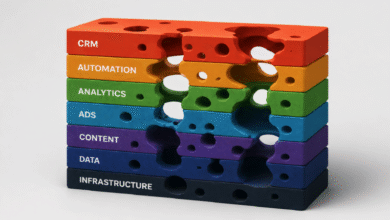
The central challenge stems from a foundational change in how our tools operate. Increasingly, processes within the marketing stack rely on probabilistic approaches rather than deterministic rules. Where deterministic logic depends on exact matches and rigid, predefined conditions, probabilistic systems use context-based interpretation. They leverage large language models to infer meaning from both structured fields and unstructured data like emails and notes. This evolution means our historical playbook, which assumed properly structuring all data was the ultimate goal, is no longer viable. Legacy systems often forced unstructured information into restrictive boxes, with the ubiquitous “Other” dropdown menu becoming a symbol of this limitation.
Evidence underscores the scale of the problem. Recent industry surveys reveal that a majority of organizations report less than half of their CRM data is accurate or complete. Furthermore, over half of marketers cite poor data quality, missing, stale, or inconsistent records, as a primary obstacle to their AI initiatives. To navigate this new landscape, a new framework for “AI-ready” data is essential. We can modernize the old data management principle of CRUD (Create, Retrieve, Update, Delete) into a new mindset: CRUD 2.0.
This updated framework begins with C for Context. The focus shifts from merely trusting an AI’s output to trusting the context it operates within. Marketing technologists will evolve into curators and context engineers, applying the “Goldilocks principle” to provide the just-right amount of relevant data for AI agents to function effectively.
R stands for Review by the ‘human in the loop’. Probabilistic algorithms necessitate coordinated human oversight. Teams must be retrained, and new fact-checking procedures established to involve subject matter experts based on data context. This also requires a shift from project-based data cleanups to a continuous review mindset, as embedded AI capabilities run constantly.
U represents Upgrade. Attention must move from simply updating data fields to analyzing whether processes and decision quality are genuinely improving. Leaders must assess if AI inclusion delivers significant business value relative to its processing costs, which are becoming a major metric as vendors shift to usage-based pricing models.
Finally, D is for Declutter. Ironically, the risk of AI hallucinations generated from poor-quality data may finally provide the impetus for long-overdue system cleanup. The danger of launching highly visible, inaccurate automated campaigns can fuel the business case to audit and simplify legacy setups, where outdated fields and workflows now introduce harmful noise.
Applying this CRUD 2.0 mindset often starts with revisiting core CRM processes. Consider the example of classifying a contact based on a job title containing the word “contract.” A deterministic rule might categorize them in Legal. However, a probabilistic AI, reviewing context from deal emails and RFP involvement, could correctly identify a sourcing role. The workflow would then suggest a human reviewer create a new procurement persona, flag related contacts for review, and draft tailored follow-up content for approval. Outdated automations tied to the old classification could then be flagged for cleanup or cloned as new templates.
The tipping point for data quality and AI is not on the horizon, it is here. Simply activating new AI features by default without this paradigm shift would rightly lead to distrust. However, by adopting a proactive approach centered on context, human review, continuous upgrade, and strategic decluttering, organizations can transform a longstanding challenge into a significant opportunity for growth and reliability.
(Source: MarTech)