Why Metroid Prime 4 Isn’t Open-World, According to Nintendo
▼ Summary
– Nintendo acknowledged fan interest in an open-world Metroid Prime 4 but found the genre’s core freedom incompatible with Metroid’s progression-based exploration.
– Instead of a full open world, the developers created a central hub area that connects to other zones, drawing comparisons to older 3D Zelda games.
– The team included a bike for traversal in the hub to provide a pacing break from the tension of exploration.
– Despite noticing a shift in player perceptions of open-world games during the long development, Nintendo avoided another reboot to stay true to its original vision.
– The developers consciously chose not to incorporate modern trends like increased game speed to preserve the deliberate tempo of an adventure game.
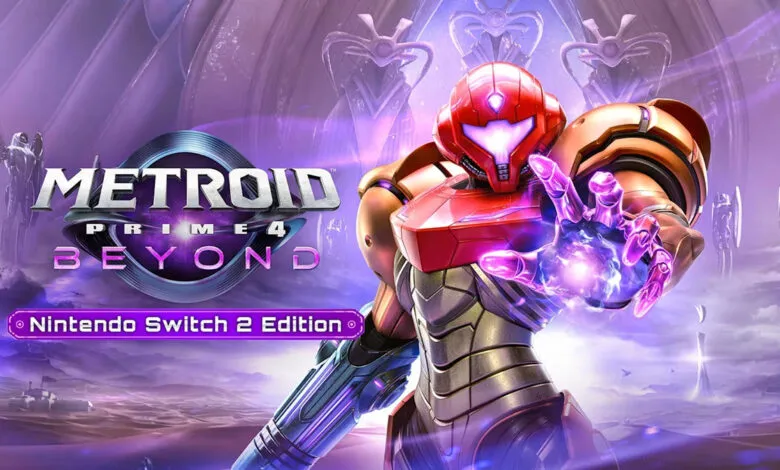
Nintendo has provided a fascinating look at the design philosophy behind Metroid Prime 4: Beyond, explaining the deliberate choice to avoid a fully open-world structure. The decision stems from a core belief that the franchise’s identity is built on progressive exploration, which the team felt clashed with the unrestricted freedom typical of modern open-world games. Instead, developers crafted a central hub area that connects to other explorable zones, creating a more guided adventure that stays true to the series’ roots.
Early in the project, the team observed considerable online discussion from fans expressing a desire for an open-world Metroid experience, likely influenced by the success of titles like The Legend of Zelda: Breath of the Wild. However, a fundamental conflict quickly became apparent. The essence of Metroid revolves around gradually unlocking new abilities to access previously unreachable areas. This core loop is inherently at odds with the open-world design principle of granting players the freedom to go almost anywhere from the outset.
To bridge this gap, the developers conceived a design centered on a substantial, freely explorable hub region. This area would serve as a connective tissue linking to other distinct environments. The concept for the bike, or Morph Ball traversal, emerged as a key component within this hub. The team envisioned it as a satisfying mode of movement that could provide a refreshing change of pace, alleviating the tension that can build during intense exploration segments and helping to regulate the game’s overall rhythm.
The development journey was lengthy, and during this time, the team recognized that player expectations and perceptions of open-world games had continued to evolve. Despite this shifting landscape, the project had already undergone one significant reset when development was handed over to Retro Studios. Given this history, the idea of backtracking and fundamentally altering the design direction again was not feasible. The studio made a conscious decision to stay committed to its original creative vision.
This commitment extended to other industry trends as well. The team noted significant evolutions in shooter and action games, particularly a widespread increase in overall game speed. While aware of these trends, the developers actively chose not to incorporate them. They believed that adopting such a faster pace would have disrupted the carefully constructed tempo essential to a classic adventure game experience. As a result, they feel the final product is somewhat distinct from contemporary gaming trends, a deliberate outcome of preserving the specific feel of a Metroid Prime adventure.
In related news, data miners have recently uncovered a collection of unused NPC dialogue within the game’s files, hinting at elements that were considered or cut during the final stages of production.
(Source: Nintendo Everything)