Hark launches privacy-focused AI personal assistant
▼ Summary
– Startup Hark has launched Hark Pro, an AI personal assistant designed to act as an operating system that uses the user’s computer autonomously.
– The product features a full-screen interface with chat capabilities and visual panels, allowing users to configure access to their digital life for task automation.
– A key differentiator is its transparency, showing users how the agent navigates the web in real-time to build trust regarding its actions.
– Hark positions itself against tech giants like Meta and OpenAI by emphasizing privacy and stating it does not sell ads or steal user data.
– The company focuses on building a user interface for AI rather than creating artificial general intelligence, aiming to make the assistant a must-have tool through practical utility.
Hark, a startup founded by serial entrepreneur Brett Adcock, has officially launched Hark Pro, aiming to redefine the personal assistant landscape. Less than a year after its inception, the company is positioning itself not as a creator of artificial general intelligence, but as a builder of a specialized user interface for AI. The core technology relies on a model trained specifically for computer use, allowing the assistant to operate directly on a user’s device rather than merely generating text responses.
This approach marks a distinct departure from the ambitious claims made by larger frontier labs. Hark views its mission as creating an operating system for future AI-driven computers. The service is available via a free tier, with a subscription option designed for power users who require more extensive capabilities. By focusing on practical utility over theoretical supremacy, the company hopes to earn user trust through reliability and humility.
A New Interface for Digital Tasks
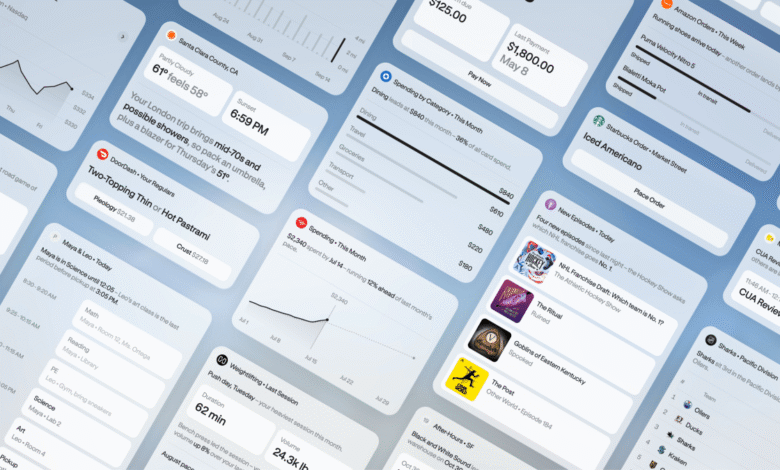
The Hark Pro experience is presented as a full-screen application featuring a central chat dialog and a dynamic feed of actionable prompts. Users can visualize their data through custom “panels” that function as mini-dashboards, while the background imagery adapts to local weather and time zones. To function effectively, the assistant requires access to various aspects of a user’s digital life, including email, calendars, hard drives, and financial accounts. Once configured, it handles both complex tasks and standard conversational queries.
During demonstrations, former Apple designer Abidur Chowdhury, who leads design at Hark, showcased the assistant’s proactive nature. The AI identified pending expense approvals, unanswered emails, and scheduled meetings. It also recognized the need to book a flight and offered to complete the transaction immediately. (“I know the flight thing is put to death,” he admits, grinning.) This highlights a common hurdle in the industry: users often struggle to identify which tasks are suitable for automation. Chowdhury noted that the assistant successfully renewed a colleague’s car registration at the California DMV website, demonstrating its ability to navigate external portals independently.
Transparency and Privacy Concerns
A key differentiator for Hark is its commitment to transparency regarding how it operates. Unlike many competitors that hide backend processes, Hark displays a small window showing exactly how the agent navigates the web. This visual feedback is intended to build confidence that the software is executing actions correctly. The company explicitly distances itself from tech giants like Meta or OpenAI, emphasizing a privacy-first stance.
Chowdhury clarified the company’s data philosophy during discussions about potential profiling. He stated, “we are doing work to understand you, and be helpful for what you need, but it’s really like task-related , it’s really about how Hark can help take something off your plate and be useful.” This statement addresses growing cybersecurity concerns and user discomfort with platforms that might create detailed profiles of individuals and their social circles. By framing data usage around specific tasks rather than broad behavioral tracking, Hark aims to alleviate fears associated with sharing extensive personal information.
Performance and Future Hardware
Hark argues that its specialized training for computer use results in superior end-to-end performance compared to general-purpose models. While it may not match the raw speed of competitors like Muse, the company claims it delivers better results by completing workflows without requiring user intervention at critical steps. Chowdhury encouraged critics to test the product extensively, asserting, “Please compare it to the others, be critical… It might not be faster than Muse, but it will give you a better result, and it will work end-to-end instead of asking you to take over at a point.”
The current software represents only half of Hark’s long-term vision. Chowdhury, known for his work on Apple devices, announced plans to release an AI-native hardware device in 2027. While details remain sparse, the team is cautious about wearable technology due to privacy implications. Chowdhury expressed skepticism toward wearable cameras, citing a “creep factor” that could hinder adoption. Instead, the first hardware product promises to be entirely novel. He emphasized the absurdity of relying on keyboards for advanced AI interaction, stating, “It’s so hilarious to me that you have AI now, you have a chatbot, and you type stuff in with a keyboard… Fifty years later and the future of computing is still a terminal.”
(Source: TechCrunch)