Brain-Inspired AI Models Are Now Closer to Reality
▼ Summary
– Amazon Web Services is offering limited preview access to The Biological Computing Company’s rat brain AI model for video generation.
– TBC uses a pragmatic approach by mimicking biological neural processes to improve the efficiency of existing generative AI visual models.
– Amazon also partners with Cortical Labs, another biologically-derived computing firm, indicating a growing interest in wetware technologies.
– Biological computing faces significant challenges due to the need to maintain living cells and translate their activity into digital information.
– Founded by neuroscientists in Baltimore, TBC recently raised $25 million to support its development of neural pattern-based AI.
Amazon Web Services has partnered with The Biological Computing Company (TBC) to bring a novel, biology-based artificial intelligence model to enterprise customers. Starting this Tuesday, select users will gain access to TBC’s “rat brain” AI during a limited preview phase. The technology leverages neural patterns derived from actual rat brain cells to enhance the efficiency of video generation models. Both Amazon and TBC anticipate that this specialized tool will soon be available to all AWS enterprise clients, marking a significant step toward integrating biological computing into mainstream cloud infrastructure.
“We figured out a way to code information, like images for example, to the biological material,” says TBC cofounder Alexander Ksendzovsky. “We then observe how the biology processes that information, and then we build a tool that mimics that process.”
This collaboration highlights a growing trend in which tech giants explore non-traditional computational methods. According to Deap Ubhi, global director of technology for startups at Amazon Web Services, this is not the first biologically-derived platform AWS has introduced to its marketplace. The company also supports Cortical Labs, an Australian firm that merges lab-grown neurons with silicon chips to assist companies in data processing. Cortical Labs markets its offerings as “wetware as a service” (WAAS) and even sells high-end biological computers designed for laboratory environments, capable of sustaining neurons for up to six months.
A Pragmatic Approach to Efficiency
Ubhi notes that TBC’s appeal to Amazon lies in its pragmatic approach to innovation. Rather than attempting to overhaul the fundamental architecture of large language models or reinventing the transformer unit, TBC focuses on optimizing existing standards within the generative AI sector. “They’re working within existing standards of the generative AI space and saying, ‘How can we make the current visual models more efficient?’” he explains.
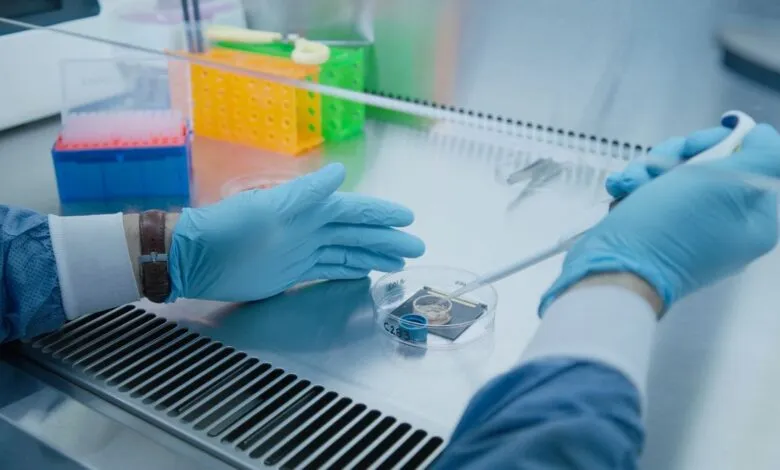
As the industry races to solve energy and computational constraints, biological computing is transitioning from a fringe concept to a viable solution. Researchers have long hypothesized that software could perform more effectively by emulating the neural networks found in human brains rather than relying exclusively on mathematical algorithms. However, this field presents distinct hurdles. It demands the operation of physical laboratories where living brain cells, stem cells, or synthetic biomaterials must be kept alive, meticulously monitored, and translated into digital signals. Bridging the gap between organic matter and code remains a complex engineering challenge.
Founders and Funding
The Biological Computing Company was established four years ago in Baltimore, Maryland, by two medical professionals: neuroscientist and neurosurgeon Alexander Ksendzovsky, who now serves as CEO, and Jon Pomeraniec, who acts as president and COO. The startup recently secured its first major funding round, raising $25 million earlier this year. The investment was led by Primary Venture Partners, signaling strong investor confidence in the potential of hybrid biological-digital systems to reshape the future of AI.
(Source: Wired)