Smaller, Cheaper Game Boy Clone Rivals Analogue Pocket
▼ Summary
– FunnyPlaying has announced the FPGB Mini, a new handheld console designed to play original Nintendo Game Boy and Game Boy Color cartridges.
– The device utilizes FPGA technology to ensure accurate gameplay while offering improvements like a high-resolution LCD screen and expanded battery life.
– Priced significantly lower than competitors, the initial batch of units sold out quickly due to its affordable cost and compact, pocketable design.
– While it lacks support for GBA or Sega Game Gear cartridges, it features USB-C multiplayer connectivity and a microSD slot for ROMs and saves.
– Despite size constraints preventing the use of cartridges with rumble motors, reviewers have praised its hardware capabilities and form factor.
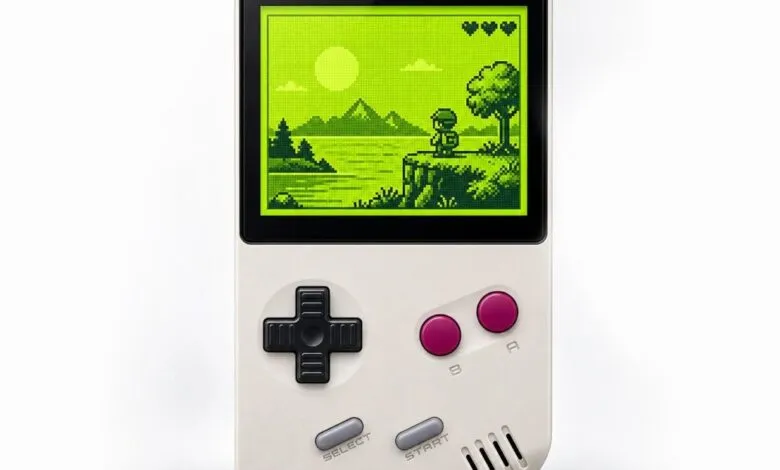
A new contender has entered the market for retro handheld gaming, challenging the dominance of premium devices like the Analogue Pocket. FunnyPlaying, a Chinese manufacturer recognized for its Game Boy and GBA enhancement kits, has unveiled the FPGB Mini, a device designed to play original Nintendo cartridges alongside ROM files. While it lacks the multi-system versatility of the Analogue Pocket, which supports Game Boy Advance and Sega Game Gear titles, the FPGB Mini distinguishes itself through a radically compact form factor and a significantly lower price point.
The device’s most striking feature is its size. The FPGB Mini is engineered to be extremely pocketable, measuring only slightly wider than a standard Game Boy cartridge. This minimalist design does come with trade-offs; the chassis is too small to accommodate larger Game Boy cartridges equipped with rumble motors or other hardware expansions. However, for purists seeking an authentic experience in a tiny package, it represents a compelling option.
Under the hood, the FPGB Mini utilizes field-programmable gate array (FPGA) technology, mirroring the approach taken by the Analogue Pocket. This method ensures that games run with accuracy comparable to the original Nintendo hardware, avoiding the visual artifacts often associated with software emulation. Despite using similar core architecture, the Mini offers modern upgrades, including a 2.98-inch LCD display with a resolution of 800×720 pixels. It also features an 1,800mAh rechargeable battery and a microSD slot, allowing users to store game saves, screenshots, or ROMs for emulation purposes.
Connectivity options have been updated to meet contemporary standards. The device supports multiplayer sessions and trading via a USB-C cable, replacing the proprietary connectors found on older systems. This modern interface enhances convenience for users looking to connect with friends or transfer data without needing legacy adapters.
Pricing and availability present a stark contrast between the two major players in this niche. Following recent price increases, the Analogue Pocket now retails for $239.99. In comparison, the FPGB Mini was initially discounted from $89.99 to $69.99 for its first batch of just 20 units, which sold out rapidly. Although supply is currently limited, reports suggest that FunnyPlaying may release additional units after implementing specific hardware improvements.
Early impressions from testers indicate strong potential for the device. Retro Dodo, who has spent several days evaluating the handheld, expressed satisfaction with both the build quality and performance capabilities. As FunnyPlaying refines the hardware for future production runs, the FPGB Mini could establish itself as a viable, budget-friendly alternative for gamers who prioritize portability and affordability over multi-system compatibility.
(Source: The Verge)


