Scientists Solve 1840s Space Weather Mystery
▼ Summary
– Researchers identified a potentially erroneous 1841 report of rail disruption in Exeter due to space weather, likely a typo for a later date.
– The study highlights that society has faced space weather impacts on technology since the advent of early electrical systems like telegraphs.
– Jim Wild from Lancaster University notes that the Exeter incident marks the intersection where emerging technologies first encountered the space environment.
– The Carrington Event of 1859 remains the most powerful recorded geomagnetic storm, causing widespread auroras and telegraph system failures.
– During the Carrington Event, operators could transmit messages using induced currents even after disconnecting power supplies.
Uncovering the True Timeline of Early Space Weather Impacts
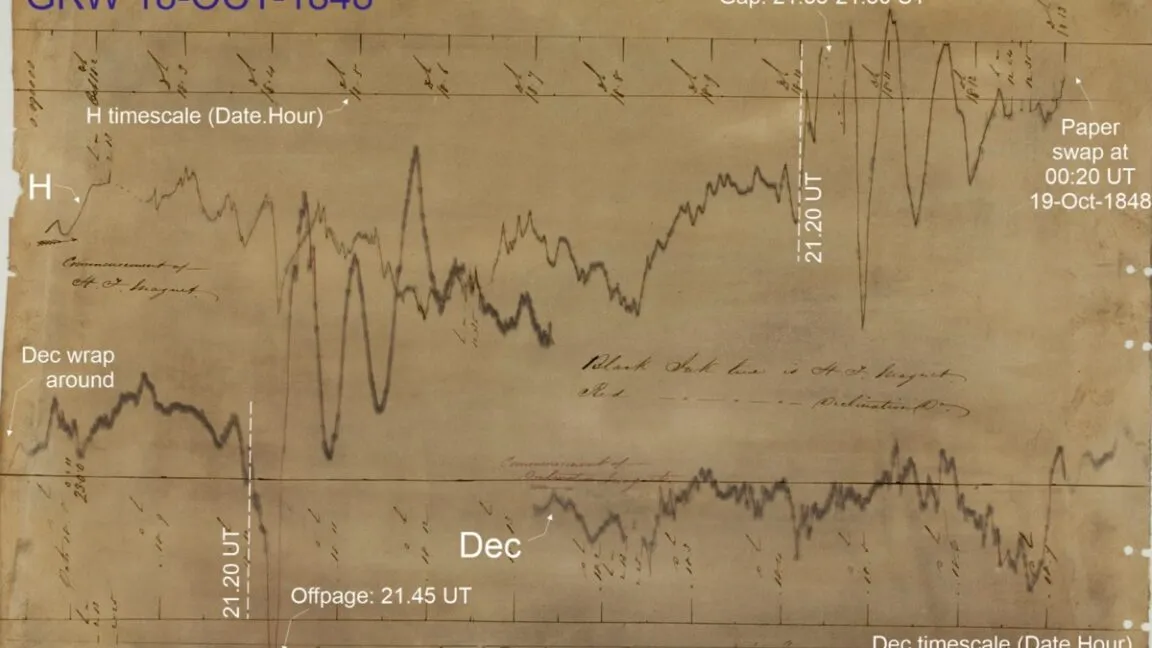
The historical narrative surrounding extreme space weather has long centered on the Carrington Event of 1859 as the inaugural instance of such phenomena. While reports of minor disruptions to telegraph infrastructure during geomagnetic storms date back to the late 1840s, a specific incident in Exeter, England, was once believed to predate that famous storm. In 2013, researchers identified an anonymous article published in Nature in 1871, which claimed a “very intense magnetic disturbance” had halted rail travel in Exeter in October 1841. If verified, this would represent the earliest recorded account of space weather affecting modern technology. However, a recent study published in the journal Space Weather suggests that the 1841 date is likely a typographical error, indicating the actual disruption occurred several years later.
This correction does not diminish the significance of the event but rather refines the timeline of how humanity has interacted with the space environment. The incident highlights a critical period when emerging electrical technologies first collided with the realities of solar activity. As Jim Wild of Lancaster University and co-author of the study noted, “Space weather is often discussed as a modern challenge because of our dependence on technologies such as satellites, communications systems and electricity networks.” He further emphasized the historical continuity of these interactions, stating, “What this study shows is that society has been experiencing the effects of space weather on technology for almost as long as electrical technologies have existed. The Exeter train delay is a fascinating story because it sits right at the point where emerging technologies first began to encounter the realities of the space environment.”
The Legacy of the Carrington Storm
Despite the re-dating of the Exeter incident, the Carrington Event remains the most powerful geomagnetic storm documented in scientific history. The storm generated widespread auroral displays across the globe, so intense that some observers reported being able to read newspapers by their glow. These luminous phenomena were accompanied by severe technical failures, including sparking and fires within telegraph stations. The telegraph system, which had only emerged in the 1830s, was particularly vulnerable to geomagnetically induced currents resulting from what is believed to be a massive coronal mass ejection from the Sun.
The power of the storm was such that it interfered with communication lines even after they were disconnected from their power sources. Operators discovered that the strong auroral currents alone were sufficient to allow them to transmit and receive messages, demonstrating the raw energy transferred from the solar event to terrestrial infrastructure. This event serves as a stark reminder of the vulnerability of early electrical networks to solar variability, a concern that persists today with our reliance on more complex and interconnected technological systems.
(Source: Ars Technica)