Nvidia’s Huang Pushes Back on AI Rules at King Charles Summit
▼ Summary
– Jensen Huang, CEO of Nvidia, argued that AI is a foundational technology rather than a product and should not face the same regulations as social media.
– Huang emphasized that safety concerns stem from unready products and advocated for strict engineering testing in sealed laboratories before public release.
– He noted that sectors utilizing AI, such as healthcare and transport, already have existing regulatory frameworks that can be augmented with new laws if necessary.
– His stance contrasted with calls from Anthropic and OpenAI executives to slow down frontier AI development due to fears of losing control.
– The comments were made at an event hosted by King Charles, who expressed cautious concern about the pace of AI development and the need for adequate control measures.
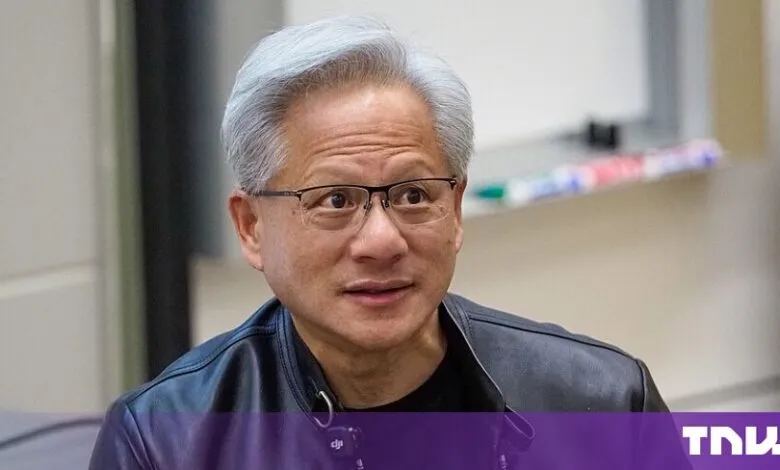
Jensen Huang, the chief executive of Nvidia, argued during a high-profile summit in Scotland that artificial intelligence requires a distinct regulatory framework separate from that of social media. Speaking to journalists on Thursday at the event organized by King Charles III at Dumfries House, Huang emphasized that AI is fundamentally a technology infrastructure rather than a consumer product. He contended that while social media platforms are products subject to specific rules, AI serves as the underlying engine for various other technologies and applications.
Huang clarified the distinction between the two fields, stating that AI was “very different from social media” and that current security concerns were “due to products that had not been ready for release”. He noted that industries utilizing AI, such as healthcare, transport, and entertainment, already operate under their own established regulatory regimes. Rather than creating new, isolated laws for AI itself, he suggested that authorities should monitor deployments for failures and integrate necessary legal additions into existing frameworks whenever issues arise.
Addressing safety protocols directly, Huang advocated for rigorous pre-release testing in controlled environments. He described this process as
“…good old-fashioned engineering, that’s all it is. It’s not any more than that and not any less than that.” “This is no different than, you know, an omelet’s not ready to be released, or a car is not ready to be released, an airplane engine’s not ready to be released,” he said. “You should properly test it.”
He reinforced this perspective in his formal address at the meeting, which included King Charles, representatives from OpenAI and Anthropic, Google DeepMind chair Demis Hassabis, and UK AI minister Kanishka Narayan. Huang stated:
“If a product is not safe enough, we should delay it and continue with engineering; we have always taken that approach and must continue to do so.”
These remarks positioned Huang at odds with leaders from two of Nvidia’s most significant customers. Dario Amodei, CEO of Anthropic, has previously urged a slowdown in frontier AI development, a stance supported by OpenAI’s Sam Altman, who warned that “we could lose control”. The King himself adopted a cautious tone, describing the rapid pace of AI advancement as “intriguing and deeply concerning in equal measure” and questioning whether society would act too late without proper safeguards. He asked:
“Surely, we need adequate means of control before it is all too late?”
The gathering, attended by key figures in the global AI community, was not anticipated to yield binding agreements but served as a platform for discussing the balance between innovation and safety.
(Source: The Next Web)