The Architects of the Digital World: Vint Cerf, Bob Kahn, and the Invention of TCP/IP
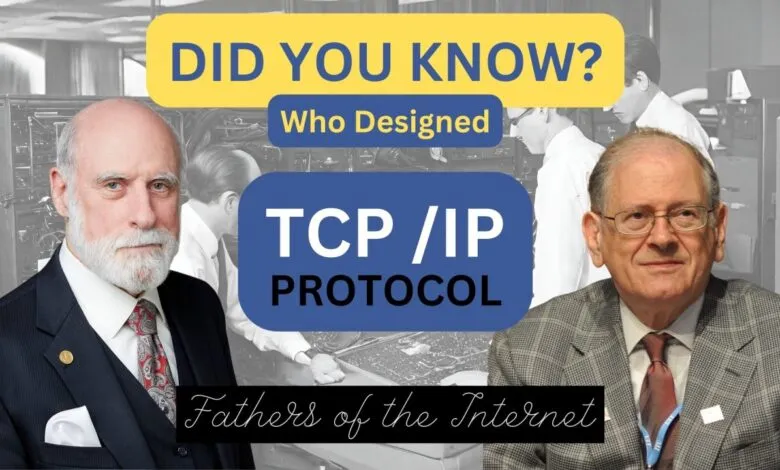
▼ Summary
– Vint Cerf and Bob Kahn are recognized as the “Fathers of the Internet” for creating the TCP/IP protocol suite.
– Their work solved the critical problem of enabling different, isolated computer networks to communicate with each other.
– TCP/IP operates by dividing data into packets, with IP handling routing and TCP ensuring reliable reassembly at the destination.
– A key to its impact was their decision to make TCP/IP an open standard, which allowed for widespread adoption and innovation.
– Their foundational architecture enabled the modern internet, supporting everything from the web to digital commerce and AI.
At DigitrendZ, we honor individuals whose actions have fundamentally altered the trajectory of human history. When we think of the digital revolution, our minds often jump to the creators of massive search engines, the pioneers of AI, or the innovators behind our devices. But none of these advancements, not a single algorithm, digital publication, or cloud server, would exist without the bedrock laid by two engineers in the 1970s.
Vint Cerf and Bob Kahn are universally recognized as the “Fathers of the Internet.” Their crowning achievement, the Transmission Control Protocol and Internet Protocol (TCP/IP), solved the most complex communication problem of the 20th century: how to make wildly different computer networks speak the exact same language.
The Problem With Early Networks
To understand the magnitude of their contribution, we have to look at the fragmented state of early computing. By the early 1970s, the U.S. Defense Advanced Research Projects Agency (DARPA) had already successfully launched ARPANET, a pioneering packet-switching network. Bob Kahn, a brilliant engineer who had earned his PhD from Princeton and worked at Bolt Beranek and Newman (BBN), was responsible for the system design of ARPANET.
However, ARPANET wasn’t the only network. Other systems, like packet radio networks and packet satellite networks, were emerging. The problem was that these individual networks were enclosed ecosystems. A computer on a packet radio network could not communicate with a computer on ARPANET. It was the digital equivalent of having excellent railway systems in different countries, but with entirely different track gauges, making cross-border travel impossible.
The Great Collaboration: Birthing TCP/IP
In the spring of 1973, Bob Kahn, now at DARPA, reached out to his former colleague Vint Cerf, who was then an assistant professor at Stanford University. Kahn asked Cerf to help him tackle this seemingly insurmountable problem of “internetworking.”
Together, they set out to create an open-architecture protocol. Their vision was radical for its time: the network itself shouldn’t be responsible for reliability. Instead, the responsibility should be pushed to the hosts (the computers at the edges of the network).
By 1974, Cerf and Kahn published their seminal paper, detailing a method to unify these disparate networks. This research evolved into TCP/IP.
- IP (Internet Protocol): Acts like the postal service, handling the addressing and routing of packets so they reach the correct destination.
- TCP (Transmission Control Protocol): Acts as the quality-assurance manager, ensuring that once the packets arrive, they are reassembled in the correct order without any missing data.
This ingenious division of labor allowed data to be broken into packets, sent across various global networks via different routes, and perfectly reconstructed on the other side. On January 1, 1983, ARPANET officially switched to the TCP/IP protocol suite. The internet, as we know it, was born.
Beyond the Protocols: A Lasting Legacy
The true genius of Cerf and Kahn’s invention was its scalability and open nature. They didn’t patent TCP/IP or keep it as a proprietary military secret. They made it an open standard, allowing anyone, anywhere, to build upon it. This decision catalyzed the explosion of the World Wide Web, global e-commerce, digital publishing, and modern artificial intelligence.
Their paths continued to shape the tech landscape long after the 1970s:
- Dr. Robert Kahn founded the Corporation for National Research Initiatives (CNRI) in 1986, where he remains Chairman, CEO, and President. At CNRI, he spearheaded the concept of digital object architecture, providing a framework for interoperability in managing digital information, a crucial component for modern digital archives and publications.
- Dr. Vint Cerf went on to become the founding president of the Internet Society (ISOC) alongside Kahn. Since 2005, Cerf has served as Vice President and Chief Internet Evangelist at Google, dedicating his career to global policy development and the continued spread of internet access, particularly in underserved regions.
The Unseen Foundation
Today, when we publish an article, run a digital marketing campaign, or query a generative AI model, we are riding on the architecture built by Vint Cerf and Bob Kahn over fifty years ago. They didn’t just invent a technology; they engineered a global nervous system. Their legacy is a testament to the power of open standards, collaborative problem-solving, and the profound impact of connecting the world.
