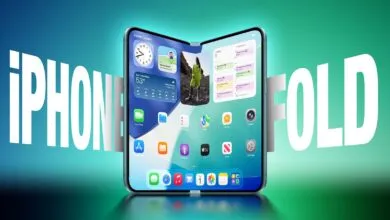
iPhone Fold Durability Claims Face Scrutiny After OPPO Find N6 Use

▼ Summary
– Apple’s rumored iPhone Fold faces the key design challenge of eliminating the visible crease, a problem competitors have not fully solved.
– Apple is reportedly experimenting with different materials to strengthen the display and prevent the crease from forming.
– An OPPO Find N6 user demonstrated that its marketed “crease-less” screen still has a visible crease under certain conditions, contradicting claims.
– OPPO’s “Zero-Feel Crease” technology focuses on making the crease imperceptible to touch, not completely invisible to the eye.
– Reviewers are expected to rigorously test the iPhone Fold’s crease visibility, putting pressure on Apple to deliver a superior design.
As the foldable smartphone market matures, the persistent challenge of the display crease remains a critical benchmark for durability and user experience. Apple’s rumored iPhone Fold faces intense pressure to deliver a genuinely crease-less panel, a feat that has eluded even its most ambitious competitors. Recent scrutiny of OPPO’s Find N6, which marketed a Zero-Feel Crease display, highlights just how difficult this engineering problem is to solve permanently.
A detailed, month-long real-world test by former concept creator Ben Geskin revealed that the OPPO Find N6 does develop a visible crease, contradicting some of its marketing claims. While the device boasts an industry-first 3D Liquid Printing process and a Clover Balance Pivot within its hinge system, designed to create a flatter screen, the visual blemish became apparent under certain lighting. This is notable given the phone’s TÜV Rheinland certification, which promises screen integrity after 600,000 folds. Geskin noted that while the crease is visible, the Zero-Feel claim holds some merit, as the physical bump under the finger is minimal compared to older models like the Find N5. This distinction between visual and tactile presence is becoming a key point in the foldable debate.
This episode sets a challenging precedent for Apple. The company is reportedly exploring advanced material stacks, including Ultra-Thin Glass (UTG) of varying thicknesses combined with a polyimide film (PI) overlay to enhance scratch resistance. The goal is not just to reduce the initial appearance of a crease but to ensure its long-term invisibility under all conditions. Given Apple’s market position, the iPhone Fold’s display durability will be subjected to unparalleled global scrutiny. Reviewers will inevitably test the panel by angling it toward light sources, a simple yet effective method for revealing any imperfections.
The situation underscores a broader trend where marketing claims in the competitive foldable space can sometimes outpace the physical reality of current hinge and display technology. For Apple, the task is clear: it must deliver a foldable experience where the crease is neither seen nor felt throughout the device’s lifespan. Success would set a new standard, while any shortcoming would invite immediate and severe criticism. The company’s extensive resources are being marshaled for this single purpose, making the eventual launch a definitive test of its innovation in flexible display design.
(Source: Wccftech)