Nomadic Secures $8.4M for Autonomous Vehicle Data Platform
▼ Summary
– Nomadic AI is a startup that provides a platform to turn vast, unorganized video footage from autonomous vehicle and robot fleets into structured, searchable datasets.
– The company’s core technology uses vision language models to identify rare, valuable edge-case events in video data for better monitoring and AI model training.
– Nomadic AI recently raised $8.4 million in seed funding led by TQ Ventures to onboard more customers and refine its platform.
– The startup’s customers, including Zoox and Mitsubishi Electric, use the platform to develop intelligent machines faster than through outsourcing or internal solutions.
– The founders position their tool as an “agentic reasoning system” that understands actions in context, differentiating it from basic auto-annotation or data labeling services.
Developing the next generation of autonomous vehicles and robots requires more than just raw video data, it demands the ability to extract meaningful intelligence from it. Companies in this space often find themselves with petabytes of footage sitting unused in archives because manually reviewing it is impractical. Nomadic AI is tackling this bottleneck with a platform that transforms unstructured video into a structured, searchable database, a solution that has now attracted $8.4 million in seed funding.
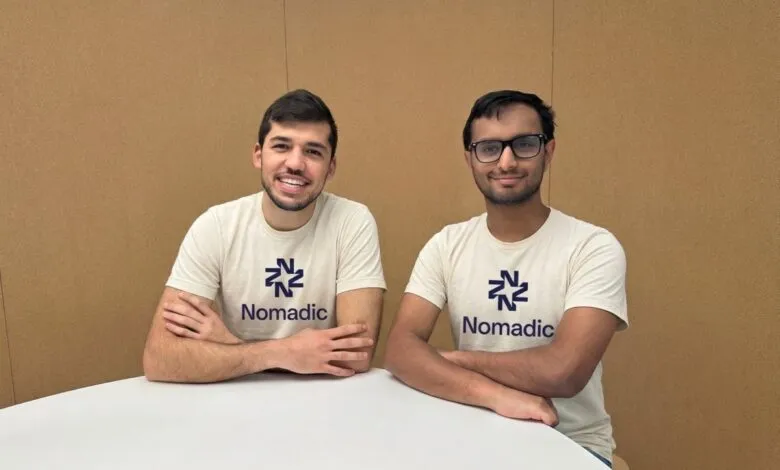
The round, led by TQ Ventures with participation from Pear VC and Google’s Jeff Dean, values the startup at $50 million post-money. The capital will fuel customer acquisition and platform development for the company, which recently won first prize at Nvidia’s GTC pitch contest. Nomadic’s founders, CEO Mustafa Bal and CTO Varun Krishnan, identified the core problem while working at companies like Lyft and Snowflake. They repeatedly encountered the immense challenge of managing and utilizing the vast amounts of data generated by physical AI systems.
The platform’s power lies in using a suite of vision language models to automatically analyze and annotate video. This process turns hours of footage into a queryable dataset, enabling developers to efficiently locate critical edge cases and specific scenarios for model training. For instance, a team could instantly find every instance of a vehicle navigating a complex construction zone or identify moments where a police officer overrides a traffic signal. This capability accelerates reinforcement learning cycles and enhances real-time fleet monitoring for safety and compliance.
“We provide insights on a company’s own footage, from their own autonomous vehicles and robots,” Bal explained. “What moves these builders forward is their unique operational data, not random datasets.” This focus on turning proprietary video into a competitive asset is already resonating with early customers like Zoox, Mitsubishi Electric, and radar startup Zendar. Antonio Puglielli, VP of Engineering at Zendar, noted that Nomadic’s domain expertise allowed his team to scale development faster than through outsourcing, distinguishing it from generic labeling services.
The market for auto-annotation tools is growing, with firms like Scale AI and Kognic offering AI-assisted labeling, and Nvidia releasing open-source models for similar tasks. However, Krishnan positions Nomadic’s system as more advanced than a simple labeler. He describes it as an agentic reasoning system where users describe what they need, and the platform determines how to find it across video, using multiple models to understand actions in context.
Investors believe this specialized focus gives Nomadic a significant edge. “The moment an autonomous vehicle company tries to build this internally, they’re distracted from their core mission of perfecting the robot itself,” said Schuster Tanger, the TQ Ventures partner who led the investment. He compared it to Salesforce not building its own cloud infrastructure, emphasizing the value of dedicated, best-in-class tools.
The startup’s technical team, which includes an international chess master in Krishnan and engineers who have all published research, is now building highly specific analytical tools. These include models that understand the physics of lane changes from camera feeds or precisely track a robotic gripper’s position. The next frontier involves expanding the platform to handle non-visual sensor data, like lidar point clouds, and creating fused insights from multiple data streams.
Bal acknowledges the immense technical challenge ahead. “Juggling terabytes of video, processing it with massive models, and then extracting accurate insights is incredibly difficult,” he said. With its new funding and focused approach, Nomadic is betting that solving this complex data problem will be foundational to the future of autonomous machines.
(Source: TechCrunch)