Pixel 10a Design: No Camera Bump
▼ Summary
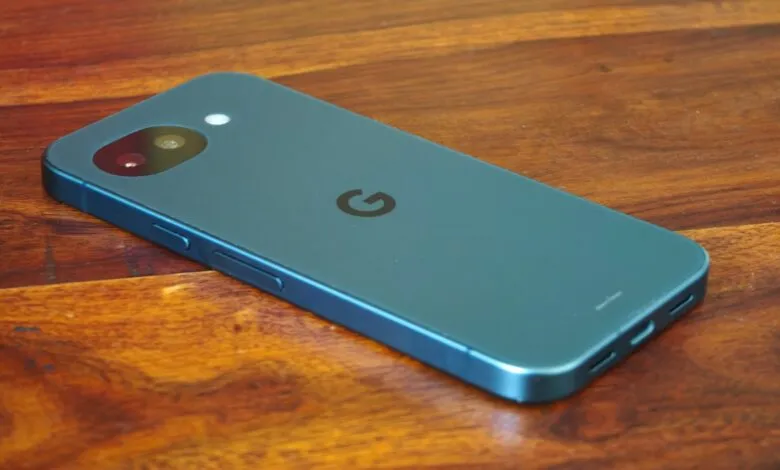
– The Google Pixel 10a’s key design change is the complete removal of the camera bump, creating a phone that lies flat on surfaces.
– It features a brighter 6.3-inch 120Hz display and a larger 5,100 mAh battery compared to the base Pixel 10.
– The phone uses the older Tensor G4 chip, which prevents it from running the latest Gemini Nano AI model and some on-device AI features.
– Its dual-camera system is unchanged from last year, with a competent main sensor but a weaker wide-angle lens lacking autofocus.
– Priced at $499, it offers good value with seven years of updates but faces strong competition from rivals like the Nothing phone 4a Pro.
The relentless pursuit of better smartphone photography has long resulted in one universal side effect, the prominent camera bump. This design necessity, while improving image quality, often compromises a device’s stability on flat surfaces. With the Google Pixel 10a, the company has taken a definitive step away from this trend by engineering a phone that lies completely flat, a refreshing change in a market dominated by protruding camera arrays. This flat design is the most significant visual departure for Google’s latest budget offering, which otherwise maintains a familiar aesthetic similar to last year’s Pixel 9a.
Available in colors like Lavender, Berry, Fog, and the reviewed plain black, the Pixel 10a features a 6.3-inch Actua display. This screen matches the size of its predecessor but now reaches a peak brightness of 3,000 nits, making it far more usable in direct sunlight. The panel supports a 120Hz refresh rate for smoother scrolling, though it ships set to 60Hz, requiring a manual adjustment in settings. In terms of build, the phone balances premium and practical elements, pairing a plastic back with Corning Gorilla Glass 7i on the front, while the standard Pixel 10 uses Victus 2 on both sides.
Under the hood, the Pixel 10a specifications reveal a device that closely aligns with its more expensive sibling in several areas. It packs a larger 5,100 mAh battery compared to the base Pixel 10’s 4,970 mAh cell. Charging sees an upgrade to 30W wired speeds over the Pixel 9a’s 23W, with wireless charging now at 10W. The core differentiator is the Google Tensor G4 chip, which also powered the previous generation. This means users upgrading from a Pixel 9a will not see a performance leap, and the combination of this older chipset with 8GB of RAM has a notable consequence, the phone cannot run the updated Gemini Nano AI model.
The absence of Gemini Nano limits the on-device AI features available. The Pixel 10a misses out on several capabilities present in the Pixel 10 series, including AI-generated notification summaries, the Pixel screenshot app, contextual Magic Cue suggestions, automated call notes, and on-device call translation. Photography is handled by a dual-camera system unchanged from last year, a 48-megapixel main camera and a 13-megapixel ultrawide sensor. The main shooter performs reliably in various lighting conditions, but the ultrawide lens, with its older, smaller sensor and lack of autofocus, can lose detail. AI-assisted photography tools like Camera Coach and Auto Best Take are included, and the phone supports up to 8x super-res zoom, though its quality doesn’t match the Pixel 10’s more advanced 100x capability.
Google supports the Pixel 10a with a strong commitment to seven years of software updates, ensuring long-term access to operating system upgrades, security patches, and potential Pixel Drop feature additions. A practical new convenience is the enhanced Quick Share feature, which now seamlessly interoperates with Apple’s AirDrop, allowing for easy wireless file transfers to Macs without needing a cable.
Priced at $499, the Pixel 10a’s value proposition rests on its excellent battery life, very bright display, faster charging, and its unique, grippable flat design. For owners of the Pixel 9a, however, the upgrade is difficult to justify given the identical core processor and camera hardware. The competitive landscape also offers alternatives like the Nothing Phone 4a Pro, which at the same price point challenges the Pixel with a larger, brighter screen, a more powerful Qualcomm processor, a dedicated telephoto camera, and significantly faster 50W charging speeds.
(Source: TechCrunch)