Xbox Project Helix Specs Leak: Microsoft’s New Console Details
▼ Summary
– Project Helix is a hybrid gaming console from Microsoft that merges console and PC ecosystems, targeting both types of gamers.
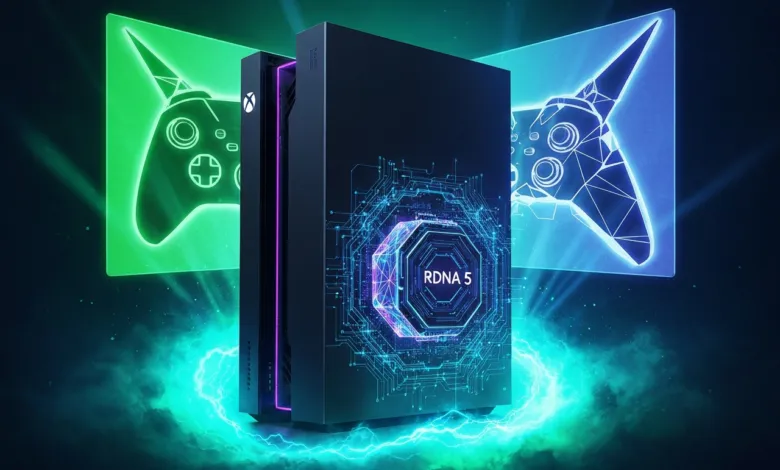
– Its hardware features a custom 3nm AMD SoC and an RDNA 5 GPU, with performance rivaling high-end PC graphics cards.
– A dedicated Neural Processing Unit (NPU) powers advanced AI features like smarter NPCs and enhanced in-game physics.
– The console supports native Xbox and PC games and will enhance Windows’ “Xbox Mode” for a unified, plug-and-play experience.
– It is projected for a potential 2028 launch with a premium price between $900 and $1,200, contrasting with Sony’s expected focus on affordability for the PlayStation 6.
Details have emerged regarding Microsoft’s next major gaming platform, internally known as Project Helix. This device is positioned not as a simple console refresh but as a hybrid gaming system designed to fundamentally merge the PC and console ecosystems. It promises to deliver top-tier performance, leverage cutting-edge AI, and create a unified library for games, though its anticipated premium cost will likely cater to a dedicated enthusiast market.
The hardware foundation is a custom AMD System on Chip (SoC) manufactured on an advanced 3nm process. This architecture allows for greater transistor density, which translates to significant gains in both power efficiency and raw processing capability. The graphics are driven by AMD’s next-generation RDNA 5 GPU, with leaked performance data suggesting it competes with, or even exceeds, current high-end desktop graphics cards in both rasterization and ray tracing workloads. This positions Project Helix to handle the most visually demanding future titles with ease.
A defining component is its integrated Neural Processing Unit (NPU). This dedicated AI hardware is engineered to transform in-game experiences by enabling more intelligent non-player characters, simulating complex physics, and powering advanced AI upscaling for image quality. The goal is to create worlds that feel more reactive and lifelike, directly enhancing player immersion.
The core philosophy of Project Helix is its hybrid design. It will natively run games from both the Xbox and Windows PC platforms, effectively creating a single, cohesive library. Microsoft is also reportedly refining a console-like “Xbox Mode” for Windows to complement this strategy. This approach offers the streamlined, user-friendly experience of a console alongside the flexibility and power traditionally associated with gaming PCs.
Visually, the system aims to achieve high-fidelity 4K gaming at smooth frame rates. It utilizes AMD’s latest upscaling technology, FSR Diamond, which uses AI to reconstruct images with sharp detail. Specialized hardware like Radiance Cores and Neural Arrays are included to accelerate ray tracing effects, enabling highly realistic lighting, shadows, and reflections that significantly boost graphical fidelity.
For storage and data streaming, Project Helix combines Microsoft DirectStorage with efficient compression techniques. This technology stack is designed to virtually eliminate traditional loading screens and allow for the seamless streaming of vast, detailed game worlds, keeping players immersed in the action without interruption.
In a major benefit for existing fans, the platform will continue Microsoft’s strong commitment to backward compatibility. Support is planned for games across four prior generations of Xbox hardware, allowing players’ existing libraries to benefit from the new system’s enhanced performance and visual capabilities.
Current projections suggest alpha development kits could reach studios in early 2027, pointing toward a potential consumer launch in 2028. The ambitious technology reportedly comes with a substantial price, with estimates ranging from $900 to $1,200. This contrasts sharply with the expected strategy for Sony’s PlayStation 6, which rumors suggest will prioritize a more accessible price point around $600. This divergence highlights a clear strategic split, with Microsoft targeting the high-performance segment and Sony aiming for the mainstream market.
Project Helix represents a significant gamble for Microsoft, challenging the entrenched separation between console and PC gaming. By blending the strengths of both platforms, it could establish a new benchmark for what dedicated gaming hardware can be. The competing visions of Microsoft and Sony, focusing on premium innovation versus broad affordability, will likely accelerate industry-wide advancements. For gamers, this rivalry promises more choice and pushes the entire category forward, hinting at a future where gaming devices are defined less by rigid categories and more by their capabilities and the experiences they enable.
(Source: Geeky Gadgets)