Apple’s Next iTunes Could Be Vibe-Coded
▼ Summary
– Parachord is a new music app aiming to make songs universally playable and shareable across different streaming services by freeing music metadata from service-specific silos.
– The app is the brainchild of J Herskowitz, who previously built a similar app called Tomahawk in 2011, which ultimately failed due to a lack of a sustainable business model.
– Herskowitz rebuilt the concept as Parachord in a few weeks using AI coding tools like Claude Code, despite not being a traditional developer himself.
– The app is built as a personal passion project for a niche audience of dedicated music fans, using personal API keys to avoid third-party costs and restrictive service policies.
– Herskowitz believes there is a potential “cottage industry” opportunity for building new experiences on top of existing streaming content, even if competing directly with giants like Spotify is not feasible.
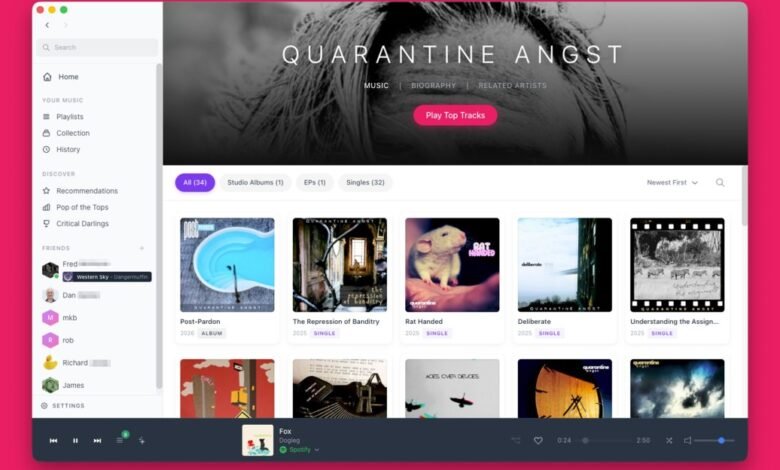
Imagine a world where your music isn’t locked inside a single app. A new project called Parachord is attempting to break down the walls between streaming services, aiming to make songs universally playable and shareable regardless of whether you subscribe to Spotify, Apple Music, or Bandcamp. This ambitious app seeks to let you follow tastemakers across social media, turning their posts into dynamic playlists, and even use AI to fine-tune recommendations to surface entirely new music.
The brain behind Parachord is J Herskowitz, a music tech veteran with experience at Spotify, LimeWire, and AOL Music. This isn’t his first attempt at solving this problem. Over a decade ago, he helped build an app named Tomahawk. That project used a plug-in system to pull music from various services like Rdio and Grooveshark, offering a social layer for fans and universal links for artists. While the idea was compelling, Tomahawk lacked a viable business model and development ceased in 2015.
However, Tomahawk’s code lived on as an open-source project. Recently, Herskowitz revisited it with the help of AI coding tools. Despite not being a traditional developer, his background is in product management, he used Claude Code to analyze the old Tomahawk repository and rebuild a functional version within weeks. This rapid development process, sometimes called vibe-coding, allowed him to resurrect his passion project as Parachord without hiring a single engineer.
The modern music landscape looks very different than it did during the Tomahawk era. Spotify has largely won the subscription war, and many smaller services have vanished. Herskowitz acknowledges that casual listeners happy with algorithmic playlists may not need his app. Instead, Parachord targets a more niche audience: music enthusiasts who buy tracks on Bandcamp, scrobble their plays to Last.fm, and follow artists on platforms like Bluesky. He admits this audience is smaller than he once imagined, but the current technological climate empowers him to build an app just for that niche, even if it primarily serves his own needs.
This approach of vibe-coding for niche media projects has historical precedent. Years ago, apps like Songbird, Boxee, and Miro explored novel ways to consume music and video online. Many were passion projects that struggled to become sustainable businesses. Today, AI-assisted development can give such specialized ideas a new chance to exist, even if they only serve a dedicated few.
Building Parachord now comes with fresh challenges. Major streaming platforms have become more restrictive with their data and API access. To integrate with Spotify, for instance, users must register Parachord as a personal app in their Spotify developer account and generate a private API key. This same model applies to connecting AI services like Claude or ChatGPT. While this creates a technical hurdle, it offers a significant advantage: it keeps costs near zero. Herskowitz doesn’t need to charge subscription fees to cover third-party API bills, allowing him to offer all features freely.
He frames this as a philosophical choice. Music listening is deeply personal, your taste, your library, your friends’ recommendations. These elements shouldn’t be trapped inside someone else’s walled garden. By building Parachord as a personal tool that leverages individual API keys, he keeps control and data in the user’s hands.
Although Parachord is currently a personal endeavor, Herskowitz hasn’t abandoned the possibility of a business model. He believes there’s potential for a cottage industry of apps that build enhanced experiences on top of the content people already pay for through major services. The goal isn’t to compete with Spotify directly, but to create a new layer of interoperability and social discovery that the big platforms currently lack.
(Source: The Verge)