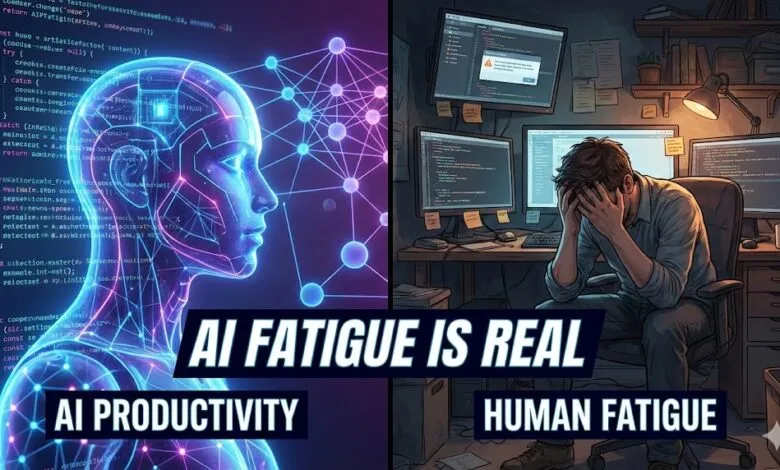
The Hidden Cost of Copilots: Why “AI Fatigue” Is the New Burnout
▼ Summary
– AI tools increase task speed but not total workload, leading engineers to juggle more problems and suffer from constant context-switching.
– Engineering work is shifting from creative coding to draining evaluative tasks, causing decision fatigue as engineers review AI-generated code.
– AI’s nondeterministic nature creates anxiety, requiring constant hyper-vigilance to ensure reliable outputs, which wears down mental endurance.
– The “prompt spiral” wastes time as engineers over-optimize AI instructions, and rapid tool obsolescence fuels a sense of futile learning.
– To combat fatigue, adopt strategies like accepting 70% complete AI output, time-boxing AI use, and focusing on stable infrastructure over chasing new tools.
Executive Summary
In a candid new essay that is resonating across the engineering community, Siddhant Khare, a core maintainer of OpenFGA and builder of AI agent infrastructure, tackles a growing but unspoken crisis in tech: AI Fatigue.
While the industry celebrates productivity gains, Khare argues that for the engineers in the trenches, the AI revolution has introduced a new form of cognitive exhaustion. His essay breaks down why shipping code faster is leaving developers more drained than ever, and offers a framework for reclaiming mental sustainability.
The Core Paradox: Faster Tasks, Harder Days
Khare identifies a critical flaw in the “AI boosts productivity” narrative. While AI tools genuinely reduce the time required for individual tasks (e.g., drafting a doc, scaffolding a service), they do not reduce the total workload. Instead, work expands to fill the capacity.
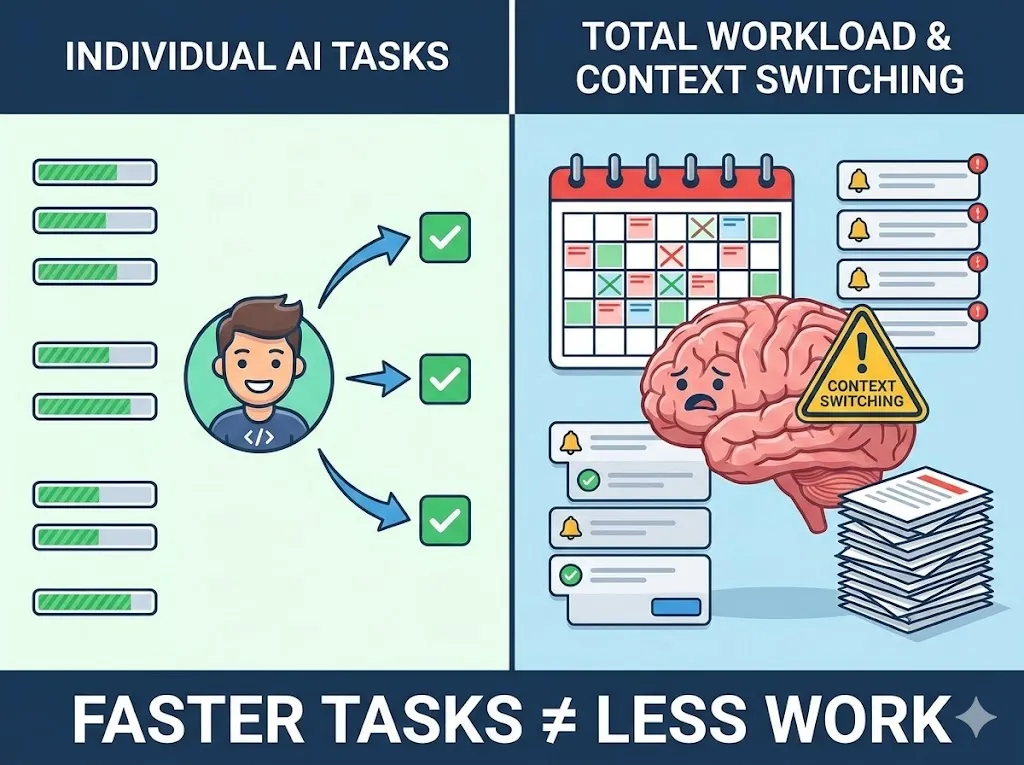
- The Problem: Engineers who used to focus deeply on one major problem a day are now juggling six different problems because “AI makes them quick.”
- The Result: Massive context-switching costs. While the AI doesn’t get tired of jumping between topics, the human brain does.
3 Key Drivers of AI Fatigue
1. The Shift from Creator to Reviewer
Khare argues that engineering is shifting from generative work (writing code, which induces “flow” states) to evaluative work (reviewing AI code, which causes decision fatigue).
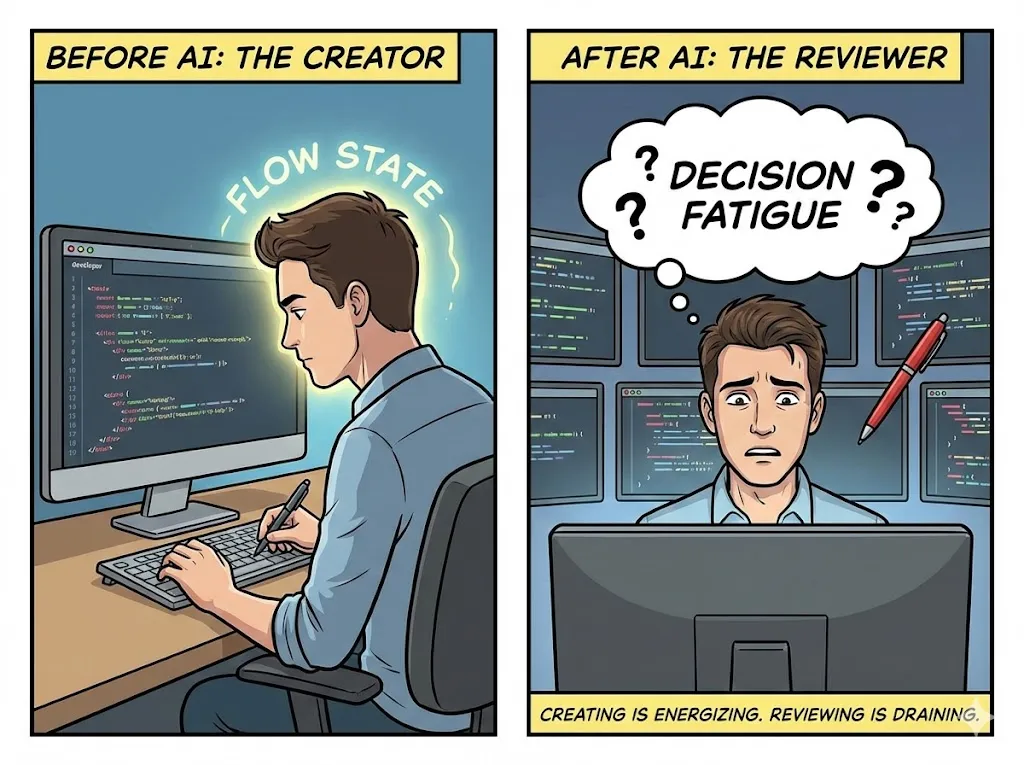
The Burden: “Creating is energizing. Reviewing is draining.” Engineers are now acting as quality inspectors on an infinite assembly line, forced to judge code they didn’t write, often lacking the context of why it was written that way.
2. The Anxiety of Nondeterminism
Engineers are trained to trust deterministic systems (same input = same output). AI breaks this contract.
The friction: The background anxiety of never fully trusting the output, knowing that the same prompt might produce clean code on Monday and “spaghetti” on Tuesday, requires a level of constant hyper-vigilance that wears down mental endurance over time.
3. The “Just One More Prompt” Trap
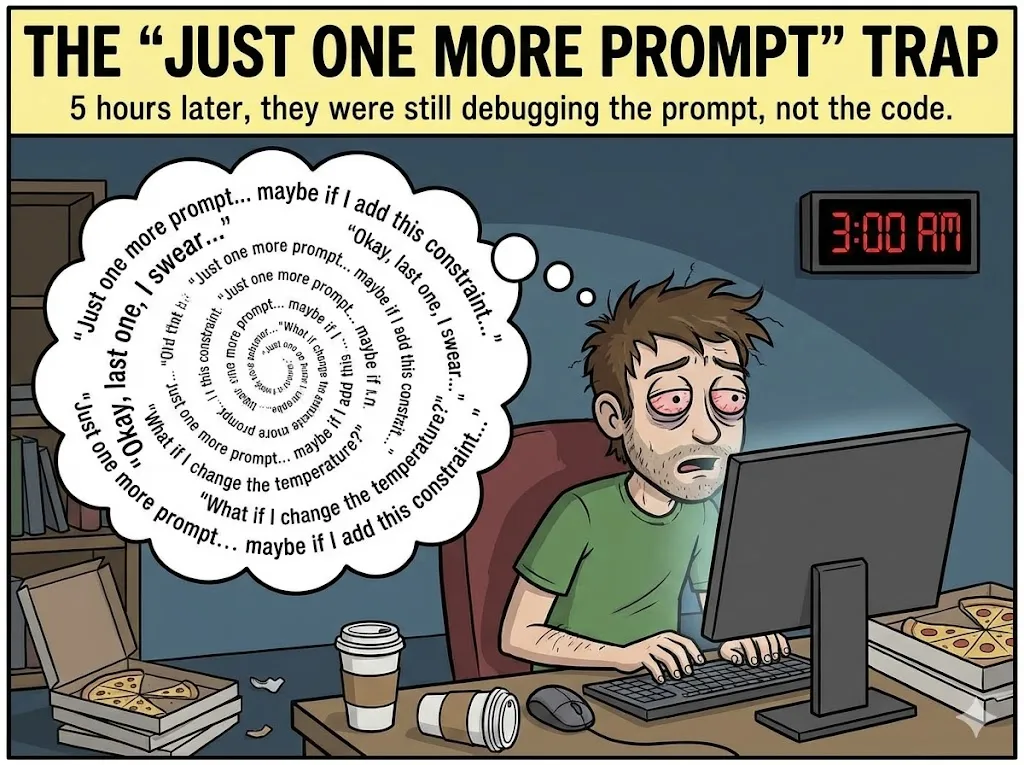
Khare describes the “Prompt Spiral”, spending 45 minutes optimizing instructions to get an AI to do a task that would have taken 20 minutes to do manually. It feels productive because you are “iterating,” but it is often a waste of cognitive resources.
The “FOMO Treadmill”
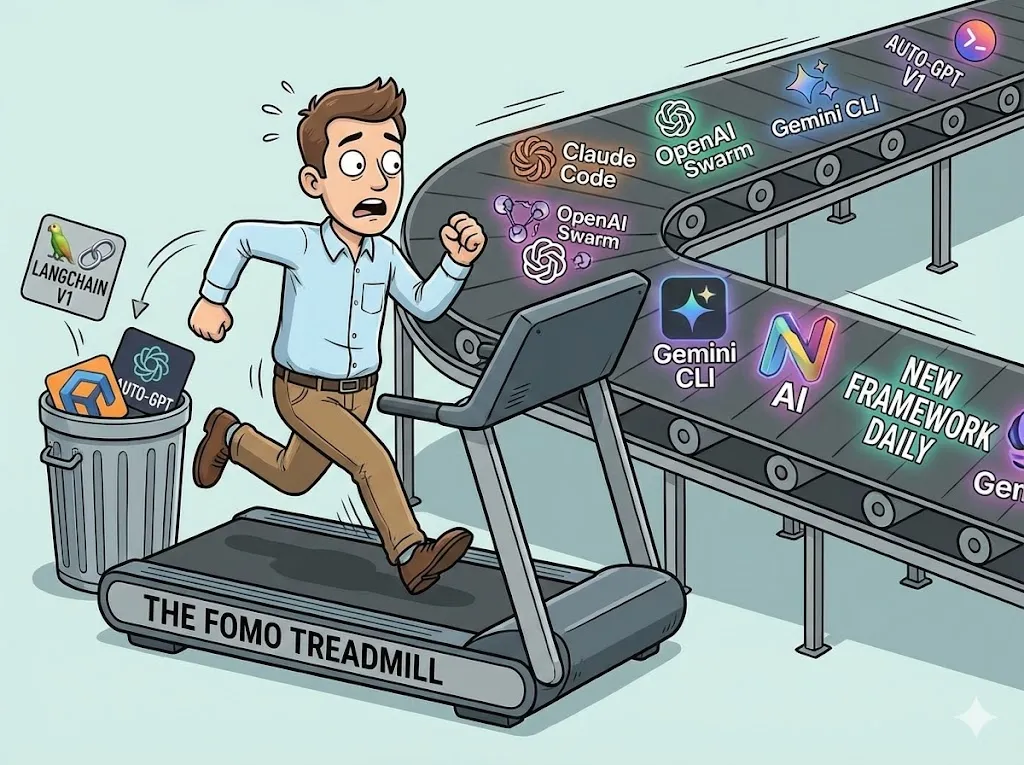
The report highlights Khare’s observation on the dizzying speed of the ecosystem (Claude Code, OpenAI Swarm, Gemini CLI, etc.). He notes that the shelf-life of knowledge has collapsed; workflows built two months ago are often rendered obsolete by a model update, leading to a sense that learning is futile.
Strategic Takeaways for DigitrendZ Readers
Khare suggests that the “real skill” of the AI era isn’t prompt engineering, it’s knowing when to stop. He offers specific strategies for developers and managers:
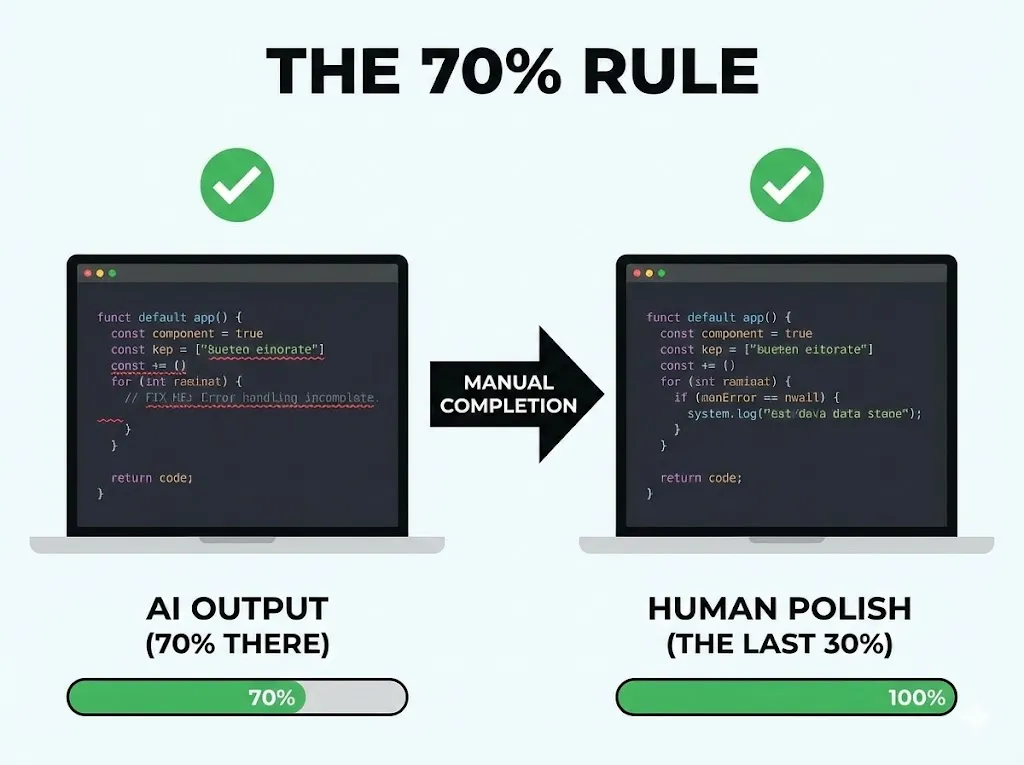
- The 70% Rule: Accept that AI output is usually “pretty good” (70% there). Fix the remaining 30% manually rather than trying to prompt your way to perfection.
- Time-Boxing: Set a timer (e.g., 30 mins) for AI assistance on a task. If the AI hasn’t solved it by then, switch to manual work to prevent the “prompt spiral.”
- Infrastructure over Tools: For those feeling the “tool churn,” Khare advises focusing on the infrastructure layer (auth, context, security) rather than chasing every new agent framework.
Conclusion
Khare’s essay serves as a crucial wake-up call. As we rush to integrate agents and copilots into every workflow, we must remember that human cognitive bandwidth is finite.
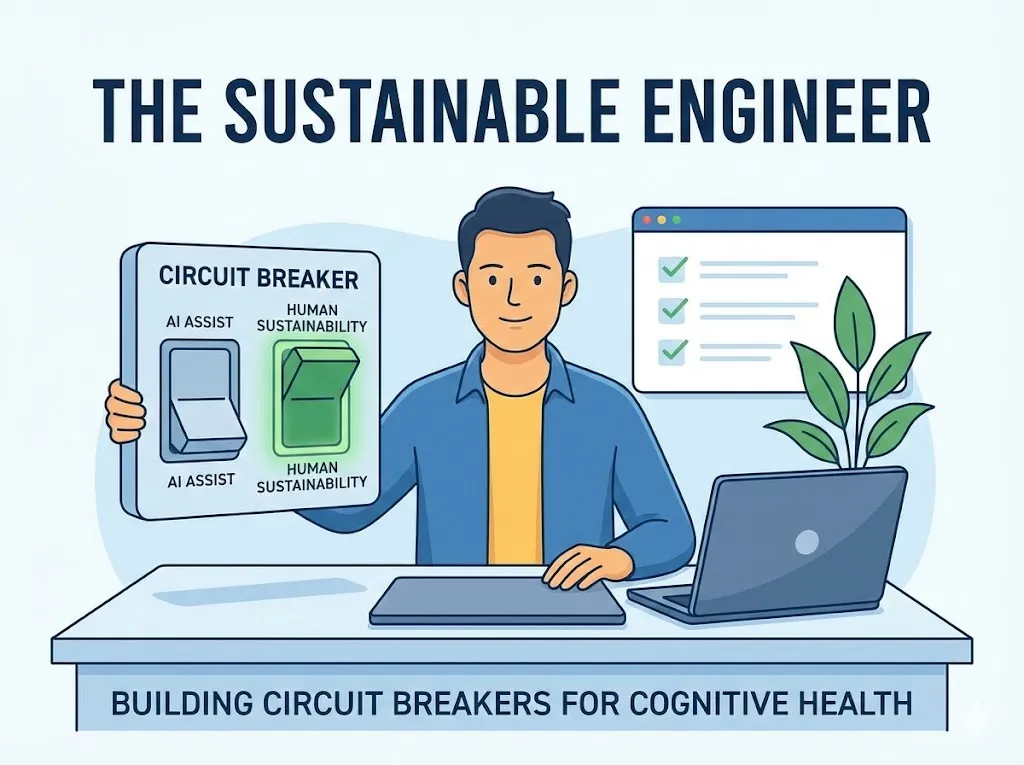
The Verdict: AI removes the natural “governor” on production speed (typing/thinking speed). Without that governor, the only limit left is burnout. To survive the AI era, engineers must build their own “circuit breakers.”
Link to original essay: https://siddhantkhare.com/writing/ai-fatigue-is-real